


 Business Recorder
 Egyptian bourse surpasses Gulf peers in 2025; oil weighs on Saudi
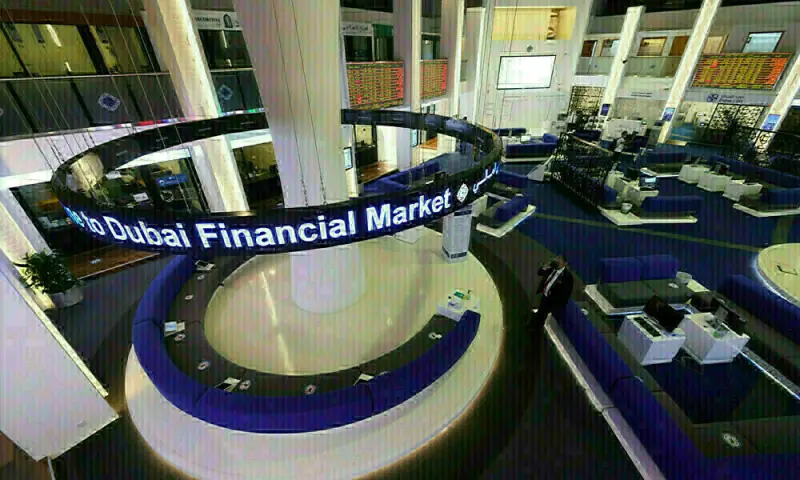
Most Gulf stock markets closed higher on Wednesday, driven by optimism that the United Arab Emirates’ decision to withdraw its remaining troops from Yemen may help reduce regional tensions. Meanwhile, Egypt’s stock exchange outperformed Gulf peers for 2025. The UAE defence ministry said on Tuesday it had voluntarily ended the mission of its counter terrorism units in Yemen. The withdrawal of Emirati forces from Yemen could ease tensions between the UAE and Saudi Arabia. Dubai’s main share index gained 0.5% a day after recording its biggest intraday fall in more than six months, to end the year 17.2% higher. Abu Dhabi’s index added 0.3%, concluding the year 6.1% higher - its first annual increase in three years. Both markets benefited from strong local economic fundamentals and corporate earnings. Abu Dhabi’s larger exposure to the energy sector made it more sensitive to oil’s weak performance, said Milad Azar, market analyst at XTB MENA. Azar said the outlook for 2026 remains positive. “However, key risks could remain oil and global growth,” he added. Egypt’s blue-chip index added 0.3% on Wednesday, the last trading day of 2025, concluding a year in which it has risen more than 40%, its best year since 2023. Rate cuts and sustained inflows from real estate and tourism supported market sentiment, with further gains possible if inflation continues to fall, said Azar. The Qatari index slipped 0.3%, but eked out a mere 2.1% for the year - its strongest annual showing since 2021. Saudi Arabia’s benchmark index gained 1.1%, but finished the year about 13% lower, recording its second yearly drop in 10 years, as a robust IPO pipeline and weak oil prices weighed on market liquidity and sentiment. Oil giant Saudi Aramco experienced its most challenging year since its December 2019 initial public offering (IPO), with shares declining by 15.04%. Aramco’s decline came amid weak oil markets and rising regional tensions, triggering broader market corrections and increased investor caution, Azar said. He said the Saudi market may rebound in 2026 as monetary policy eases and interest rates decline, boosting liquidity and equity valuations. The recovery could be stronger if oil prices stabilize or rise. Oil prices - a catalyst for the Gulf’s financial markets - were little changed on Wednesday and are set to fall more than 15% over the course of 2025, as oversupply concerns grew in a year marked by wars, higher tariffs and OPEC+ output and sanctions on Russia, Iran and Venezuela. Kuwait’s stock market registered a 21.2% yearly gain, ending the year close to its record peak. Bahrain’s index rose for a fifth consecutive year with a 4.1% increase in 2025, while the Omani index jumped a little over 28% for the year, its biggest yearly gain since 2007. Saudi Arabia advanced 1.1% to 10,491 Abu Dhabi added 0.3% to 9,993 Dubai gained 0.5% to 6,047 Qatar eased 0.3% to 10,763 Egypt rose 0.3% to 41,829 Bahrain fell 0.5% to 2,067 Oman was up 0.1% to 5,867 Kuwait rose 0.6% to 9,498