


 The Advocate
 As groundbreaking trans politician Andrea Jenkins retires, a look at her life and career
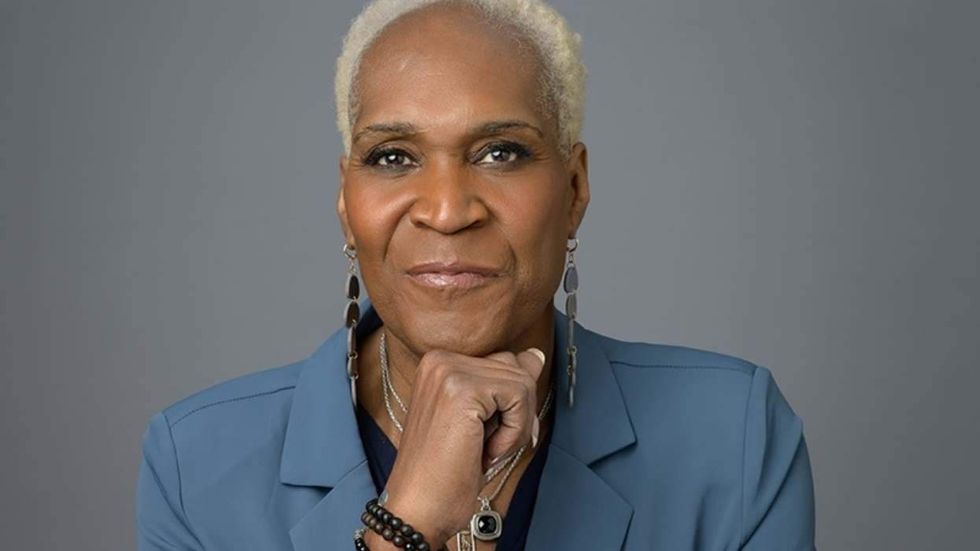
A look at trans pathbreaker Andrea Jenkins Andrea Jenkins has been a history-making figure at a historic time. In 2017, she was elected to the Minneapolis City Council , becoming the first out transgender African American elected to public office in the U.S. She went on to be vice president and then president of the council, the latter making her the first out trans person to be a city council president in the U.S. She helped see the city through the unrest caused by the death of unarmed Black man George Floyd at the hands of police, followed by a plan for police reform. Now Jenkins is retiring. Here’s a look back at her life and career. Related: 14 transgender elected officials you should know Early life and coming out Jenkins was born in 1961 in Chicago . She grew up in the impoverished neighborhood of North Lawndale; her mother was an office administrator, while her father, who was addicted to heroin, spent much time in prison. She spent weekends with her grandparents in the middle-class neighborhood of Chatham. She once said she “experienced all of Chicago from the deep poverty to the striving middle-class Black Chicago,” according to her biography on the National Women’s History Museum website . She moved to Minneapolis in 1979 to attend the University of Minnesota, a largely white school, where she experienced much racism and anti-LGBTQ+ hostility, even though she wasn’t out as trans at the time. She was expelled from her fraternity house and returned to Chicago, where she got her first political experience in working for Harold Washington’s successful 1983 campaign to become the city’s first Black mayor. In her 20s, she married a woman and had a daughter. At age 30, she ended the marriage and came out as a trans woman. “I just really realized that I [couldn’t] go on anymore, hiding the truth from myself,” Jenkins once said of this period. “Hiding the truth from those who I love. If I am going to thrive in life, I have to come to grips with who I am, and I have to accept it.” She returned to Minnesota , working as a vocational counselor for Hennepin County, which includes Minneapolis, and also returned to college, eventually earning a bachelor’s degree and two master’s degrees. Going into politics Her involvement with Minneapolis city government began in 2001, when she worked on Robert Lilligren’s campaign for City Council and joined his staff when he was elected. She later was a staffer for another council member, Elizabeth Glidden. Both were from Ward 8, which Jenkins ran to represent in 2017, after Glidden decided not to seek reelection. Jenkins won with more than 70 percent of the vote. She was vice president of the council from 2018 to 2021 and president from 2022 to 2023. George Floyd's murder and the aftermath In May 2020 came the death of George Floyd within Jenkins’s ward. A convenience store employee called police and said Floyd had made a purchase with a counterfeit $20 bill. Four officers responded, and one, Derek Chauvin, kept his knee on Floyd’s neck for eight minutes, resulting in Floyd’s death. Chauvin was convicted of murder and imprisoned but is now seeking a new trial. Some conservatives have urged Donald Trump to pardon him, but Trump has not done so. The three other officers were convicted on various charges. Related: Black LGBTQ+ Notables See Justice in Chauvin's Murder Convictions After Floyd’s death, Minneapolis and other cities saw huge protests and calls to reform or replace police departments. “Defund the police” was a rallying cry. “I tried to reframe that as refund our communities, meaning we need to fund our communities as well as our public safety mechanisms,” Jenkins told Minnesota Public Radio in May of this year. The City Council created the Office of Community Safety to oversee the police force and other first responders, plus a team to deal with mental health crises. “We invested in violence prevention measures with violence interrupters throughout the city, which has been a little controversial,” Jenkins told MPR. “But I think we are on a positive trajectory.” In a December MPR interview as she prepared to retire, Jenkins described her time on the council as “tumultuous.” She recalled being trapped in her car by angry activists as she was leaving a Pride event in June 2021. One, D.J. Hooker, accused her of supporting “the cops who kill Black people and Black trans women,” according to a site called Bring Me the News. The group let her leave only after she signed a list of six demands, including a call for the resignation of Mayor Jacob Frey. She later posted on Facebook, “Black pain, Black trauma, Black anger is real and justified. What is not justified is the inhumane treatment of other humans because they hold elective office.” She also said the voters of Minneapolis would decide who would be mayor, not her or any other member of the council. Frey, who stood by her, was reelected that November and again in 2025. In one of her last acts in office, she supported a plan, opposed by certain activists, in allowing cars at George Floyd Square, a memorial area that some wanted to keep for pedestrians only. “If I had my dream, I think it would be public transportation and pedestrian only,” she told MPR. “But what we're hearing from the professional staff and from majority of the community is that we want to have cars and public transportation in the corridor.” A poet, historian, and grandmother In addition to her political career, Jenkins is a poet, prose author, and performance artist who has received numerous grants for her work. She has also been curator of the Transgender Oral History Project at the University of Minnesota's Jean-Nickolaus Tretter Collection in Gay, Lesbian, Bisexual and Transgender Studies. After retiring from the council, she wants to spend more time writing and with her three grandchildren. “First and foremost, I identify as a poet and a writer, and being in this job didn’t really allow me to focus as much time and energy as I wanted to on my creative life, and so I wanted to get back to that while I still had some mental acuity and passion and abilities,” she told MPR. She was diagnosed with multiple sclerosis the year she was elected, and she wants to enjoy life while she still has some physical mobility, she noted. Praise as she retires At the council’s last meeting of 2025, she received praise from colleagues and others. State Rep. Leigh Finke, the first out trans person in the Minnesota legislature, said Jenkins inspired her to run for office. “Her steadfastness and clarity has been really inspirational to me. I continue to see her as a person whose strength and commitment is a guide path for me,” Finke said, according to MPR. Another who lauded her was community activist Bill English. “She did her job with a sense of commitment to her community and her people,” he said. “And that’s all of them. It didn’t matter that you weren’t African American, if you lived in Eighth Ward, she served you just as well and welcomed everybody.” Her term ends January 5.