


 Dawn.com
 Traders question inflation figures despite relief
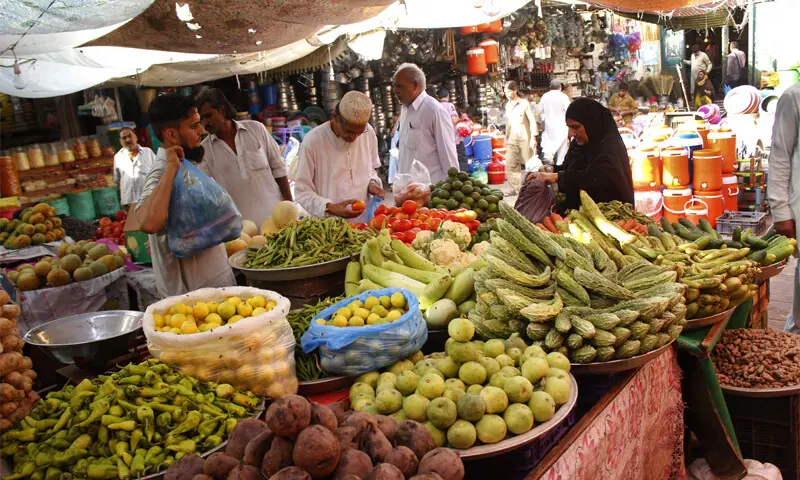
• Vegetable price slump offsets costlier staples • Tomato glut eases prices, hurts growers • Flour, milk and meat rates climb KARACHI: Traders appear dissatisfied with the official inflation numbers, despite the fact that prices of many items have declined compared to rising trend in other items. Consumers have found some relief in vegetable prices, with tomatoes leading the decline. Tomato prices have dropped to as low as Rs30 per kg in various cities, although this relief for consumers has hit growers hard. In Karachi, several pushcart vendors are seen offering 2.5kg to 3kg tomatoes for Rs100, owing to heavy arrivals from producing areas. According to the Sensitive Price Index (SPI) for the last week of December 2025, the national average price of tomatoes ranged between Rs30 and Rs130 per kg across different cities. Consumers are also benefiting from improved onion supplies from producing areas, thus dropping the national average price to Rs60-140 per kg from Rs110-180 per kg in the first week of January 2025. The national average price of new potatoes has also plunged to Rs30-100 per kg, compared to Rs80-150 per kg a year ago, in various cities. During October 2025, in contrast, consumers had paid Rs600-700 per kg for tomatoes in various parts of the country, while onion prices had reached Rs220 per kg. Pulses prices have largely remained stable. The national average price of gram pulse decreased to Rs220-350 per kg from Rs330-450 per kg over the past year. The average prices of moong, masoor and mash stood at Rs340-470, Rs240-330 and Rs360-530 per kg, respectively, compared to Rs350-470, Rs260-370 and Rs440-590 per kg in the first week of January 2025. Fresh milk prices in the country edged up to Rs170-260 per litre from Rs150-240 a year back. The price of a 20kg wheat flour bag jumped to Rs1,810-2,650 from Rs1,580-2,200 after an increase in wheat rates whose 10kg bag price soared to Rs1,052 from Rs806 over the past year. The average price of fine flour rose to Rs132 per kg from Rs111. The national average price of 1kg ghee pouch, 2.5kg ghee pack and five-litre cooking oil also increased to Rs560-590, Rs1,400-1,588 and Rs2,850-3,110, respectively, from Rs545-585, Rs1,370-1,500 and Rs2,695-2,945 a year earlier. The price of beef with bones and mutton (average quality), which were Rs700-1,300 and Rs1,550-2,400 a year ago, has soared to Rs900-1,450 and Rs1,700-2,550 per kg, respectively. Prices of Basmati broken rice have slightly surged to Rs140-300 per kg from Rs130-280, while prices of Irri 6/9 rice in Sindh and Punjab remained unchanged at Rs110-200 per kg during the last one year. Zaid Bin Haris at Sherman Securities said the food index rose 3.2pcYoY, due to increase in prices of wheat (up 20.8pcYoY), chicken (up 16.11pcYoY) and meat (up 13.56pcYoY). Mr Haris attributed the rise in wheat prices to higher retail rates, prices, supported by a new government wheat policy raising its minimum support price (MSP) to assist flood-affected farmers. He added that chicken and meat prices increased YoY due to higher feed costs and weak enforcement of price controls, keeping market prices above official rates. ‘Highly disappointing year’ Separately, All Karachi Tajir Itehad Chairman Atiq Mir termed 2025 as a “highly disappointing year” in which trading and business activities shrank by 60pc, alongside rising food prices, unemployment and declining business confidence and investment. In a statement, he further said no new industrial units were set up during the year, which led to increased capital flight amid an uncertain business environment. While painting a bleak outlook for 2026, Mr Mir said the government appeared non-serious in providing a business-friendly environment, citing rising prices of power, gas, LPG, petrol and diesel, along with a number of taxes and duties. Published in Dawn, January 2nd, 2026