


 Dawn.com
 Just a handshake
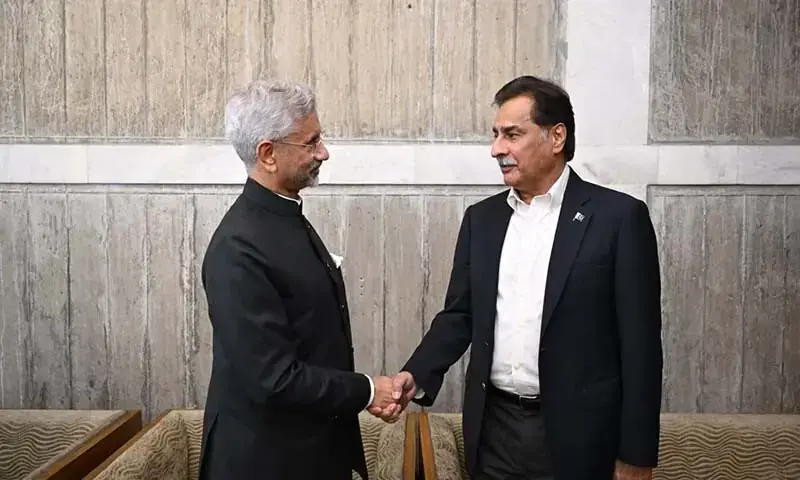
IT was a handshake that sent a ripple through the region. On Wednesday, National Assembly Speaker Ayaz Sadiq and India’s External Affairs Minister S. Jaishankar shook hands in Dhaka , where they had both arrived to attend the state funeral of former Bangladeshi prime minister Khaleda Zia , who passed away earlier this week. It was, doubtless, a significant moment which invited attention across three countries. The Chief Adviser of the Government of Bangladesh, Muhammad Yunus, made note of it in a post on his X account , which stated that the two men had “exchanged greetings” during their interaction ahead of the funeral programme organised for Ms Zia. Pictures of the two, sombrely attired for the occasion, accompanied his post. Indian media downplayed the event, framing the handshake as a usual nicety at such events and therefore inconsequential. The Pakistani media, noting that it was the first high-level contact between the two nations since the May hostilities, ran with the statement issued by the National Assembly Secretariat, underlining the part where it claimed that the handshake and pleasantries had been initiated by Mr Jaishankar, who reportedly approached Mr Sadiq with an informal acknowledgement. One reason for the interest could be that this is a slow time of the year for newsrooms. Another could be that anticipation has continuously been high for what happens next between Pakistan and India. Yet, given the prevailing atmosphere, not much can or should be read into a mere handshake. Interestingly, the NA Secretariat’s statement on the ‘handshake’ notes that Pakistan has “consistently emphasised dialogue, restraint and cooperative measures, including proposals for peace talks and joint investigations into the alleged false flag Pahalgam incident, in order to prevent unprovoked aggression and escalation”. Can this be read as a signal to New Delhi that the door to talks remains open? Unfortunately, the hostile rhetoric and posturing from next door show no signs of relenting. Recent reports regarding plans for controversial hydropower projects by India, which would violate the Indus Waters Treaty, are designed to be provocations for further tensions between the two states. There is, without question, a strong need for temperatures to be brought down. But handshakes and exchanging pleasantries alone will not make that happen. It will require earnest effort, especially on New Delhi’s part, and diplomacy at the highest levels before a thaw can be expected. Published in Dawn, January 2nd, 2026