


 Dawn.com
 Karachi’s deadly roads and the limits of enforcement
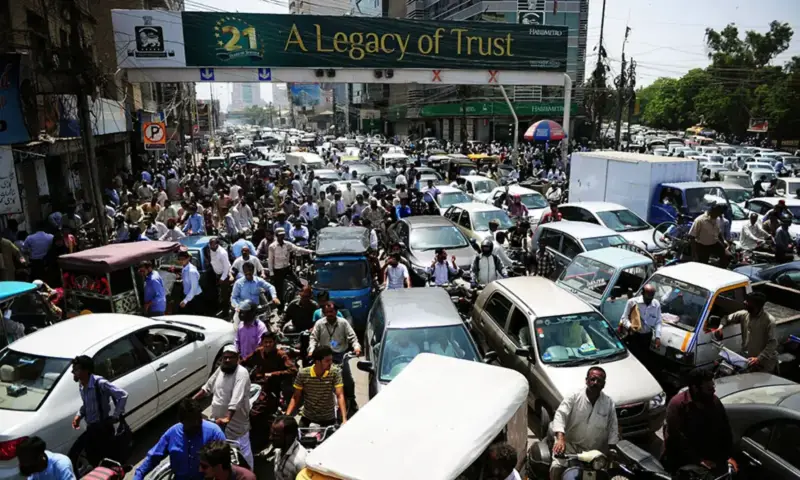
A few months ago, traffic on Karachi’s busy Rashid Minhas Road was moving with its usual chaos when a routine commute turned fatal. On the Askari Flyover, a 22-year-old woman riding a motorcycle hit a pothole while travelling in the fast lane. She lost her balance and fell onto the road. Within seconds, a water tanker approaching from behind ran her over and killed her on the spot. The incident barely stood out in a city accustomed to daily road fatalities, yet it captured the lethal mix that defines Karachi’s traffic crisis. Reckless driving, excessive speed, crumbling infrastructure, and weak enforcement of traffic laws have become the hallmarks of the city’s roads. A pressing issue In 2025, while Karachi grappled with a series of troubling developments, fatal road accidents emerged as more than just routine headlines in the national media, as they evolved into a significant political issue as well. At one point, the situation became so volatile that fears resurfaced of ethnic tensions spilling over, a spectre that has historically undermined the city’s peace and stability. A total of 803 people lost their lives in traffic accidents in Karachi in 2025. The Karachi traffic police, however, maintains that the situation began to improve during the latter half of the year. In its annual road accident report, the department recorded a noticeable decline in both fatalities and injuries, attributing the improvement to stricter enforcement, data-driven interventions, and closer coordination with transport stakeholders. According to official figures, 477 people lost their lives in traffic accidents during the first six months of the year, compared to 326 fatalities in the second half. While Karachi saw a tragic 803 road fatalities in 2025, official data reveals a 31.7 per cent drop in the second half of the year. Authorities credit the decline to a shift toward data-driven enforcement and tighter coordination with transport stakeholders. — created using Gemini A similar trend was observed in the number of injured persons. While 886 people were injured in road accidents between January and June, the figure fell to 642 during the next six months of the year, reflecting a decrease of 244 injuries, or about 40 fewer injuries each month. Comparison of road accident injuries between the first and second half of 2025. — created using Gemini The police link this progress to the formation of the Karachi Road Accident Analysis Team, which was tasked with identifying accident-prone locations, analysing underlying causes, and monitoring emerging patterns. Recommendations made by the team led to targeted preventive and corrective measures across the city, which authorities say produced tangible results. During this period, traffic police officials also engaged transporters and other stakeholders through a series of meetings, resulting in measures such as the mandatory installation of tracking systems in commercial vehicles and stricter compliance with traffic regulations. Awareness sessions focusing on road safety, monitoring mechanisms, and legal responsibilities were also conducted to improve discipline among drivers. Karachi Traffic Police performing their duties at a main thoroughfare of the port city. — Karachi Traffic Police website The department said it will continue coordinating closely with the transport sector while strengthening enforcement, emphasising that evidence-based policymaking and sustained oversight remain central to its efforts to reduce road traffic accidents and protect lives. ‘Enforcement-led gains not enough’ While the official figures point to measurable progress, urban planning and road safety experts caution that enforcement-led gains alone cannot address Karachi’s deeper mobility crisis. They argue that the city’s road fatalities are rooted in structural flaws from car-centric planning and fragmented transport governance to unsafe infrastructure for pedestrians and motorcyclists. Without a comprehensive mobility reform plan that prioritises public transport, road design standards, and institutional coordination, experts warn that recent improvements risk remaining temporary rather than transformative. Urban planning and population dynamics, they believe, play a crucial role in shaping Karachi’s traffic patterns and road safety challenges, which is a perspective that highlights why enforcement alone cannot resolve the city’s mobility crisis. A Red Line worker helping pedestrians cross the road in front of Federal Urdu University. — Fahim Siddiqui/White Star “Karachi has experienced sprawl and population growth in a complex manner,” says academic, researcher and urban planner Dr Noman Ahmed, who also serves as the Pro-Vice Chancellor of NED University of Engineering and Technology. “The magnets of employment and enterprise show a pattern of corresponding residential developments around them. For example, the fruits and vegetable market is a source of daily-wage employment for hundreds of unskilled and semi-skilled labourers. One finds informal housing hubs evolving around it. “Similar patterns are also observed around truck and bus stands, transit terminals and extension of existing informal settlements in the west and south of the city. This population requires internal streets, neighbourhood roads and arterial roads to enable proper connectivity. As a consequence, existing roads are intensively used.” He emphasises that commuting choices, rapid motorbike adoption, and risky driving behaviours compounded by poor infrastructure are driving Karachi’s rising road accident rates, which require targeted interventions and systemic reforms. “The commuting choices impact the traffic management and road safety concerns,” he says. “A rapid growth in motorbikes is an example. With very limited options of public transport, a sizable number of teenagers and working men, now also women, are adopting motorbikes as an option. With limited training, inadequate safety arrangements on roads, and poor quality of road infrastructure, road traffic accidents are on a dangerous rise.” Can stricter enforcement alone reverse Karachi’s deadly road safety trend? Traffic authorities believe it can, at least to a certain extent, arguing that deterrence remains the most immediate tool available to curb reckless driving and restore discipline on the city’s roads. Deputy Inspector General (DIG) Traffic, Karachi, Peer Muhammad Shah, maintains that the introduction of the e-challan system, enhanced surveillance and stricter enforcement has begun to deliver measurable results. “Change is impossible without deterrence,” he says, adding that traffic disorder and undisciplined driving habits have become deeply embedded over the years. According to DIG Shah, before the introduction of digital enforcement mechanisms, Karachi recorded an average of three road accident deaths per day. “With the e-challan system in place, this figure has dropped to two fatalities per day,” he says, calling it an “encouraging” sign. He acknowledges that heavy vehicles, particularly dumpers and water tankers, continue to pose serious challenges. To address this, traffic police are establishing four new fitness centres in Karachi where the fitness and licensing of dumpers will be checked on a priority basis. “No dumper will be allowed on the roads without an approved tracking system,” he adds. Need for addressing deeper structural problems While traffic police credit enforcement with reducing fatalities, urban planners caution that such gains may prove short-lived unless deeper structural problems are addressed. According to experts, fines and surveillance can correct behaviour, but they cannot compensate for flawed road design, inadequate public transport and unsafe infrastructure. “Karachi’s roads were designed to accommodate usual vehicle loads based on earlier land-use patterns,” says Dr Ahmed. “Over time, the origins and destinations of traffic have changed, but the roads have not evolved accordingly.” Image showing the under-construction BRT line on Karachi’s University Road. — Fahim Siddiqi /White Star He points to the University Road as a prominent example, where the construction of the Bus Rapid Transit (BRT) for the Red Line has reduced available road space despite the artery serving numerous educational institutions and rapidly densifying neighbourhoods. “While the BRT will carry a limited number of passengers along its corridor, the reduction of vehicular lanes will act as a perpetual bottleneck, especially during peak hours,” he says. Beyond capacity issues, Dr Ahmed highlights basic design failures that continue to expose road users to danger, including the absence of road markings, encroached or missing footpaths, lack of directional signage, inadequate street lighting and deteriorating pedestrian bridges. These deficiencies, he says, disproportionately affect pedestrians and motorcyclists who are the most vulnerable groups on Karachi’s roads. Dearth of public transport options Experts also link the rising accident toll to the city’s chronic public transport deficit. With few reliable and affordable options available, residents increasingly rely on motorcycles and private cars, a trend that urban planners describe as fundamentally unsustainable. “The exponential rise in motorbikes and motor cars cannot be controlled through enforcement alone,” Dr Ahmed says. “Only cheap, accessible and reliable public transport can reverse this trajectory.” He argues that shifting more than two-thirds of work-related trips to public transport would significantly reduce congestion, optimise road space and lower accident risks. This, he believes, requires a fleet of 100- and 70-seater buses connecting major neighbourhoods and acting as feeders to BRT corridors, supported by safe footpaths, pedestrian crossings and a unified fare system such as a single transport card. ‘Collective criminalisation of dump trucks is unjust’ Meanwhile, transporters argue that enforcement drives have unfairly singled them out. Sindh president of the All Dumper Truck Owners Association, Liaquat Mehsud, says that while accountability is necessary, collective criminalisation of dumpers and their operators is unjust. “If a dumper causes an accident, then take action against that driver and vehicle,” he says. “Conduct an investigation, seize the vehicle and punish the offender if the crime is proven. We stand with the law. But it is unfair to label everyone associated with this profession a criminal without due process.” Header image: A photograph showing a large number of people in Karachi. — AFP/File