


 The Advocate
 The films of bisexual actor Anthony Perkins: Beyond Psycho's Norman Bates
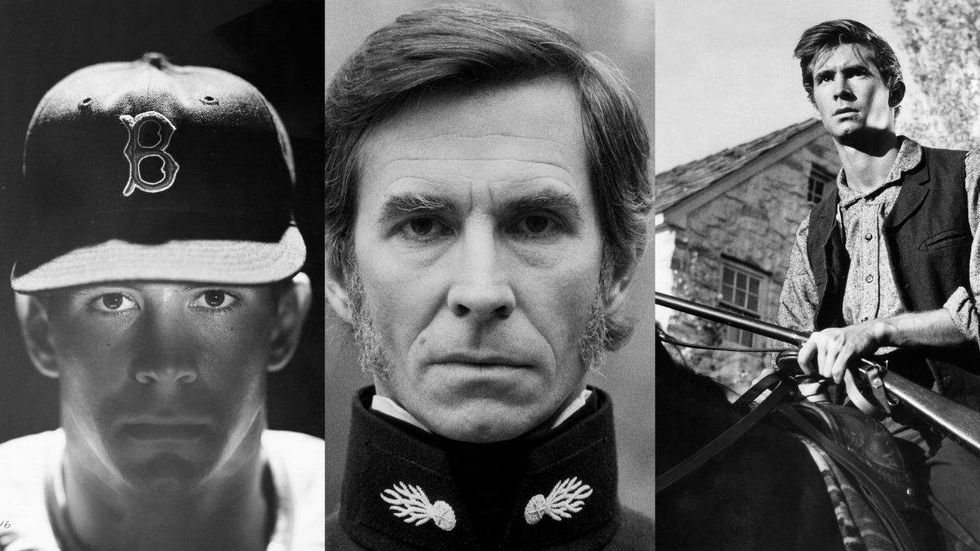
Anthony Perkins: More than Norman Bates Even the most casual moviegoer likely knows bisexual actor Anthony Perkins as Norman Bates, the mother-obsessed psycho of Alfred Hitchcock’s classic 1960 film Psycho. Anyone who’s seen it remembers the shower scene and other shocking vignettes and can quote Norman’s most famous lines: “Oh, God, Mother, blood!” “A boy’s best friend is his mother.” “Mother … isn’t quite herself today.” The film has inspired sequels, parodies, homages, and even a shot-by-shot remake by Gus Van Sant , with Vince Vaughn as Norman and Anne Heche taking Janet Leigh’s role as Marion Crane. Then there was the prequel TV series Bates Motel, starring Freddie Highmore as the young Norman and Vera Farmiga as his mother, Norma, showing how Norman got to be, well, Norman. But there’s much more to Perkins’s career than Psycho. He was a popular big-screen leading man from the 1950s through the 1970s, then worked largely in television, but he stayed active almost up to his death from AIDS complications at age 60 in 1992. Toward the end of his life, he said, “There are many who believe that this disease is God's vengeance, but I believe it was sent to teach people how to love and understand and have compassion for each other,” according to press agent Leslee Dart, quoted in his New York Times obituary. “I have learned more about love, selflessness and human understanding from the people I have met in this great adventure in the world of AIDS than I ever did in the cutthroat, competitive world in which I spent my life.” Related: 10 films showcasing the greatness of bi Hollywood icon Montgomery Clift He was born in New York City, the son of esteemed actor Osgood Perkins, who died when Anthony was only 5. Anthony started acting on stage and screen in his early 20s, notably replacing John Kerr in Broadway’s Tea and Sympathy, playing a young man “accused” of — gasp! — being gay. He made his film debut in The Actress (1953), alongside Spencer Tracy, Jean Simmons, and Teresa Wright. Perkins’s next film, Friendly Persuasion (1956) brought him an Academy Award nomination as Best Supporting Actor, his only Oscar nod. He also collaborated with Stephen Sondheim in writing the witty comedy-thriller The Last of Sheila, released in 1973. Perkins was married to actress, model, and photographer Berry Berenson from 1973 until his death. She died in the attacks of September 11, 2001, as a passenger on American Airlines Flight 11 when it flew into the North Tower of the World Trade Center. Whether she knew about his relationships with men is the subject of debate, but in a letter to his sons, Osgood and Elvis, he’s reported to have said, “Boys, don’t try to find a woman as wonderful as your mother to marry because if you do, you’ll stay single your whole lives.” His son Osgood Perkins, now a director, has objected to Ryan Murphy’s Netflix series Monster: The Ed Gein Story, starring Charlie Hunnam as Gein, the real-life killer who inspired the characters of Norman Bates and other fictional psychopaths. Joey Pollari plays Anthony Perkins in the series. Osgood Perkins told TMZ he disliked “the Netflix-ization of real pain.” Whether you watch that series or not, here are eight films you can watch to see that Anthony Perkins was much more than Norman Bates. Related: 15 of Jodie Foster's lesser-known movies you should check out after her Emmy win Friendly Persuasion (1956) Perkins plays Josh Birdwell, the son of devout Quakers Jess and Eliza (Gary Cooper and Dorothy McGuire), who goes against his family’s pacifist beliefs to fight for the Union in the Civil War. New York Times critic Bosley Crowther wrote that Perkins “makes the older son of the Birdwells a handsome, intense and chivalrous lad.” In 2012, Cooper’s daughter, Maria Cooper Janis, told The Advocate that her father, while conservative, was not homophobic. “He was totally nonjudgmental about everybody,” she said. “He respected everyone’s life and right to make their own choices. He had friends in Hollywood, in the acting community, who were gay, and they couldn’t come out. He saw what an emotional toll it took on them.” She added, “I know my father adored Tony Perkins. My father felt he was a hell of an actor.” The film was directed by William Wyler, with a screenplay by Michael Wilson (originally uncredited because he was blacklisted), based on stories by Jessamyn West. In addition to Perkins’s nomination, it was nominated for Oscars for Best Picture, Best Director, Best Adapted Screenplay, Best Sound Recording, and Best Original Song. Available on Prime Video. Fear Strikes Out (1957) Fear Strikes Out is based on a memoir by Jimmy Piersall, who suffered from bipolar disorder and had what was then called a nervous breakdown but recovered to become a success in Major League Baseball and broadcasting. Perkins plays Piersall and Karl Malden is his overbearing father, John. The real Jimmy Piersall objected to the movie, saying it kept only the title of his book and threw out all the facts. He had other criticisms as well. “Tony Perkins couldn’t be an athlete in the toilet,” Piersall told ESPN in 2003. “He was a great actor, but athletic ability, he had none. Karl Malden was a terrific actor, and I got to know Karl Malden, and I was very pleased with him,” although the elder Piersall was not the “rotten individual” portrayed in the film. Eventually, Jimmy Piersall became grateful that the film kept him in the public eye. Richard Brody, writing in The New Yorker in 2019, called the movie a classic. While it “may not have been entirely true to Piersall’s life,” it “was true to the times; it anticipated the generational crisis of the sixties, the destructive masculine politics of discipline, repression, and war,” he wrote. Directed by Robert Mulligan, his first feature, with a screenplay by Ted Berkman and Raphael Blau. Available on Prime Video. On the Beach (1959) On the Beach, based on a novel by Nevil Shute, reflects the anxiety about nuclear war in the 1950s. In the film, most humans on the planet have been wiped out; the last survivors are in Australia, where the deadly fallout is expected to arrive in a few months, and they’re trying to make the most of the time they have left. Gregory Peck stars as an American submarine commander who has lost his family and finds comfort with a free-spirited Aussie woman played by Ava Gardner. Perkins is a lieutenant in the Australian navy and Donna Anderson is his wife. Plus song-and-dance man Fred Astaire proves he’s a dramatic actor as well. Stanley Kramer, known for message movies, directed. We dare you not to cry at the end. “The great merit of this picture, aside from its entertaining qualities, is the fact that it carries a passionate conviction that man is worth saving, after all,” Bosley Crowther wrote in The New York Times . Available to stream on Tubi; also on DVD and Blu-ray. Pretty Poison (1968) Pretty Poison has Perkins as Dennis Pitt, recently released from a reformatory after serving a sentence for arson. He’s looking for love in a small New England town, and he thinks he’s found it with the burg’s prettiest girl, Sue Ann Stepanek (Tuesday Weld). He lures her with the story that he’s a spy — something big in the 1960s — but she turns out to be more delusional and dangerous than he is. “For once, Perkins is out-psychoed by an honor-roll student who worries she’ll be late for hygiene class,” Bill Weber wrote in Slant. It’s based on the novel She Let Him Continue by Stephen Geller, and the screenplay is by Lorenzo Semple Jr., who wrote the campy Batman TV series of the ’60s but also some acclaimed movies, including Three Days of the Condor and Papillon. Noel Black directed. “This lyrical thriller is a minor American classic,” Charles Taylor commented in The New York Times upon the film’s DVD release in 2006. Perkins, he added, “gives perhaps his richest performance, certainly his most touching.” Available on Prime Video, DVD, and Blu-ray. Play It as It Lays (1972) Perkins and Weld reunited for 1972’s Play It as It Lays, which explores alienation and the general meaninglessness of modern life. Weld is Maria Wyeth, an actress who’s suffered a mental breakdown, and the film details the events that led up to her crisis. Perkins plays her best friend, B.Z., a closeted and unhappy gay producer. Joan Didion and her husband, John Gregory Dunne, wrote the screenplay from Didion’s novel, and Frank Perry directed. “What makes the movie work so well … is, happily, easy to say: It has been well-written and directed, and Tuesday Weld and Anthony Perkins are perfectly cast as Maria and her friend B.Z.,” Roger Ebert observed in the Chicago Sun-Times, adding, “They make us care about characters who have given up caring for themselves.” Unfortunately, the film doesn’t seem to be available for streaming or in physical media, but it screened at the TCM Classic Film Festival in 2023, and we can hope TCM will show it on TV. It also has played at classic movie venues such as Los Angeles’s American Cinematheque and New York’s Film Forum, so if you’re in a large city or university town, you will likely have an opportunity to see it. Murder on the Orient Express (1974) Perkins joins an all-star cast led by Albert Finney as detective Hercule Poirot in this film, based on the famed novel by Agatha Christie. Poirot’s trying to find out who murdered a despised American businessman (sound like anyone we know?) on the luxurious train on its way from Istanbul to Calais. Perkins is secretary to another businessman, played by Richard Widmark, and the cast also includes Lauren Bacall, Ingrid Bergman, Jacqueline Bisset, Sean Connery, John Gielgud, Vanessa Redgrave, and Michael York. “‘Murder on the Orient Express’ is a splendidly entertaining movie of the sort that isn’t made anymore: It’s a classical whodunit, with all the clues planted and all of them visible, and it’s peopled with a large and expensive collection of stars,” Ebert commented in the Sun-Times. Available to stream on MGM+, Pluto TV, and Prime Video; on DVD and Blu-ray as well. Mahogany (1975) A camptastic guilty pleasure. Diana Ross, fresh off her success in Lady Sings the Blues, stars as Tracy Chambers, an impoverished Chicagoan who longs to be a fashion designer. She’s torn between this ambition and the demands of her activist boyfriend, Brian Walker (Billy Dee Williams, her Lady costar), a character who bears more than a passing resemblance to Jesse Jackson. He thinks Tracy should be at his side in the fight for civil rights, but as some reviewers have observed, if she had a lucrative career, she could certainly aid him financially in the struggle. She eventually goes to Rome as a model for famed fashion photographer Sean, played by Perkins; the lensman is also “paranoid and psychotic,” as Ebert put it. There are also hints that he might be gay. Look for Bruce Vilanch, who’s written many an Oscar show and contributed to The Advocate, in a small role. On top of everything else, “Theme From Mahogany (Do You Know Where You’re Going To),” sung by Ross, is an earworm but not a bad one. “The movie’s got rich costumes, romantic music, decadent playboys, socially redeeming values and a fable of rags to riches,” Ebert remarked. “Why should it have to make sense?” He summed it up as “a big, lush, messy soap opera.” Written by John Byrum and Toni Amber, and directed by Motown mogul Berry Gordy. Gordy fired two previous directors, the little-known Jack Wormser and the esteemed Tony Richardson, a bisexual man who was once married to Vanessa Redgrave. They had two gifted actress daughters, Natasha and Joely Richardson. Les Misérables (1978) Before Victor Hugo’s epic 19 th -century novel became a hit musical, it was adapted as a nonmusical film. In a 1935 theatrical feature, the great (and gay) actor Charles Laughton played Javert, the obsessive police officer spending his life trying to track down Jean Valjean, whose only crime was stealing a loaf of bread. In that version, the equally great Fredric March was Valjean. The story was filmed for TV in 1978 with Perkins as Javert and Richard Jordan, a fine actor who deserved more attention, as Valjean. (Check out his performance in Woody Allen's Interiors, released the same year.) Directed by Glenn Jordan (no relation), it aired on CBS and had a supporting cast that included John Gielgud, Ian Holm, Cyril Cusack, Flora Robson, and Celia Johnson. “This version of Les Misérables delivers the familiar characters, moments, and situations with an acceptable replica of human emotion,” Peter Hanson wrote on his Every ’70s Movie blog. If you’re a Les Miz completist, in addition to the stage production and the 2012 musical film with Russell Crowe as Javert and Hugh Jackman as Valjean, there’s a 1998 version with Liam Neeson as Valjean and Geoffrey Rush as Javert, directed by no less than Bille August, and a 2018 BBC/PBS miniseries starring David Oyelowo as Javert and Dominic West as Valjean. The Perkins-Jordan version is on Prime, Roku, Tubi, and other streaming services.