


 Forbes India
 2000-2025 in images: 25 events that changed the course of history
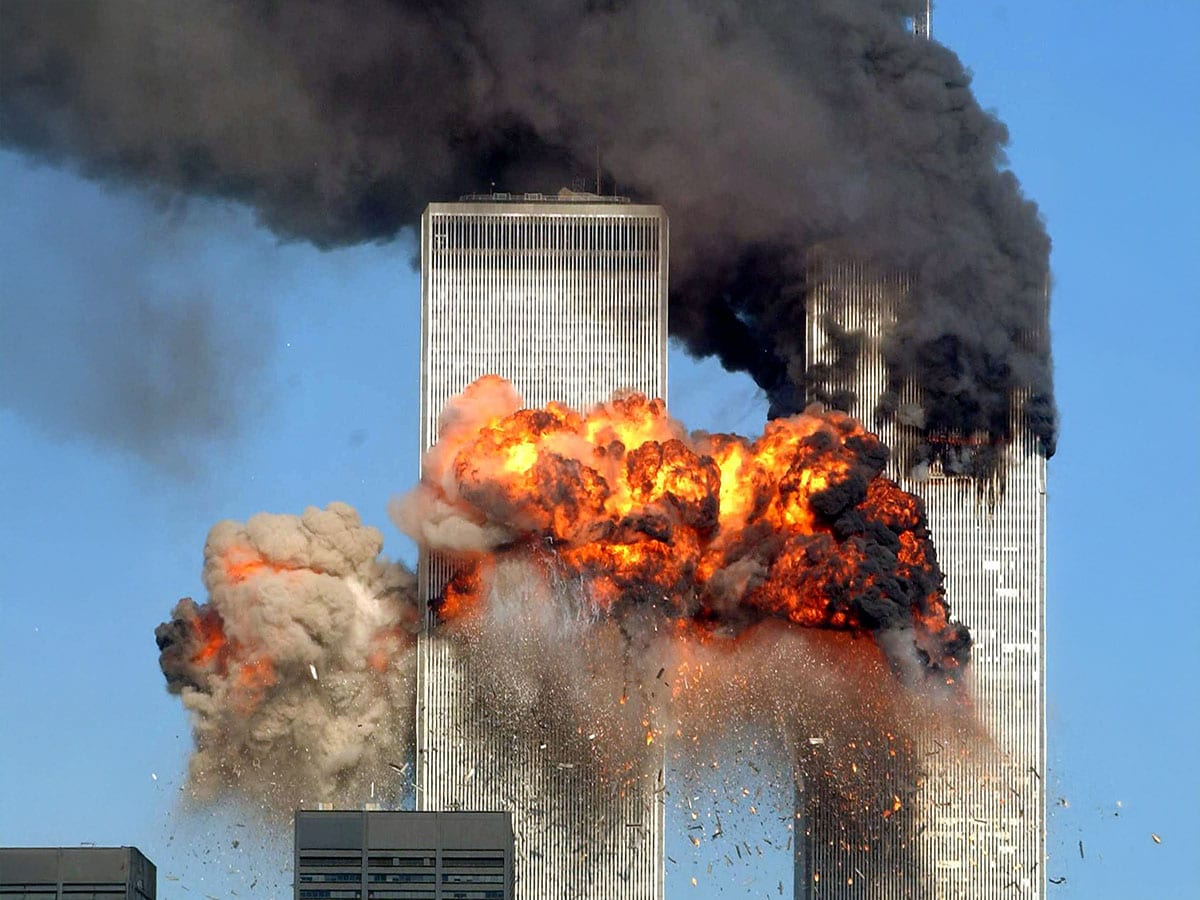
2001 : World Trade Centre attacks| An event that changed the world as we knew it: Terror struck the heart of America on September 11, 2001, as New York's World Trade Centre went down. It reshaped geopolitics and travel norms around the world. The event's aftermath spawned wars, surveillance and a new era of counter-terrorism.Photo by Spencer Platt/Getty Images 2004 : Launch of Facebook and the subsequent rise of social mediaOn February 4, 2004, Facebook was launched from a Harvard University dorm room in Cambridge, Massachusetts, by Mark Zuckerberg and his college collaborators. What began as a student networking site quickly expanded beyond universities, opening to the public in 2006. This moment marked the start of a global social media revolution. Over time, social media stopped being just a tool and became a habit, shaping friendships, opinions, careers, and even daily-life-routines. It even lent itself to the rise of a new economy—the creator economy armed with all its 'influencers'.Photo by John Green/San Mateo County Times via Getty Images 2006 : MGNREGAThe Mahatma Gandhi National Rural Employment Guarantee Act (MGNREGA), one of the largest work guarantee programmes in the world, was passed in Parliament in August 2005 and came into force on February 2, 2006. It guaranteed 100 days of employment in every financial year to adult members of any rural household willing to do public work-related unskilled manual work. In December 2025, it was repealed by the Parliament of India after the Lok Sabha and Rajya Sabha passed the Viksit Bharat–Guarantee for Rozgar and Ajeevika Mission (Gramin) Act (VB–G RAM G).Photo by Anand Sharma/Pacific Press/LightRocket via Getty Images 2007 : iPhone LaunchOn June 29, 2007, Apple introduced the first iPhone, a device that combined a phone, music player, and internet browser into one sleek package. This revolutionary launch changed the way people communicate, work, and interact with technology, kickstarting the smartphone era we live in today.Photo by Kimberly White / Reuters 2007 : T20 World Cup winIndia became champions of the inaugural T20 World Cup by beating Pakistan in a thriller which ended in the last over. The shorter version of the game gained more popularity after the tournament in South Africa in 2007. A year later, the first edition of the Indian Premier League (IPL) took place, revolutionising not only the way cricket was played and watched, but also the commercial aspects—auctions, contracts, sponsorship deals and broadcasting rights.Photo by Hamish Blair/Getty Images 2008: Global financial crisisThe 2008 global financial crisis, sparked by the US housing bubble and risky lending practices, cascaded into a worldwide economic meltdown. Major banks collapsed, credit markets froze and stock markets plunged. Beyond numbers, the human toll was immense, as millions of jobs were lost and savings evaporated. Governments scrambled with bailouts and stimulus packages, while the crisis reshaped financial regulations and left lasting scars on global economies and societies.Photo by Shannon Stapleton / Reuters 2008: 26/11 Mumbai terror attackMumbai was under siege for three days starting November 26, when 10 Lashkar-e-Taiba terrorists stormed into the city and attacked key places, including the Chhatrapati Shivaji Maharaj Terminus and The Taj Mahal Palace and Tower hotel. Over 170 died and more than 300 people were injured in one of the deadliest terror attacks in the country. While nine attackers were shot dead, the lone surviving terrorist, Ajmal Kasab, was captured, and executed in 2012.Photo by India Today Group/Getty Images 2010: The launch of AadhaarAadhaar was the Government of India’s initiative to provide a unique identification number to every Indian resident, which would also serve as proof of identity and address. Pioneered by a team led by Nandan Nilekani, the first Aadhaar number was issued on September 29, 2010, by the UIDAI, which maintained a database of residents’ biometric and other data.Photo by Pallava Bagla/Corbis via Getty Images 2011: Osama Bin Laden is killedAfter a manhunt spanning almost 10 years, US forces raided a compound in Abbottabad, Pakistan, on May 2, 2011, and killed Osama Bin Laden, the Saudi millionaire and fugitive leader of the terrorist group Al-Qaeda. Bin Laden planned and executed the 9/11 US terror attacks that killed about 3,000 Americans in New York, Washington and Pennsylvania.Photo by CNN via Getty Images 2014: BJP is elected to power in the Lok SabhaUnder Narendra Modi, the Bharatiya Janata Party (BJP)-led National Democratic Alliance (NDA) came to power in 2014, with a sweeping majority in the Lok Sabha polls. The NDA secured 336 seats, while the BJP alone won in 282, 10 more than what constitutes a majority. The Congress-led United Progressive Alliance won 55 seats, with the Congress bagging only 44, its worst-ever performance. Modi, who became prime minister (PM) in 2014, is now the longest-serving PM outside the Indian National Congress.Photo by Raveendran / AFP 2016: UPILaunched in 2016, the Unified Payments Interface (UPI), in just nine years, has become the largest real-time payment system in the world. The interface, which facilitates inter-bank peer-to-peer and person-to-merchant payments, saw 17.5 billion transactions in December 2025, worth Rs 23 trillion (about Rs 91,141 crore in daily value)Photo by Jitendra Prakash / AFP 2016: DemonetisationOn November 8, 2016, PM Narendra Modi surprised the nation with perhaps his most audacious move: Rendering much of India's currency demonetised overnight. The decision, made to fight black money and push for a digital economy, has left a lasting debate over its impact.Photo by Sanchit Khanna/HT via Getty Images 2017: Launch of JioReliance Jio was commercially launched in September 2016, in Mumbai by Mukesh Ambani, the chairman of Reliance Industries, transforming India’s digital landscape almost overnight. Offering free voice calls and extremely low-cost data, Jio made mobile internet accessible to millions for the first time. It triggered a price war, forced telecom mergers, and rapidly increased smartphone and internet usage across urban and rural India. Today, Jio stands as India’s largest telecom operator with over 500 million subscribers, including 191 million users on its fifth-generation (5G) network. It is also working with the Centre on the INDIAai initiative, and investing in satellite communications (satcom) as well as 6G technologies to be future-ready.(Disclaimer: Network18, the parent company of Forbes India, is controlled by Independent Media Trust, of which Reliance Industries is the sole beneficiary.)Photo by Shailesh Andrade / Reuters 2017: #MeToo movementThe movement against sexual abuse and harassment was initiated by Tarana Burke in 2006 but the phrase gained significant popularity after sexual abuse allegations against film producer Harvey Weinstein in 2017. Alyssa Milano's tweet popularised the hashtag #MeToo, empowering survivors through solidarity. It sparked global conversations, high-profile consequences, and debates over supporting victims while ensuring due process.Photo by Spencer Platt/Getty Images/AFP 2019 : Ram Mandir VerdictIn 2019, the Supreme Court delivered a historic verdict on the decades long Ayodhya dispute, marking one of the most significant legal decisions in independent India. The court ruled that the disputed 2.77 acre site be handed over to a government constituted trust for the construction of a Ram temple. It simultaneously directed the government to allot five acres of alternative land in Ayodhya to the Sunni Waqf Board for the construction of a mosque. The judgment sought to bring closure to a conflict that had shaped India’s social, political and religious landscape for generations.Photo by Sanjay Kanojia / AFP 2020 : Covid-19 pandemicThe Covid-19 pandemic emerged in Wuhan, China, in late 2019 and was declared a global pandemic by the World Health Organization on March 11, 2020. Caused by the novel coronavirus SARS-CoV-2, it led to worldwide lockdowns, overwhelmed health care systems, and millions of deaths. The aftermath reshaped the world: Remote work and learning became common, vaccine development accelerated at unprecedented speed, and public health gained renewed importance. Long after the lockdowns ended, the pandemic left lasting marks on how people work, learn, travel, on the economies of the world, and also on the value human connection.Photo by Adnan Abidi / Reuters 2020 : Covid-19 pandemicThe Covid-19 pandemic emerged in Wuhan, China, in late 2019 and was declared a global pandemic by the World Health Organization on March 11, 2020. Caused by the novel coronavirus SARS-CoV-2, it led to worldwide lockdowns, overwhelmed health care systems, and millions of deaths. The aftermath reshaped the world: Remote work and learning became common, vaccine development accelerated at unprecedented speed, and public health gained renewed importance. Long after the lockdowns ended, the pandemic left lasting marks on how people work, learn, travel, on the economies of the world, and also on the value human connection.Photo by Adnan Abidi / Reuters 2021: Taliban recaptures KabulIn August 2021, the Taliban captured Kabul after a swift offensive, overthrowing President Ashraf Ghani's government and ending the Afghan War. The collapse, faster than anticipated, prompted a massive NATO-led evacuation of over 123,000 people, marking the largest US non-combatant airlift in history.Photo by Wakil Kosher / AFP 2022 : Russia Ukraine warRussia’s 2022 invasion of Ukraine shattered assumptions about post-Cold War stability, reviving large-scale land war in Europe. It redrew geopolitics, forcing governments worldwide to rethink security, supply chains and sovereignty.Photo by Diego Herrera Carcedo/Anadolu Agency via Getty Images 2023 : Chandrayaan 3 landingIndia made history in August 2023 when Chandrayaan-3’s robotic lander, Vikram, touched down on the moon’s south pole. It became the fourth country to achieve a soft lunar landing after Russia, the US and China. The previous attempt had failed in 2019 because of a last-minute glitch. The Indian Space Research Organisation launched Chandrayaan-1 in 2008.Photo by Amit Dave / Reuters 2024: Gaza offensiveOn 7 October 2023, Hamas launched a surprise attack on Israel, killing 1,195 people and taking 251 hostages. Israel's subsequent offensive in Gaza has killed more than 70,000 Palestinians, mostly women and children, causing massive destruction, displacement, and a humanitarian crisis.Photo by Dawoud Abo Alkas/Anadolu via Getty Images 2024: Trump assassination attemptDonald Trump survived an assassination attempt at a Pennsylvania rally when 20-year-old Thomas Crooks shot him in the ear, killing one attendee. The US Secret Service counter-sniper team later killed Crooks. Trump's defiant “Fight!” image went viral. The incident sparked debates around security failures, conspiracy theories, and led to the Secret Service director's resignation.Photo by Anna Moneymaker/Getty Images 2025 : Operation SindoorIn May 2025, the Indian defence forces carried out a mission called ‘Operation Sindoor’, which saw precision strikes on nine terror camps in Pakistan, in response to the Pahalgam attack that left 26 civilians dead. The press briefing was led by two trailblazing women officers—Colonel Sofiya Qureshi of the Indian Army and Wing Commander Vyomika Singh of the Indian Air Force—signalling India’s confidence and inclusivity, and serving as a tribute to the widows of those killed.Photo by Arun Sankar / AFP 2025 : Air India crashAir India Flight 171, a Boeing 787 departing Ahmedabad for London Gatwick, tragically crashed just 32 seconds after take-off, into the BJ Medical College hostel, killing 241 people onboard and 19 on the ground. Caused by a simultaneous fuel cutoff in both engines—likely due to switches moved to “CUTOFF”—the incident remains under investigation. Only one passenger survived the unprecedented tragedy, which raised questions about the safety of Boeing aircraft.Photo by Raju Shinde/HT via Getty Images ICC Women's World Cup win (2025)India's women in blue lifted their inaugural World Cup on November 3, 2025, and along with it, ushered in a new era of equality in the sport. The victory ignited a surge of investment in women's cricket, and turned its star players into household names.Photo by Punit Paranjpe / AFP