


 Dawn.com
 Utmanzai tribe holds peace rally in Mir Ali, warns of civil disobedience
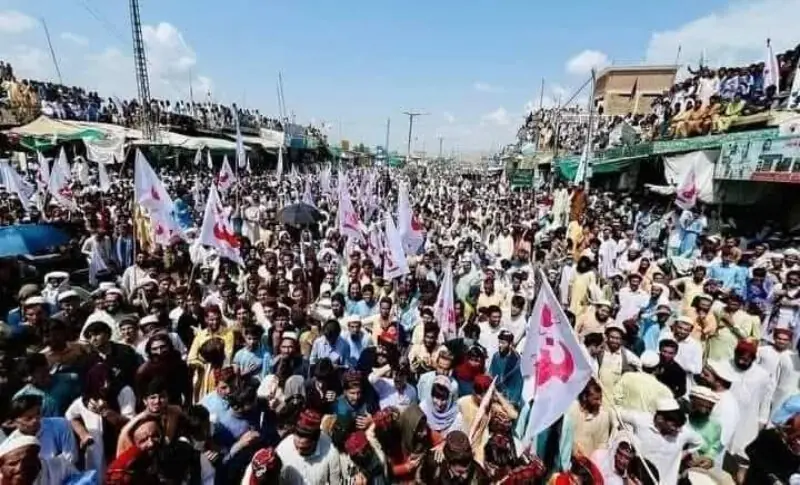
PESHAWAR: The Utmanzai tribe of North Waziristan staged a peace rally in Mir Ali on Friday and warned of launching a civil disobedience movement if its demands, including restoring peace, lifting the curfew, and reopening the Ghulam Khan border crossing, were not fulfilled by Jan 20. Thousands of people from the tribe, along with other political and local leaders, gathered at Noor Islam Shaheed Chowk in Mir Ali, where Friday prayers were also offered, led by Member of the National Assembly Mufti Misbahuddin. Speakers stressed that peace was a fundamental right of citizens and demanded that residents of North Waziristan be allowed to live peacefully like people in other parts of the country. Misbahuddin told the rally that Waziristan could no longer withstand further military operations. “Peace is the greatest blessing, and tribal elders have always cooperated with the state, but the authorities never appear serious about restoring lasting stability,” he lamented. Chief of Waziristan Jirga Malik Nasrullah said every child in the region yearned for peace and warned that if the government failed to act, the tribes would be compelled to announce “civil disobedience and block all internal and external routes”. He also demanded compensation for damaged shops, and the immediate return of seized vehicles that had not paid customs duties. “If affected drivers block roads in protest, Utmanzai elders and the public will fully support them.” Nasrullah also criticised the placement of tribal elders on the Fourth Schedule, demanding the immediate removal of restrictions to allow them free movemen. Addressing the gathering, Utmanzai tribes’ elders said, “The continued insecurity, restrictions on movement, and economic blockades have made life unbearable for the local population”. They warned that if their demands were ignored, they would be left with no option but to resort to civil disobedience after the deadline. Jamaat-e-Islami leader Malik Imshadullah said the region had endured more than “two decades of inconsistent policies”, marked by a persistent gap between the “state’s commitments and actions”. Awami National Party leader Malik Nisar Ali Khan urged the authorities to allow the youth of the region to live normal lives. Utmanzai tribe’s spokesperson, Mufti Baitullah Aman, said peace was a sacred demand, adding that Islam placed great emphasis on security and human dignity. “The people are asking for peace, not confrontation,” he said, calling on the state to fulfil its constitutional responsibilities. Participants demanded that the police be empowered and all check-posts handed over to them, while security forces should focus on border security. They also urged militant groups to stay away from populated areas, saying “homes, shops, hospitals, and other civilian properties cannot be turned into bunkers or occupied by force”. Elders also called for the reopening of the Ghulam Khan border terminal for trade with Afghanistan, stating that nearly 20,000 people depended on cross-border trade for their livelihoods. Other demands included lifting restrictions on development projects, ending what they described as discriminatory treatment, and immediately ending the curfew. They said if restrictions were unavoidable, they should be limited to Sundays only, adding that curfews under Section 144 after 10pm on Saturdays were unacceptable. Elders claimed thousands of residents had their passports and national identity cards blocked and demanded their immediate restoration, alleging that heavy bribes were being demanded for unblocking documents. The rally concluded with a unanimous warning that if their demands were not accepted, a campaign of “civil disobedience and social boycott” would be launched after the January 20. In May last year, the locals in North Waziristan also staged a sit-in for days, protesting against a suspected drone strike that killed four children. Later, the military’s media wing, Inter-Services Public Relations, had clarified that security forces were “falsely implicated” in the incident and that it was carried out by the banned TTP. Last year, Pakistan ranked second in the Global Terrorism Index 2025, with the number of deaths in terrorist attacks rising by 45 per cent as compared to the previous year.