


 Dawn.com
 ‘Drone swarms’ test KP police limits
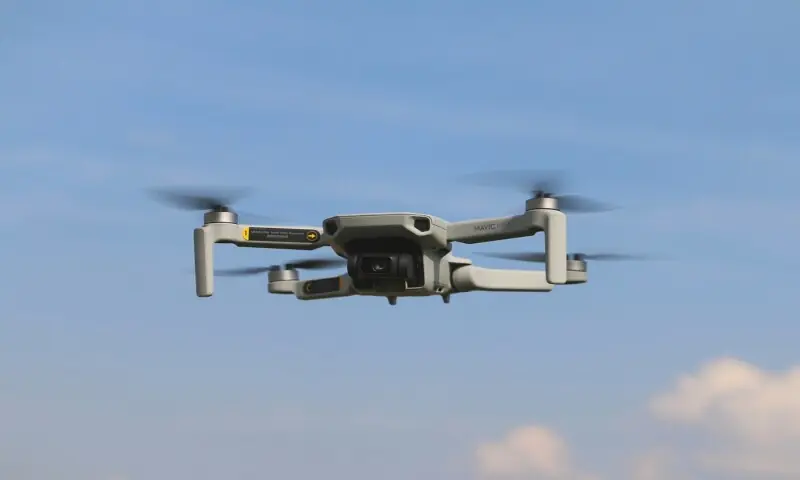
As unmanned aerial vehicles, or drones, become ubiquitous in modern battlefields, their use by militants in the southern districts of Khyber Pakhtunkhwa has given them an apparent edge over the police, who are currently using anti-drone technology to intercept ‘swarms’ of quadcopters. For decades, Pakistan has been fighting against militants, particularly in KP, utilising all available resources to defeat an invisible enemy, which relies on guerrilla tactics for deadly and unpredictable strikes. Khyber Pakhtunkhwa Police used anti-drone jamming technology during Sunday’s Ashura procession in Peshawar. — DawnNews TV After years of reliance on suicide bombers, gun-and-bomb attacks, and improvised explosive devices, the militants have now increasingly turned towards ‘drone warfare’ to evade authorities and to inflict maximum damage. Experts believe the impetus for this shift in strategy stems from the Russia-Ukraine war, where drones have played an effective role, particularly in targeting installations deep inside the enemy territory. In response to the drones, the police deployed anti-drone guns in multiple districts across the province and subsequently two anti-drone systems in Peshawar and the restive Bannu district. IGP Zulfiqar Hameed said 76 quadcopter attacks were foiled by the police using anti-drone guns, fearing such attacks will grow in the days to come. The problem is that the anti-drone guns can only jam one or two drones at the same time, and to bypass these guns, the militants have shifted towards ‘drone swarms’, making it difficult for law enforcement agencies to counter multiple quadcopters at once. “After providing the anti-drone guns, militants started attacking from multiple sides. This is a technological war, and they [referring to militants], have now reduced the IED, VBIED attacks,” the KP police chief told Dawn . He said the police did not operate drones to target militants, and as of now, their role remained defensive. Anti-drone systems As militants found a solution to the anti-drone guns, the police eventually deployed two anti-drone systems in Bannu and Peshawar, which, officials claim, were most effective in countering the swarms of unmanned aerial vehicles. According to the data collected from several sources, 320 such attacks took place in Bannu district alone during the past year, followed by 21 in Bajaur, while 34 such drones targeted forces in North and South Waziristan. “The figure may be higher, but since there is no data available…(the number shared above) is just a count, not an officially verified document,” a senior officer said. Former additional inspector general Akhtar Ali Shah said the militant groups had changed their strategy to capitalise on readily available quadcopters and carry out attacks. Their use of drones showed that the law enforcement agencies were no longer the “sole masters” of the sky. However, a senior official believed that their anti-drone system was a significant improvement in countering such attacks. Officials from the police department, on condition of anonymity, said countering this type of drone warfare was manageable, albeit difficult. Image showing a drone. — Webagentur Meerbusch/Pixabay According to an officer, they can successfully repel drone attacks, but the police cannot simultaneously take on militants on the ground as well as fend off the drones. Officials said Bannu Miryan, Haved, Daud Shah, Mamand Khel, Domel, and Bargnatu and villages adjacent to the Bannu cantonment are some of the spots under constant attack. In a statement issued by the office of Bannu Regional Police Officer Sajjad Khan, militants carried out 20 drone attacks targeting police installations and civilian populations, in which 19 police personnel were injured, while nine civilians were martyred and 33 were injured. However, following the installation of an anti-drone system on July 18, a significant improvement was observed, with over 300 drone attacks thwarted and four drones neutralised. “Technology can be countered with technology only,” another senior official privy to developments in Bannu, told Dawn . According to him, drones give an edge to militants but at the same time, provide the forces an opportunity to identify the militants’ base since the operators are always in the proximity. As drone use for surveillance and attacks grows in number, officials believe that the latest technology and structural changes are key to counter this threat. For instance, the militants always deploy surveillance drones before attacking, and if all the open areas in the government installations are camouflaged, they will not be able to gather intel, they said. Besides this, the authorities will install anti-drone technology to deter such incursions. Header image: A drone flying in the sky. — Atimedia/ Pixabay