


 Dawn.com
 ‘Conflict in India-held Kashmir remains unresolved and volatile’
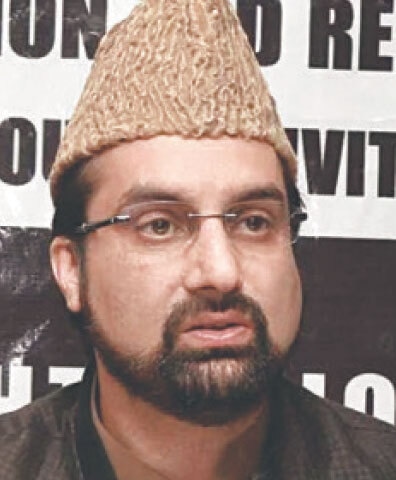
Mirwaiz Umar Farooq • Mirwaiz Umar Farooq says ‘enforced silence’ hides widening trust deficit; urges renewed dialogue • Hurriyat leader calls for ‘humanity’ after being denied access to Srinagar’s Jama Masjid • Says locals facing ‘existential crisis’ amid fears of demographic changes JAMMU: In a hard-hitting statement posted on social media on the first Friday of the year, the chief cleric of India-held Kashmir, Mirwaiz Umar Farooq, said that despite unilateral changes made in 2019, the reality is that the conflict continues to keep the region in a state of uncertainty that can erupt at any time. Mirwaiz, who said he was not allowed to go to the Jama Masjid in Indian-occupied Srinagar to deliver the Friday sermon, wrote: “That is why wars are paused, not ended, and dialogue finds no takers.” “Yet beyond these incidents, in which Kashmiris find themselves at the receiving end of suspicion and attacks in parts of India, not much has changed for them. The trust deficit between them and New Delhi has widened, not shrunk. Enforced silence is projected as acquiescence. Wounds remain open, problems unaddressed, and an elected government of a Union Territory complains of being powerless,” he said. “A sense of hopelessness prevails, along with an existential crisis of losing one’s identity through demographic change since the state was downgraded to a Union Territory, constitutional guarantees withdrawn, and rules and laws tweaked.” Highlighting his inherited role as a channel of lasting peace, brotherhood and reconciliation for his people and the region, Mirwaiz said: “In the past, I have engaged with leadership across the subcontinent and successive Indian governments — including former prime ministers Atal Bihari Vajpayee and Manmohan Singh, as well as L.K. Advani — in sincere efforts at dialogue. My path remains the same.” “Is real peace possible? Yes. Kashmiris are natural optimists. Dialogue has worked elsewhere, and our hope remains alive. When there is sincere willingness to engage in the spirit of ‘Insaniyat’ and ‘Jamhooriyat’, as Vajpayee ji once said, peace gets the best chance,” he wrote. “As another year begins and we look ahead, painful memories of 2025 stay with us. It was a year marked by tragedy and uncertainty. The horrific Pahalgam attack shook us deeply. Unequivocally condemned by all in the Valley, it led to widespread anxiety as people were targeted and homes demolished. This was followed by another India–Pakistan war, a stark reminder of how fragile peace in the region continues to be. “Today, we are operating in an environment where any expression of views contrary to the state, or any disagreement, is increasingly criminalised, branded as ‘anti-national’, and penalised,” Mirwaiz remarked. “No public space is available to us, and mediums of communication, including most local media, are not ready to provide any platform for expressing people’s demands or views. I do not have the privilege of addressing press conferences. I cannot move without official clearance, and people cannot meet me without permission. My access to the pulpit of Jama Masjid — the spiritual heart of Kashmir — is also curtailed. Even last Friday, I was placed under house arrest, and again this Friday too. “With Hurriyat constituents banned, all offices sealed and institutions closed, leaders and activists either in jail or under constant surveillance, social media remains the only platform that offers some space to connect with people and the outside world,” he added. Published in Dawn, January 3rd, 2026