


 Ruptly
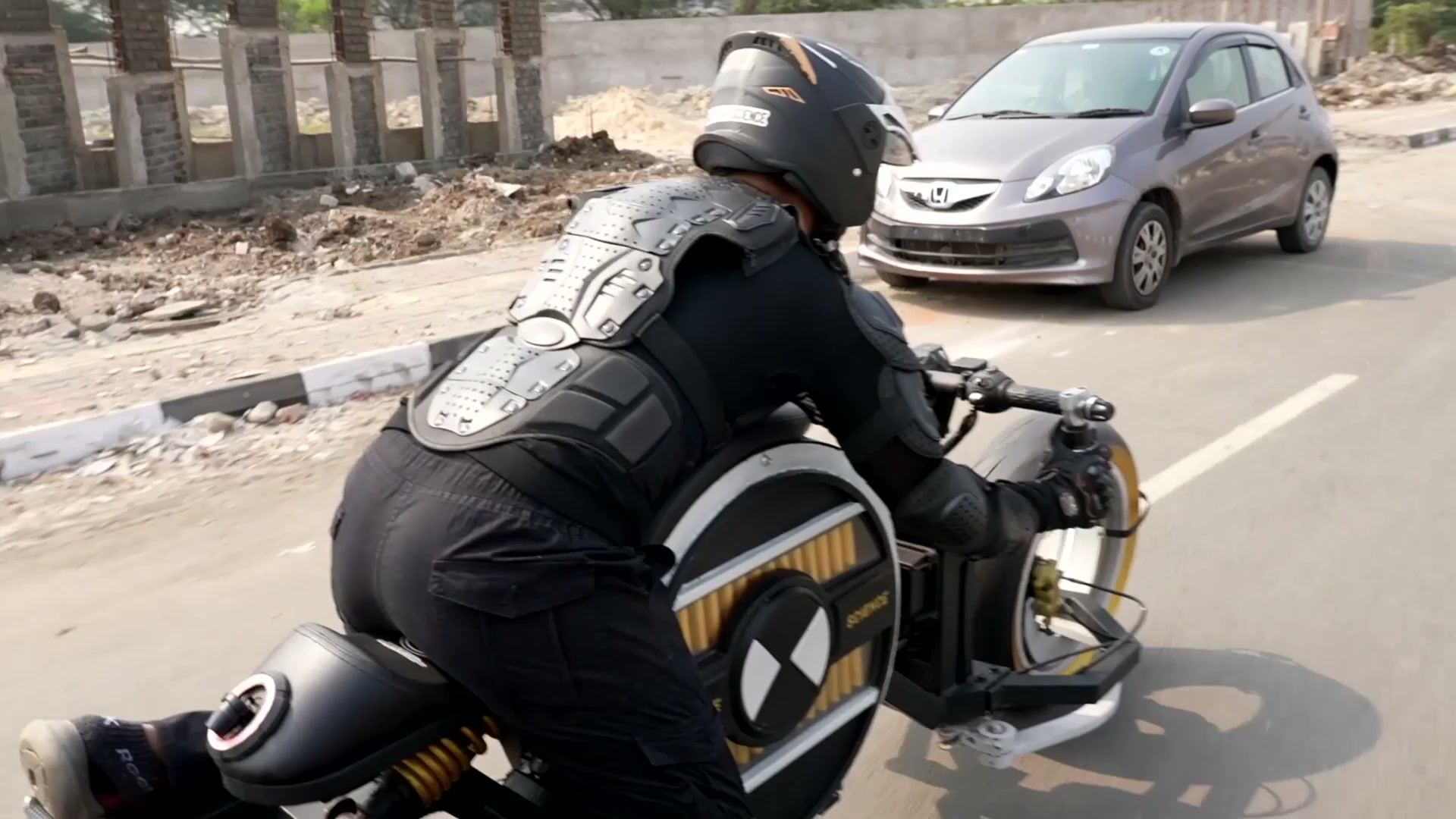
 Wired to ride! Engineering students unveil India’s first AI-powered electric superbike
"Engineering students from Bhagwan Mahavir University in the western Indian city of Surat have unveiled 'Garuda', described as India’s first AI-powered electric superbike, built largely from scrap metal and recycled components. The futuristic prototype has gone viral on social media, drawing attention for its blend of artificial intelligence, sustainability and advanced engineering. Footage captured on Friday shows student Shivam Maurya riding Garuda and working alongside fellow students to design, test and refine its AI-assisted self-parking and semi-autonomous functions. “We are trying to build a motorcycle designed to last 20 or even 50 years into the future,” said Maurya. “It needs to be built now, not just as an indigenous concept, but as a fully functional, rigorously tested model that can be put on the road and truly ridden.” According to the team, development took more than a year, with several revisions made to the steering system and extensive testing of the bike’s self-driving and safety features. “The future of mobility is electric, with petrol gradually being phased out,” Maurya added. “That’s why we made this motorcycle fully electric, allowing it to run on the road without emissions or pollution.” Nearly half of Garuda is constructed from discarded metal parts, with the students investing around ₹1.8 lakh (approximately $2,000) into the project. At the heart of the bike is a Raspberry Pi module that functions as the central processor, enabling features such as voice commands, automatic speed control, self-braking and AI-assisted collision avoidance using long-range sensors. The bike connects via Wi-Fi and can interpret commands such as slowing down or stopping at a set distance, automatically adjusting speed or coming to a halt when obstacles are detected. Despite being a student-built prototype, Garuda includes a range of premium features, including a touchscreen dashboard with GPS navigation, smartphone connectivity, music playback, front and rear cameras providing live video feeds, and a wireless charging pad. Powered by a lithium-ion battery, the electric superbike offers a reported range of up to 220 kilometres in Eco mode and around 160 kilometres in Sport mode, with a full charge taking roughly two hours. The project has already attracted interest beyond academia, with Maurya saying the team has received enquiries from technology companies and members of India’s film industry interested in showcasing the bike on screen."