


 Dawn.com
 Fresh talks on Gaza stabilisation force to focus on mandate as Pakistan maintains caution
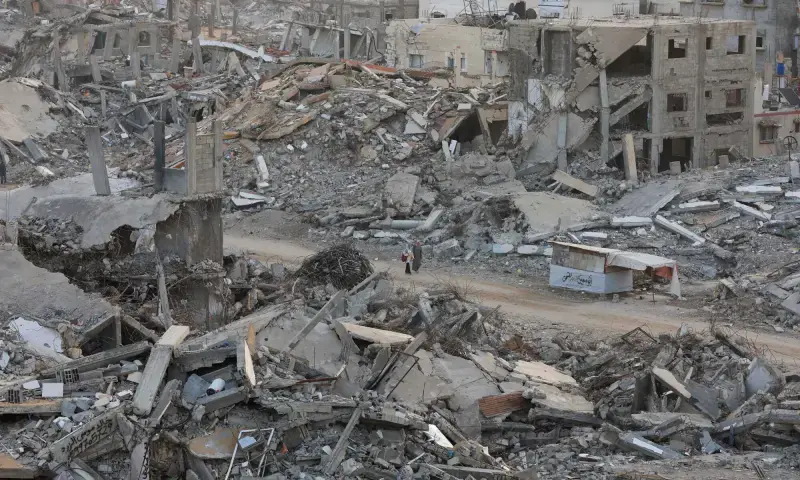
WASHINGTON: A fresh round of diplomatic talks on the formation of a proposed International Stabilisation Force (ISF) in Gaza is expected to be held in a Middle Eastern capital in the coming days, diplomatic sources told Dawn as Muslim countries, including Pakistan, continue to press for clarity on the force’s mandate, operational scope, and political objectives. The ISF, a central element of a US-brokered Gaza peace plan , is envisioned to stabilise the territory following over two years of Israeli atrocities in the Gaza Strip, protect civilians and humanitarian corridors, and assist in establishing transitional governance through a proposed “Board of Peace”. However, several core issues remain unresolved, including the force’s legal authority, chain of command, funding, duration, and whether it would play a role in disarming Hamas or other Palestinian groups. Pakistan, Indonesia, Egypt, and other states have expressed willingness to participate in a stabilisation effort that genuinely restores order and facilitates humanitarian access. “They are prepared to join any credible international force that brings stability to Gaza,” a diplomatic source said. “But they will not be part of a mission whose primary focus is disarming Palestinian resistance groups.” Hamas has rejected the idea of an international force tasked with disarmament, warning that such a deployment would be considered a party to the conflict rather than a neutral stabilising presence. This stance complicates efforts to secure broad regional participation and raises concerns about the safety and legitimacy of any deployed troops. Last month, Reuters reported that international troops could be deployed in the Gaza Strip as early as 2026 to form a UN-authorised stabilisation force. US signals gratitude, Pakistan remains cautious Three weeks ago, United States Secretary of State Marco Rubio described Pakistan’s willingness to consider particpating as “key” to the initiative and expressed gratitude for Islamabad’s engagement. Pakistani officials, however, emphasise that no final decision has been taken yet, and that Islamabad has neither committed troops nor received a formal request. In December 2025, Pakistan also attended a US Central Command–hosted conference in Qatar, with representatives from nearly 45 countries, where the operational framework of the ISF was discussed. Reports suggesting Pakistan might deploy up to 3,500 troops remain speculative. Diplomatic sources stressed that any troop commitment would depend on a mandate that is fully transparent, politically neutral, and focused on humanitarian stabilisation rather than disarmament or law enforcement inside Gaza. ‘2025 saw positive trends in Pak-US ties’ Meanwhile, in a press briefing at the Pakistan Embassy in Washington on Friday, Pakistan’s Ambassador to the US Rizwan Saeed Sheikh framed discussions on the ISF alongside broader Pak–US relations. He said that 2025 had been a year of positive trends in bilateral ties and that 2026 would be a year where concrete results were expected. “The opportunities are positive and clear but 2026 will be a critical year for translating these possibilities into practical outcomes across every sector of our bilateral partnership,” he said. The ambassador highlighted economic cooperation in minerals, energy, information technology, health, education, and counterterrorism as areas of particular promise. Ambassador Sheikh also emphasised Pakistan’s competitive advantages, noting that the country’s production costs were 174 per cent lower than China’s. He drew attention to the skills of Pakistan’s youth, particularly in technology and English-language proficiency, which have earned global recognition. Highlighting trade relations, he said Pakistan’s goods trade with the US rose 16.3pc in 2025, exports increased by 11.5pc, and services trade grew by 39.7pc. Remittances from the US also rose by 5.4pc. He stressed that while these achievements were commendable, sustained effort and institutional coordination would be required to translate potential into tangible results. “Our partnership with the US is not just a matter of choice or convenience; it is a strategic necessity rooted in geography, economics, population, and shared interests,” the ambassador said. Strategic and operational considerations The ISF discussions, combined with Pakistan’s broader engagement with Washington, reflect the delicate balancing act Islamabad faces: supporting humanitarian stabilisation in Gaza while safeguarding Pakistan’s principles on Palestinian sovereignty. Analysts say that unless a mandate acceptable to all stakeholders is clearly defined, the force may struggle to attract broad participation and could encounter operational and political obstacles on the ground. Experts also note that the involvement of countries like Pakistan is politically significant. Islamabad has traditionally played a mediating role in Middle Eastern conflicts, balancing ties with Arab states, the US and the broader Muslim world. Any misstep in defining the ISF’s role could complicate Pakistan’s regional diplomacy, affect its credibility with partners in the Gulf, and influence its perception among Palestinians. The coming meetings will be closely watched by both regional actors and Washington, as they may determine the pace at which the ISF is deployed. While humanitarian objectives remain central, the debates over mandate, command, and responsibilities illustrate the inherent complexity of deploying a multinational stabilisation force in a highly contested environment. Israel has banned 37 foreign humanitarian organizations from accessing the Gaza Strip after they had refused to share lists of their Palestinian employees with government officials, a move that the United Nations Secretary General Antonio Guterres has said will “further exacerbate the humanitarian crisis facing Palestinians”. It is worth mentioning that eight Muslim-majority countries, including Pakistan, have expressed concern over the deteriorating humanitarian situation in the Gaza Strip, saying that severe winter weather has further worsened conditions and stressing the need to immediately initiate and scale up early recovery efforts. In a joint statement, Pakistan, Egypt, Qatar, Indonesia, Jordan, Turkiye, Saudi Arabia, and the United Arab Emirates — which had also worked with US President Donald Trump’s administration last year on a plan to end Israel’s genocide and invasion in Gaza — have demanded that Israel ensure the UN and international NGOs can operate in Gaza and the West Bank in a sustained, predictable and unrestricted manner, given their integral role in the humanitarian response in the Strip. Additional input from AFP, Reuters