


 Business Recorder
 LCCI presents ‘doable’ set of proposals to enhance exports
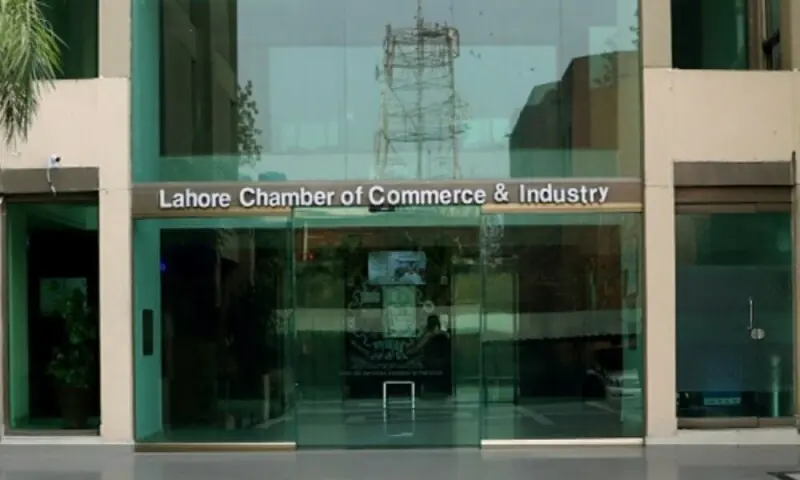
LAHORE: The Lahore Chamber of Commerce and Industry (LCCI) on Saturday presented a doable set of proposals to enhance exports. Suggestions were given in the presence of Federal Secretary Commerce Jawad Paul, Federal Secretary Industries Saif Anjum, and Federal Secretary National Food Security Amir Mohyuddin. LCCI President Faheem ur Rehman Saigol welcomed them while Senior Vice President Tanveer Ahmed Sheikh, Vice Presidents Khurram Lodhi Vice President SAARCH Chamber Mian Anjum Nisar, former President Muhammad Ali Mian, DG TDAP Rafia Syed, Executive Committee members, Ministry of Commerce officials, and representatives of various trade and industrial associations were also present. Federal Secretary Commerce Jawad Paul assured the LCCI president that their proposals would be implemented in letter and spirit, as they visited the Lahore Chamber with the objective of gaining first-hand knowledge about the issues being faced by the exporting sector. He said that the Prime Minister has clearly instructed that exporters should be included in policymaking and their suggestions given priority. He said export growth must be led by the private sector, while the government’s role is to facilitate and provide policy support. He noted that exports declined in the first six months of the fiscal year, increasing the trade deficit, especially due to falls in the food and agriculture sectors, with rice being a key item that still has potential for improvement. LCCI President Faheem ur Rehman Saigol said Pakistan is facing a sharp decline in exports and a dangerous increase in the trade deficit. He stated that in the first six months of this fiscal year, the trade deficit has exceeded 19 billion dollars and could reach 38 billion dollars by year-end if the trend continues. He warned that relying solely on remittances, which may reach 42 billion dollars, is not enough for a sustainable economy. He highlighted a sharp drop in food and agricultural exports. According to the Pakistan Bureau of Statistics, food exports from July to November were 1.95 billion dollars, compared to 3.15 billion dollars last year, a fall of about 38 percent. Rice exports dropped from 1.5 billion dollars to 769 million dollars, vegetables from 110 million dollars to 66 million dollars, and oilseeds and nuts from 262 million dollars to 92 million dollars. He said the main reasons for the decline include lack of policy focus, expansion of housing societies over agricultural land, lower per-acre production, recurring floods, and poor water management. He stressed the need for a Water Management Authority, use of hybrid seeds, mechanized and corporate farming, and protection of agricultural land. He added that the livestock sector contributes 15 percent to GDP, but meat exports from July to November were only 215 million dollars. He noted that the global halal food market is worth around 3 trillion dollars, and Pakistan has strong potential to benefit. This requires better breeding of dairy and meat animals, removal of sales tax on milk and meat, and allowing value addition. He welcomed the creation of the National Agri Food Security Authority and called for LCCI representation in it. He also emphasized reviewing free trade and preferential trade agreements, removing non-tariff barriers, active engagement of embassies, and market and product diversification. Currently, more than 60 percent of Pakistan’s exports are concentrated in a few sectors and 36 percent go to just four countries, while Africa, ASEAN, and Central Asia offer untapped potential. He expressed concern over rising business costs, high policy rates, taxes, and energy prices, which are forcing local industries and multinational companies to move abroad, describing it as capital flight. He criticized the Sindh Infrastructure Development Cess as ineffective, noting that over 9 billion dollars has been collected since 1994 without visible results. Copyright Business Recorder, 2026