


 Dawn.com
 Khamenei dismisses Trump threat
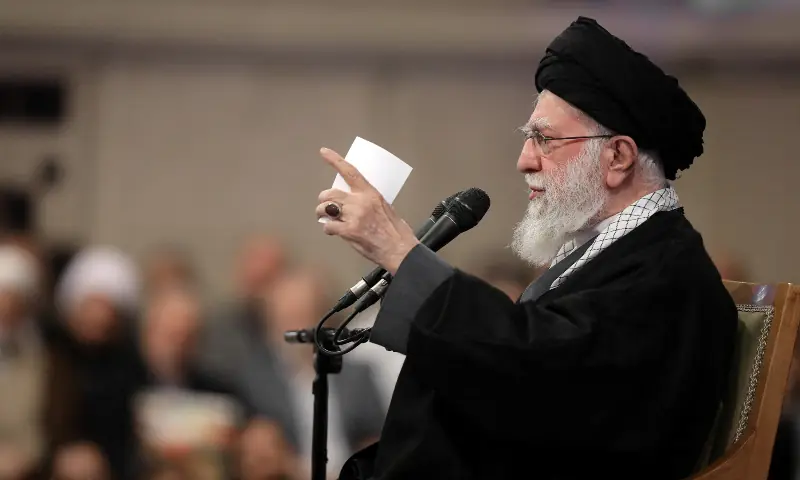
TEHRAN: Iran’s Supreme Leader Ayatollah Ali Khamenei vowed on Saturday Tehran “will not yield” following US President Donald Trump’s threat to aid protesters, while warning that domestic “rioters” must be “put in their place” amid swelling unrest over soaring inflation. Speaking in a recorded television appearance marking a holiday, Ayatollah Khamenei addressed the mounting crisis facing Iran’s leadership. He adopted a dual approach to the demonstrations that have flared across more than two dozen cities since Sunday, acknowledging legitimate economic grievances while drawing a hard line against political dissent. “We will speak with the protesters, but talking to rioters is useless,” Khamenei said. “Rioters should be put in their place.” Khamenei’s defiance came just one day after Trump warned that the US was “locked and loaded and ready to go” regarding the situation in Iran. Although Trump did not specify what action he might take, the threat adds to the pressure on Tehran following US and Israeli airstrikes last summer targeting Iran’s nuclear sites and military leaders. ‘Bazaaris were right’ Addressing the geopolitical tension, the Iranian leader insisted the country “will not yield to the enemy”. However, he conceded the validity of frustrations expressed by market traders regarding the collapsing rial currency. “The bazaaris were right. They are right to say they cannot do business in these conditions,” Khamenei said. “The shopkeepers have protested against this situation and that is completely fair.” He noted that the president and high-ranking officials were working to resolve difficulties in the sanctions-battered economy. As authorities promised dialogue for economic complaints, rights groups reported a sharp rise in violence and arrests. Demonstrators calling for political change have clashed with security forces, resulting in at least 10 deaths. Authorities have said two members of the security services had died and more than a dozen were injured in the unrest. Hengaw, a Kurdish rights group, said late on Friday it had identified 133 people arrested, an increase of 77 from the previous day. State television reported additional arrests in western and central Iran, including individuals accused of manufacturing petrol bombs and homemade pistols. Discontent takes political turn The unrest began as an expression of discontent over high prices, but quickly expanded to include political demands. The semi-official Fars news agency reported that crowds in Karaj, on the outskirts of Tehran, burned the Iranian flag and shouted, “Death to the dictator!” Videos circulated by rights groups showed marchers chanting: “We don’t want spectators: join us.” State media offered accounts of deadly confrontations in smaller cities. The Mehr news agency reported that Ali Azizi, a member of the paramilitary Basij force, was “martyred after being stabbed and shot” in the western city of Harsin. The Tasnim news agency reported a man was killed in the holy city of Qom when a grenade he was attempting to use exploded “in his hands”. Social media posts reported unrest overnight in several districts of the capital, with activists proclaiming “this isn’t the last battle, Pahlavi is coming back!” While reports of violence have centred on Iran’s western provinces, the atmosphere in Tehran appeared quieter on Saturday, a public holiday, as rain and snow kept many streets empty. Published in Dawn, January 4th, 2026