


 Dawn.com
 Aden claims retaking Mukalla from separatists
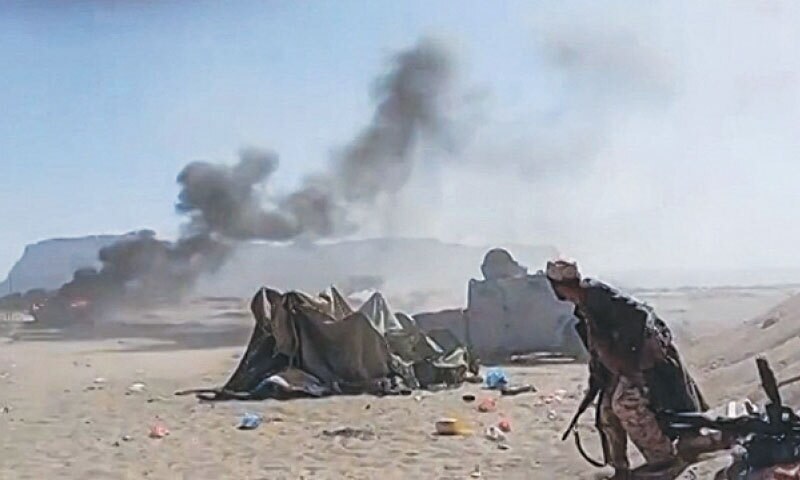
• UAE issues call for restraint; Saudi Arabia summons factions to Riyadh for ‘comprehensive’ talks • FM Dar speaks with Saudi counterpart about regional situation MUKALLA : Yemen’s Saudi-backed and internationally recognised government said on Saturday it had retaken control of Mukalla, the key eastern port in Yemen and capital of Hadramaut province, from separatists who seized it last month. The rapid government gains since Friday have reversed many of the advances made by the Southern Transitional Council (STC) and cast doubt on viability of its intention to hold a referendum on “independence”. As the fighting threatened to upend the regional order, the United Arab Emirates urged de-escalation, saying it was “deeply concerned” by the violence. Saudi Arabia appealed for factions to convene for talks in Riyadh. Saudi-backed forces said on Friday they had made advances and taken control of key locations in Hadramaut, a large province with stretches of desert along the Saudi border. By Saturday, military officials announced that “all military and civilian facilities” in Mukalla, the provincial capital, had “been secured”. An official said the military had seized the city’s principal military base. The STC confirmed the loss of territory. An STC official said there had been a “retreat of our forces” from the Al-Khasha area following “intense” Saudi airstrikes. The official said a separate strike on the Barshid camp, west of Mukalla, resulted in fatalities. He did not provide a specific number. Witnesses in Mukalla described a breakdown in security accompanied by looting, though Saudi-backed forces appeared to advance with little resistance. UAE calls for dialogue The conflict triggered an immediate diplomatic response. The UAE released a statement saying Yemenis should prioritise dialogue to safeguard security and stability. Saudi Arabia, in a statement posted by its foreign ministry to social media, called for “a comprehensive conference in Riyadh to bring together all southern factions to discuss just solutions to the southern cause”. Riyadh said the Yemeni government had issued the invitation for talks. Overnight, Presidential Council chief Rashad al-Alimi confirmed he had asked Saudi Arabia to host a forum to resolve the southern issue. Tensions boiled over early this week when Saudi Arabia bombed a base in Hadramaut and demanded all remaining UAE forces in Yemen depart, calling the separatist expansion a “red line” for its security. The STC responded with accusations that “northern Islamist factions” — a reference to the Islah party within the recognised government — had targeted civilians. The group appealed for international intervention against what it described as a “Saudi-backed military escalation”. In a clear signal of its secessionist intent, the STC announced on Friday the start of a two-year transitional period leading to a referendum on independence for a new “South Arabian state”. Aidaros Alzubidi, the STC chief, said the process would include dialogue with Yemen’s Houthi-controlled north, but warned the group would declare independence “immediately” if there was no dialogue or if southern Yemen was attacked again. The political infighting has also disrupted travel. Aden airport, the hub for areas outside Houthi control, has been closed since Thursday amid disputes over flight restrictions. The STC stated on Saturday that southern Yemen was being subjected to a land, sea, and land blockade. Separately, Pakistan expressed support on Saturday for Yemen’s territorial integrity and the Saudi-led push for de-escalation. Deputy Prime Minister and Foreign Minister Ishaq Dar on Saturday had a phone call with Saudi Foreign Minister Prince Faisal bin Farhan shortly after landing in Beijing, the Foreign Office (FO) said. In a post on X today, the FO stated that the pair “deliberated on the recent situation in the region” during the phone call. “The DPM/FM welcomed the Saudi foreign ministry’s statement regarding Yemen and appreciated the efforts of all sides to resolve the regional situation amicably,” the FO stated. Meanwhile, the FO also welcomed the call by Yemen’s presidential council to hold a dialogue in Riyadh, urging all stakeholders to engage in “good faith” toward a negotiated political solution. The FO expressed Pakistan’s hope that, guided by the principles of unity and brotherhood, regional efforts will contribute to bringing lasting peace and stability in Yemen. Published in Dawn, January 4th, 2026