


 Business Recorder
 Poorer, and more unequal
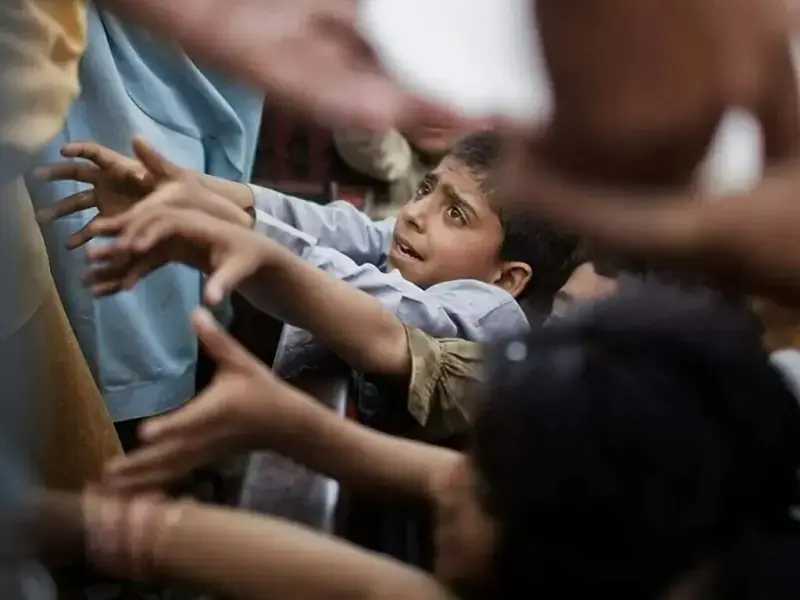
Pakistan’s latest Household Integrated Economic Survey (HIES) delivers a shocking—though not unexpected—revelation. Over the last six years (FY19 to FY25), poverty has increased and income inequality has widened between the “haves” and the “have-nots.” A large segment of the population is paying a heavy price for successive governments’ social and economic mismanagement—especially during the near-hyperinflationary period between 2022 and 2024. In FY19, 15.9 percent of households faced food insecurity; by FY25, this had risen to 24.4 percent. This is a clear indicator of rising poverty, with little room for ambiguity. Notably, the increase in food insecurity has been far sharper in urban areas, where it more than doubled to 29.6 percent in FY25 from 9.2 percent in FY19. While rural households remain poorer overall, the increase in food insecurity there was relatively smaller, rising from 20.0 percent to 26.7 percent. Overall household earnings, measured in US dollar terms to account for massive PKR depreciation, have declined by 3.4 percent, falling from $305 per month in FY19 to $294 per month in FY25. In real terms, the country has become poorer over the past six years. The quintile breakdown paints an even bleaker picture. Monthly earnings for the lowest income quintile fell by 12 percent to $150, while earnings for the top 20 percent rose by 7 percent to $499. This divergence highlights the growing vulnerability of poorer households. The trend is also visible in spending patterns: expenditures for the lowest quintile fell by 10 percent to $143 per month, while spending by the top quintile rose by 13 percent to $482 per month. The gap between income and expenditure reflects household savings. The data clearly shows that savings have collapsed, as most income is now spent—primarily on essentials. Average household savings have fallen to one-third of earlier levels, from $32 per month to just $11 per month. Lower savings translate into lower investment, which partly explains weak capital formation and the widening savings-investment gap (i.e., the current account deficit). Interestingly, the decline in savings is larger among higher-income households, possibly as they increase consumption to offset inflation and protect living standards as real savings erode. The much-touted economic “recovery” and “stability” is therefore K-shaped: richer households are recovering, while poorer households continue to fall behind. This divergence has serious implications for the future productivity of Pakistan’s young population. Although GDP per capita has edged up from $1,578 in FY19 to $1,606 in FY25, household spending patterns show reduced emphasis on education and health. The share of consumption devoted to essentials—food, housing, energy, and transport—has increased from 66.6 percent in FY19 to 68.7 percent in FY25. In contrast, spending on health and education has fallen sharply by 19 percent, declining from 7.2 percent to 5.8 percent. Spending on discretionary and other items has largely stagnated, slipping marginally by about 2 percent. This suggests that while richer households may still afford some discretionary spending, lower-income households are cutting back sharply on health and education. There are increasing indications that even middle-class families are shifting children to lower-tier private schools and postponing medical treatments. Many readers have personally felt the strain of the past six years and have witnessed even harsher stories among friends and family with lower incomes. Any claim of economic recovery or stability is hollow and incomplete when the quality of life for a population of over 250 million is deteriorating. The HIES findings should serve as a wake-up call for policymakers to refocus on basic food security and education for the masses, rather than relying on headline numbers and optimistic narratives.