


 Dawn.com
 Cabinet halts hike in fuel margins
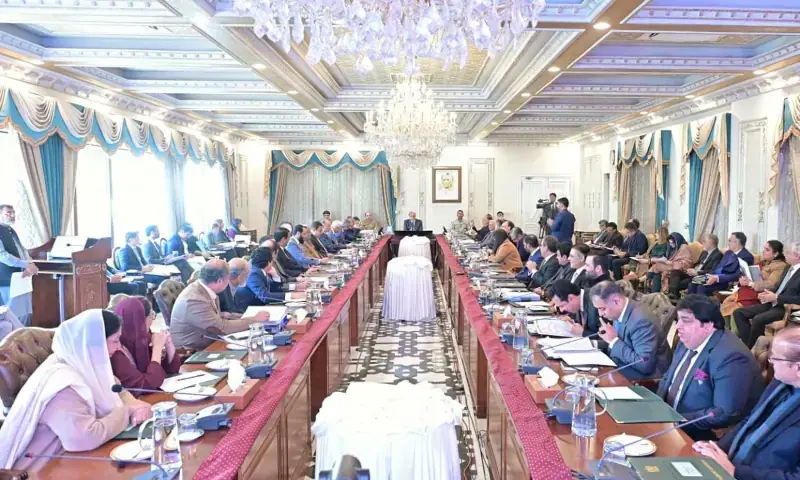
ISLAMABAD: The federal cabinet on Wednesday reportedly blocked an increase in dealers’ commission and oil marketing companies’ profit margin approved by its Economic Coordination Committee (ECC) early last month. Informed sources told Dawn that the federal cabinet, led by Prime Minister Shehbaz Sharif, has linked the ECC-sanctioned Rs2.56 per litre additional bounty to the oil industry’s retail business for complete supply chain digitisation. On Dec 9, Finance Minister Muhammad Aurangzeb presiding over the ECC meeting approved an additional build-up of Rs2.56 per litre on petrol and diesel prices in two phases to improve the profitability of oil marketing companies (OMCs) and their dealers. The ECC announced that it had approved a proposal to revise the margins of OMCs and petroleum dealers on petroleum and high-speed diesel, adjusting them in line with the national Consumer Price Index for 2023-24 and 2024-25, with increases capped between 5pc and 10pc. “It also decided that half of the increase in the margins will be paid immediately, while the remaining half will be conditional on the digitisation progress, with the Petroleum Division to report back by June 1, 2026”, it said. PM links commissions and margins to full digitisation of petroleum supply chain Under the decision, ECC had allowed Rs1.22 per litre increase in profit margins for OMCs and Rs1.34 per litre for petroleum dealers, in two equal installments. The first increase of 61 paise per litre in sale margins for OMCs and 67 paise per litre for dealers was to come into force with the following fortnightly price revision on Dec 15 or 31. This was to immediately take the OMCs’ margin to Rs8.48 per litre, while that of dealers was to rise to Rs9.31 per litre. The second equivalent increase was scheduled to come into force on June 1, 2026 subject to digitalisation of their sales and stocks network and its live connectivity to the government entities like the Oil and Gas Regulatory Authority, the Federal Board of Revenue and Petroleum Division. With that increase, the OMCs would have charged Rs9.10 per litre while dealers were to get about Rs9.98 on sale of every litre. At present, OMCs are paid Rs7.87 per litre and dealers Rs8.64. However, the government did not change revised rates for dealers and OMCs in two subsequent quarterly pricing revisions on Dec 15 and 31, although product prices were reduced significantly. When contacted, an official said the prime minister who had been personally pushing Digital Pakistan Initiative besides digitalisation of the entire petroleum sector from production to consumption stage and facilitated passage of an enabling law, opposed the two-phased hike in retail margins and linked implementation of ECC decision to 100pc digitisation, potentially with effect from June 1, 2026. This followed a law passed in August last year by the parliament for digital tracking and monitoring of all petroleum products from import and production stage to storage, transportation and sales at retail outlets to minimise the menace of smuggling and adulteration, causing an estimated Rs300-500bn annual revenue loss besides associated environmental and engine degradation. The Petroleum (Amendment) Act 2025 envisaged new clauses for information technology-based tracking of petroleum products to curb the smuggling and to initiate strict actions against illegal transportation and decantation of petroleum products, along with actions to be taken against illegal petrol pumps. All the local refineries and major oil marketing companies have been demanding individually and from their collective forums from the government to take stringent measures at borders and at domestic locations of production and sales to control smuggling of petroleum products, including LPG, as it negatively affected their businesses and caused revenue loss to the government. Published in Dawn, January 8th, 2026