


 Dawn.com
 Mayor throws his weight behind culling amid surge in dog-bite cases in Karachi
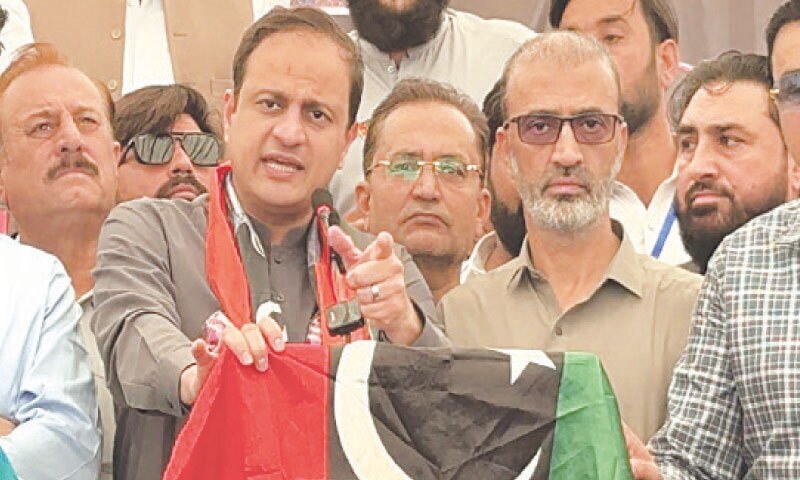
• Questions whether critics comprehend the suffering caused by dog attacks • Says a small group should not dictate stray dog policy, which must reflect majority’s will KARACHI: Amid a surge in dog-bite cases across Karachi, Mayor Barrister Murtaza Wahab on Wednesday signalled that the situation was approaching a tipping point and openly suggested culling as a possible option if the people demanded immediate relief. Responding to questions during an interaction with the media in Ittehad Town, the mayor said public opinion on the issue varied sharply across neighbourhoods, but warned against allowing a small group to dictate policy for a city of over 25 million people. “If I ask people here in Ittehad Colony what should be done about stray dogs, they will say that the dogs should be killed. But if I go to Clifton, there are 10 to 15 people who say, ‘No, this should not happen.’ Those 10 to 15 people impose their way of thinking on 25 million people,” he said. Emphasising the democratic will, Mr Wahab said he believes that “the will of all the people must be considered,” adding, “a handful of individuals cannot be given supremacy over everyone else.” Highlighting the limitations of neutering, he said the method requires time to show results and questioned the criticism faced by authorities when attacks continue during that period. “If neutering is to be done, its impact will take time to appear. Then people should not criticise when dogs bite,” he said. “If the city wants quick results, then culling will have to be carried out. “We are prepared for both options. Hundreds of people have been bitten in just a few days. I appeal to critics to listen to victims and their families before objecting to decisive measures.” Mayor Wahab also pointed to legal hurdles, saying that a small group repeatedly approaches courts to block action and then cited an example from India. “This issue also came up in the Indian Supreme Court, and it resolved it. The court said that instead of neutering, culling should be done,” he said. He questioned whether those opposing culling truly understand the suffering caused by dog attacks. “Ask those people who have actually gone through this experience what they want — culling or neutering?,” he said. Uplift work initiated in West, Keamari districts Earlier, the mayor laid the foundation stones for two major infrastructure development projects in district West and district Keamari, aimed at improving road connectivity, drainage and overall civic facilities in the city. In district West, he inaugurated a mega infrastructure project for the rehabilitation of Hub River Road to Tori Bangash Road in Ittehad Town. The project, with an estimated cost of Rs8 billion, is one of the largest road development initiatives in the area. Speaking at the ceremony, attended by city council members, elected representatives and a large number of locals, the mayor said the project reflects the Karachi Metropolitan Corporation’s (KMC) commitment to inclusive and sustainable urban development. Under the project, Hub River Road will be converted into a 12,500-foot-long dual carriageway, a move expected to significantly ease traffic congestion in District West. A modern drainage system spanning 8,000 feet has been incorporated into the design, along with the installation of more than 21,000 feet of RCC drainage pipelines to improve stormwater management. The completion of the project will eliminate flooding issues in the area, he added. Separately, the mayor also laid the foundation stone for the reconstruction of Sparco Road in District Keamari. The project is being executed at a cost of approximately Rs56m and is described as an important milestone in the city’s urban development efforts. The scheme includes 48,000 square feet of paver blocks and 65,000 square feet of asphalt wearing course, along with a modern sewerage system and a high-quality road structure. Published in Dawn, January 8th, 2026