


 Business Recorder
 Visa confident in Pakistan’s payments ecosystem amid economic stabilisation
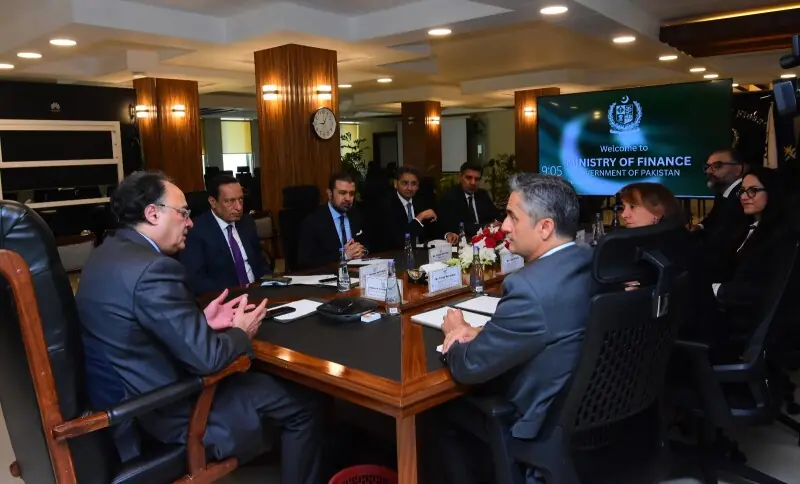
Visa, a global payments technology company, has underscored its commitment to expanding digital payments and promoting financial inclusion in Pakistan, highlighting initiatives to support small and nano businesses and extend QR and tap-to-phone solutions to Tier-2 and Tier-3 cities. The development came during a high-level meeting between Federal Minister for Finance and Revenue, Muhammad Aurangzeb, with a delegation from Visa led by Tareq Muhmood, Regional President for Central Europe, Middle East and Africa (CEMEA), read a statement on Thursday. Both sides exchanged views on the acceleration of Pakistan’s digital transformation, with particular emphasis on digital infrastructure, payment systems, and the digitisation of government payments. “The Visa delegation shared insights from their engagement with banks, fintechs, and other stakeholders in Pakistan, noting strong confidence driven by macroeconomic stabilisation and growing interest in expanding digital payments, financial inclusion, and innovation. Pakistan explores tokenisation of real-world assets to strengthen capital markets “Discussions covered cash displacement, fraud prevention, support for small and nano businesses, QR and tap-to-phone solutions, and the importance of expanding acceptance infrastructure, particularly in Tier-2 and Tier-3 cities,” read the statement. The delegation also emphasised the value of maintaining optionality and competition across payment channels to foster innovation, manage risk, and deliver better outcomes for consumers and merchants. During the meeting, Aurangzeb briefed the delegation on progress made under the IMF-supported program, external validation from international credit rating agencies, and the government’s reform agenda covering taxation, energy, state-owned enterprises, public debt management, and privatisation, including recent steps taken to accelerate the privatisation process. Aurangzeb highlighted that digitalisation is being led at the highest level by the Prime Minister to ensure coordinated, cross-government implementation. He outlined ongoing initiatives, including the establishment of the Pakistan Digital Authority, reforms in payment rails under the State Bank of Pakistan, and efforts to digitise government receipts and expenditures to enhance transparency, efficiency, and service delivery. The meeting also addressed emerging areas such as remittances, e-commerce, tourism-related spending by overseas Pakistanis, and the potential use of new technologies, including blockchain and digital assets, within a regulated framework. Both sides reaffirmed their commitment to continued collaboration, including technical engagement and knowledge-sharing on government payments digitisation and financial inclusion initiatives. The visiting Visa delegation also included Leila Serhan, Senior Vice President, NALIP; Joanne Kubba, Senior Vice President, Government Affairs, CEMEA; Umar Khan, Country Manager, Visa Pakistan; and Nauman Majeed, Visa Government Sales.