


 Tech Advisor
 Can the new Honor Magic 8 Pro dethrone the Pixel 10 Pro’s AI camera? Here’s what I found
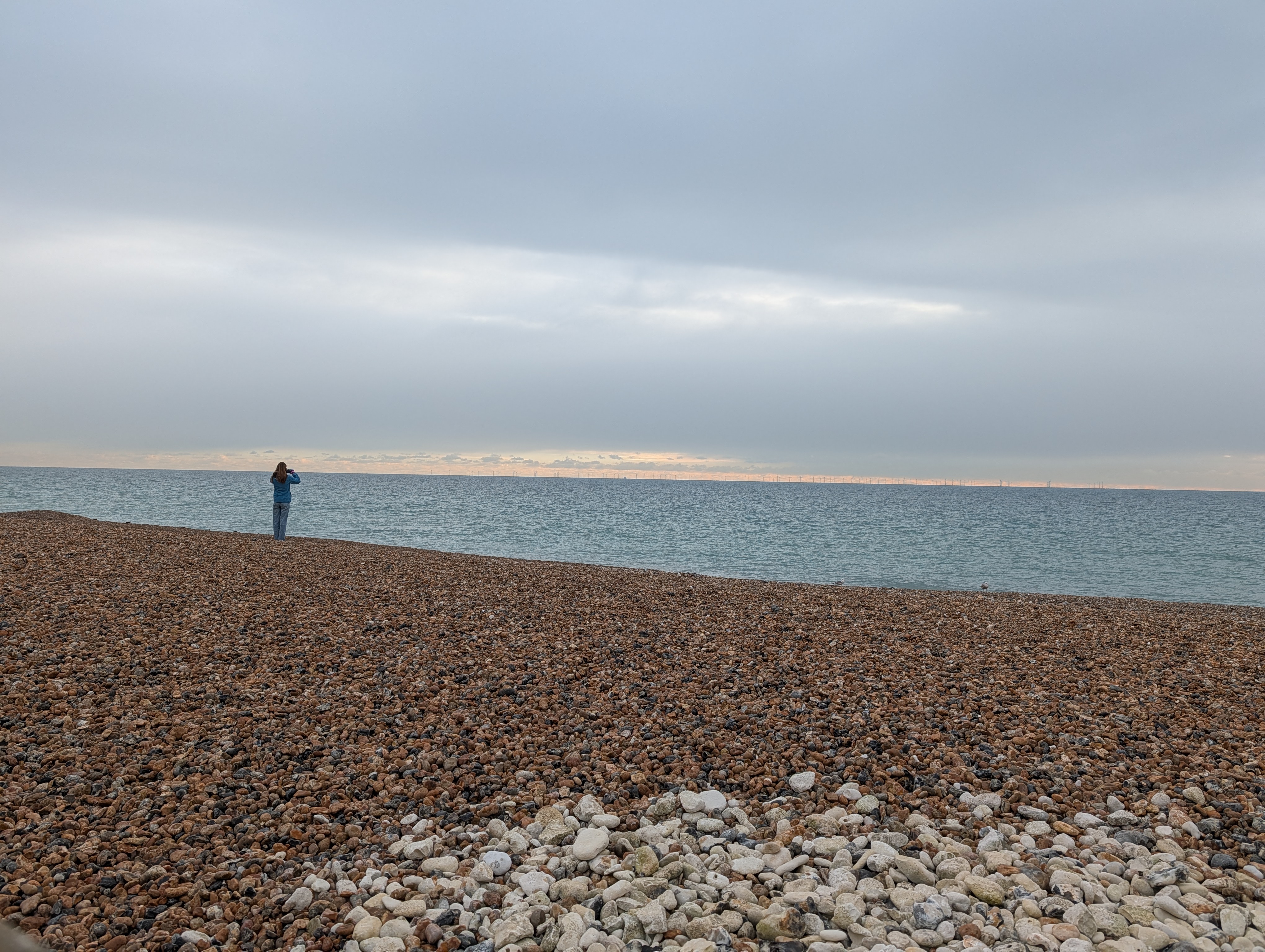
On the surface, Honor’s new flagship phone has a lot in common with Google’s latest. Both the Honor Magic 8 Pro and Google Pixel 10 Pro serve as subtle iterations on their respective predecessors, with almost exactly the same camera hardware as before, and both place a heavy emphasis on AI across photography and beyond. For all their similarities, however, in side-by-side comparisons, each actually delivers a very different camera experience. With the Pixel 10 Pro and Pixel 10 Pro XL , the line’s iconic camera bar plays host to a trio of sensors once again: a 50Mp main, 48Mp ultrawide and 48Mp 5x telephoto snapper, alongside a 42Mp selfie snapper. The main hardware upgrade this generation comes courtesy of a new ISP (image signal processor) within the phones’ Tensor G5 chip, while it’s the software where most of the progress has been made. Leaning even more heavily on generative AI, this generation unlocks the series’ new Pro Res Zoom feature, which allows for up to 100x zoom shots (up from 30x on the Pixel 9 Pro line). As for the Magic 8 Pro, it’s a similar story, albeit with a tweaked 200MP telephoto lens, which now defaults to 3.7x magnification (up from 3x on the Honor Magic 7 Pro). Just like the Pixel, Honor’s AI Super Zoom grants the 8 Pro up to 100x zoom shots as well, with the help of some generative AI magic (no pun intended). Despite similarities in their approach to mobile photography, it’s their differences that will most likely help you decide which best meets your needs and suits your tastes. Check out our shortlist of the best camera phones for some other alternatives too. Note: Unless otherwise specified, shots are presented with the Pixel 10 Pro camera samples on the left and the Magic 8 Pro’s samples on the right. Main Sensor For those who don’t like fussing with features or settings, these samples from the main camera are representative of what you get if you open up the camera app and simply hit the shutter button. Beach There’s no question that the processing each phone applies to its photos is distinctly different. The newer Magic 8 Pro dresses shots with significantly more vibrant colour science and more contrast, compared to the Pixel’s images. It makes for a more impactful first impression that better lends itself to social media without modification, but Pixel takes the technical win. The 10 Pro’s softer contrast is actually thanks to a wider dynamic range, most evident in the cloud detail along the horizon, but also in the shadows around the foreground rocks, which offer significantly more shadow detail compared to the crushed blacks in the Honor shot’s darker areas. Speaking of detail, under scrutiny, the Pixel’s camera also resolves much more detail, despite both phones sporting near identically-sized 1/1.31-inch 50MP main sensors (with the Magic 8 Pro actually boasting the wider aperture of the two). Flag (fast motion) In this high-contrast scene, while the Pixel captures more detail within the fast-moving flag itself, the 8 Pro actually renders more cloud detail, making for a more dynamic image overall. What’s more, the Honor’s penchant for saturation and warmer tones actually produces a better-coloured image overall, especially in the red of the flag itself. Toys (artificial light) As pronounced as the difference in colour science and processing may seem in bright natural light, against artificial conditions, both phones skew even further from one another. The Pixel again provides technical superiority over the Honor images. It’s most evident in terms of white balance, which, although cooler than the real-world lighting conditions the above shot was taken in, means colours are more accurately represented. The Magic 8 Pro’s shot offers comparable detail retention to the Pixel in the foreground, but with poorer quality light to work with, and the camera’s naturally shallower depth of field, details quickly degrade towards the edge of frame. The phone’s emphasis on warmer tones really hinders colour accuracy in this scenario, dressing the whole scene in an overtly orange tint. Macro Most accomplished smartphones (including these two) come with a dedicated macro shooting mode, which typically switches to each phone’s ultrawide sensor to allow for a reduced minimum focus distance (i.e. letting you get closer to your subject). The obvious trade-off is that secondary sensors are, more often than not, smaller and less capable than a phone’s primary camera. As such, below I’ve first taken samples with each phone’s dedicated macro mode disabled, in order to show just how capable their respective main sensors are at macro photography; followed by samples taken using their ultrawide cameras, with macro mode turned back on. Main sensor w/o macro mode Despite a fractionally wider ƒ/1.6 aperture on the Honor (the Pixel 10 Pro’s main sensor sports an ƒ/1.68 aperture), the depth of field and bokeh (background blur) when shooting macro subjects between both phones looks almost identical. The Honor compresses the scene a little more and lets you get marginally closer to your subject, but the Pixel retains much more detail. That’s emphasised by the softness that quickly enters into frame as the subject moves beyond the sensor’s plane of focus on the Honor. The Pixel again demonstrates better colour rendition and more accurate white balance. But in the context of this particular subject, the Magic 8 Pro’s warmer finish grants it a more appealing finish overall. Ultrawide sensor w/ macro mode As for dedicated macro mode shots, using each phone’s respective ultrawide camera, the results appear more similarly styled to one another. The differences in white balance, dynamic range and colour accuracy that have so far set the Pixel apart from the Honor’s results are notably less pronounced here. Detail capture – of particular importance in macro photography – is more comparable, too. Overall, it’s the Honor which delivers the more polished overall shot, mainly via better-looking bokeh (background blur) around the flower. Zoom Honor has touted the zoom capabilities of its flagship phones for several generations, and the most notable upgrade on the previous-gen Magic 7 Pro was a new 200Mp telephoto sensor, backed by the company’s (up to) 100x AI Super Zoom. As mentioned earlier, the only real enhancement to that experience – beyond any algorithmic improvements Honor may have made to Super Zoom over the last year – is the adjustment from 3x to 3.7x optical zoom on that enlarged 1/1.4-inch telephoto camera. The Pixel’s 48Mp 5x OIS-backed telephoto hardware remains seemingly unchanged from its predecessor’s, but Google’s answer to Honor’s AI Super Zoom now features, in (up to) 100x Pro Res Zoom. The Pixel samples taken at 0.5x, 1x, 2x, 5x, 10x, 30x, 50x and 100x, show good consistency between the main and ultrawide sensors, while either due to the shift in sensor or the adjusted metering on a narrower patch of scenery, present the 5x zoom shots and up as a little darker by comparison. Colour rendition is otherwise attractive and accurate throughout the phone’s focal range, while Pro Res Zoom (which kicks in above 30x) does a respectable job of filling in the loss of real-world image data, with a convincing replica of what you’d expect to see. Pixel 10 Pro 100x zoom w/ Pro Res Zoom (left), w/o Pro Res Zoom (right) At higher focal distances, the results appear a little painterly, but when you compare the 100x Pro Res Zoom shot with the unprocessed image – without the AI additions – this stylised finish seems pretty justifiable. The Magic 8 Pro’s delivers consistently bolder results than the Pixel, throughout its full focal range, but rather than a notable shift in exposure – when reaching that telephoto sensor – shots suddenly adopt a magenta tint. Exposure does drop on the 8 Pro too, but in these examples, there isn’t a notable shift in exposure until 15x magnification, and the results are still visually appealing. Magic 8 Pro 100x zoom w/ AI Super Zoom (left), w/o AI Super Zoom (right) The main advantage of that high-resolution 200Mp telephoto sensor is that if you don’t love Honor’s generative AI image processing, there’s still a lot more raw image data to work with. That’s in contrast to unprocessed shots from the Pixel’s 50Mp equivalent snapper. If you do like Honor’s AI processing over Google’s the trade-off is that AI Super Zoom requires an active internet connection to function, and your telephoto shots are partially processed off-device, while Google’s Pro Res Zoom model – once downloaded – runs locally on the Pixel 10 Pro, meaning it’s available with or without an active internet connection. Low light Low-light performance has long been one of the feathers in the Pixel series’ cap, while Honor is placing particular emphasis on improvements to low-light capture with the Magic 8 Pro. Dusk Aside from the messy back garden (it was too cold to go out and clean it before I snapped this test shot; so sue me), it’s evident that the Pixel’s wider dynamic range and more advanced low light processing still grant it the edge over the Honor’s equivalent result in this challenging example. In comparisons with other high-end phones – like the iPhone 17 Pro and Samsung Galaxy S25 Ultra – it’s clear that Google’s colour science and white balance skew towards magenta, but here that results in a more appealing and vibrant shot in spite of the dwindling light. While far from unusable, the Honor’s outdoor shot introduces far more grain, offers up weaker detail retention overall, and colours appear almost desaturated to the point of monochromatic, when placed alongside the Pixel’s efforts. Indoor Without changing from standard Photo Mode, things actually get worse for the Honor when shooting interior scenes with minimal available light. Google’s algorithms do a superb job of retaining details, while accurately representing colours and keeping noise at bay. The Magic 8 Pro’s equivalent shot is a muddy mess by comparison. Despite both shots being taken in low light, the conclusion here is night and day. Night Sight vs Night Mode Using Google’s dedicated Night Sight shooting mode against Honor’s Night Mode on these phones produced more interesting results. The Magic 8 Pro captured a brighter, higher-contrast image with more accurate colour rendition, but Honor’s algorithm clearly struggled when trying to resolve any fine detail authentically, and around those key elements, the shot has been flooded by unwanted grain. The Pixel 10 Pro’s Night Sight scene, meanwhile, serves up flatter contrast and an overtly warm colour treatment, but otherwise resolves detail, and combats artifacting and noise impressively well, despite the extremely dark shooting conditions. Portrait Mode While Portrait Mode on both of these phones defaults to 2x magnification (a crop on the main sensor), I punched out to the main camera’s 1x zoom in both cases. Enabling Portrait Mode places heavier emphasis on rendering convincing bokeh and, by extension, depth in a scene. Separating a crisp subject from the foreground and background is key for a high quality result. Both the Pixel and Honor let you adjust the amount of digital bokeh around your subject both at capture and after the fact, but the results below show each phone’s default settings; with the Pixel emulating a marginally narrower depth of field than the Magic 8 Pro, without tweaking any controls. Both do an admirable job of retaining fine detail, combatting the bright background in the scene and delivering pleasing looking bokeh. The Pixel takes the cake, thanks to more natural focus fall-off, both in front and behind the subject (me). That’s something that the Honor appears to struggle with. By contrast, Honor’s shot demonstrates superior edge detection, with cleaner lines around fine details like the edges of the coat’s material against the pebbles, and the beard hairs on the side of the face. That said, overall, the Pixel still has it. The 10 Pro’s shot offers much wider colour depth and colour accuracy, with the yellow-green tint of the Honor’s colour science really throwing the scene off. Despite disabling the ‘default’ beauty filter that’s enabled on the Magic 8 Pro’s Portrait Mode out of the box, there’s also clear skin smoothing and contouring, that the Pixel handles with greater subtlety, presenting a more natural and detailed looking final result. The only real fly in the ointment here is the Pixel’s limited focal ranges for Portrait Mode, with only 1x and 2x zoom capture available. Compare that to the Honor Magic 8 Pro, which lets you snap portrait-style shots at 1x, 2x, 3.7x, 5.9x and 7.4x, with those higher magnifications intended to better mirror the look and compression of lenses used in professional photographic portraiture. Selfies When it comes to the front cameras, although the 8 Pro touts a higher resolution 50Mp sensor (versus 42Mp), the Pixel offers a physically larger (1/2.55-inch, versus 1/2.93-inch) front camera, with one of the widest fields of view in the business (equivalent to a 17mm focal length). While both phones can automatically detect and crop in or punch out to fit more in-frame, depending on factors like the number of faces recognised in a shot, the Pixel’s front-facer will ultimately let you fit more in. If that isn’t the biggest priority for you, however, than the Honor otherwise delivers, at least in good lighting. The Pixel’s usually superior detail capture appears over-processed when compared with the shot from the front of the Magic 8 Pro. Honor’s latest flagship still delivers excellent detail and, interestingly, doesn’t appear to dress front-facing photos with the same colour science as the rest of the phone’s lenses. While you could dock the phone points for inconsistency, in reality, this means better colours and more accurate white balance. Skin tones also sport more colour depth than even the main sensor Portrait Mode shots delivered. Video When comparing 4K 60fps clips, it looks as though the Honor actually captures footage closer in style to the stills shot on the Pixel. Video appears to adopt a wider dynamic range than you can expect from the phone’s native photo results. Inversely, the Pixel’s video sports more contrast than expected. When paired with its comparatively more subdued, natural colour science, it results in muted, seemingly desaturated-looking footage. Foundry | Alex Walker-Todd Audio recording is roughly equal, with perhaps a little more compression, but better bass capture from the Honor. Both also handle voice recording and wind noise suppression equally well. Neither offers the industry’s best (that accolade most likely goes to the iPhone 17 Pro and Pro Max ), but when zooming in and out during recording, the Pixel will serve up smoother transitions between lenses. Both phones offer optical image stabilisation (OIS) on the main and telephoto lenses. However, vigorous or sudden movements tend to result in jerkier-looking footage from the Honor, compared to the Pixel. The Honor Magic 8 Pro’s video party piece is the option of native 4K 120fps capture, while the Pixel remains limited to 4K 60fps recording. You can shoot 8K with the Pixel, but that requires use of the phone’s Video Boost feature, which involves offloading footage to the cloud for further processing- assuming you trust Google with your media. Verdict As much as Honor shouts about the camera prowess of its latest and greatest, it’s the Pixel 10 Pro which offers technical superiority here. Results from the Magic 8 Pro certainly have potential, and sometimes edge in front of the Pixel for one reason or another, but the phone’s camera is also far more inconsistent. The new Honor phone shares in Google’s penchant for the AI enhancement of shots, but the Pixel does a much better job of blurring where real and generated image data meet, not only with telephoto shots, but in low light too. Where the Magic 8 Pro leads is with its versatility. As well as a more ambitious sensor setup, you have way more shooting options, focal lengths and filters to choose from. Honor has even added an iPhone-like Camera Control-style button to the side of the Magic 8 Pro, which doubles as a camera shortcut, shutter button and zoom control, as well as granting access to the phone’s other AI features. Beyond straight photography, the Pixel 10 Pro features a number of other AI-backed image editing and generation features, as well as Camera Coach, to help those less versed in photography get a better shot. Choose the Pixel 10 Pro for: Consistency & reliability Low light performance AI photo/video enhancement Choose the Honor Magic 8 Pro for: Social media Macro photography Selfies Google Pixel 10 Pro Read our review Price When Reviewed: 1.099 Euro Best Prices Today: 1.099,00 € at Google Related articles Google Pixel 10 Pro XL review Honor Magic 7 Pro camera review: The ultimate phone for photos? Best phones: Our experts pick the top 10 Android & iPhone models Honor Magic 7 Pro review: The gilded lily