


 Dawn.com
 Iran cuts internet amid expanding protests over economy; supreme leaders tells Trump to focus on problems in US
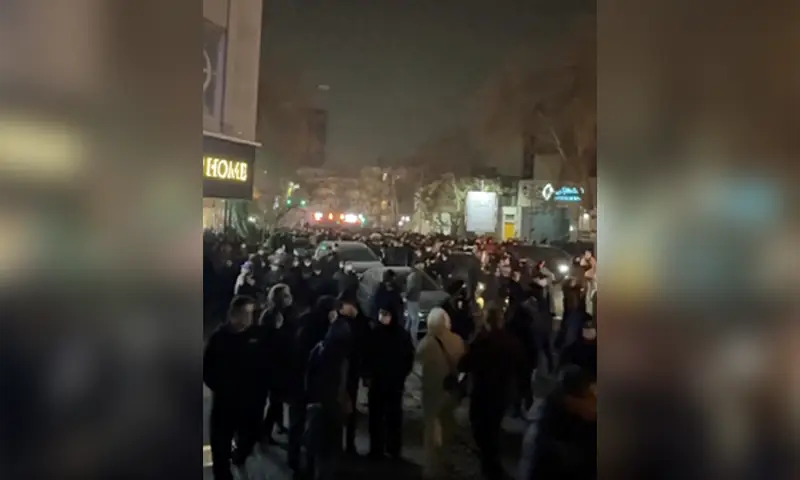
Iran was largely cut off from the outside world on Friday after authorities blacked out the internet to curb expanding protests , with phone calls not reaching the country, flights cancelled and online Iranian news sites only intermittently updating. Supreme Leader Ayatollah Ali Khamenei accused protesters of acting on behalf of US President Donald Trump, saying rioters were attacking public properties and warning that Tehran would not tolerate people acting as “mercenaries for foreigners”. He also told Trump to focus on the problems in his own country. The protests, which began on December 28 over an inflationary spiral, have not approached the scale of unrest three years ago but have spread across Iran with dozens reported dead and the authorities looking more vulnerable because of a dire economy and the aftermath of last year’s war with Israel and the United States. The US-based Human Rights Activists News Agency has reported at least 34 protesters and four security personnel killed, and 2,200 arrested during the unrest. Images of fires raging in Iranian cities Iranian rights group Hengaw reported that a protest march after Friday prayers in Zahedan, where the Baluch minority predominates, was met by gunfire that wounded several people. Iran’s fragmented external opposition factions called for more protests on Friday with Reza Pahlavi, exiled son of the late ruling shah, telling Iranians in a social media post: “The eyes of the world are upon you. Take to the streets.” Trump, who bombed Iran last summer and who last week warned Tehran it could come to the protesters’ aid, said on Friday he would not meet Pahlavi and was “not sure that it would be appropriate” to support him. Images published by state television overnight showed what it said were burning buses, cars and motorbikes as well as fires at metro stations and banks. It accused the People’s Mujahedin Organisation, an opposition faction that splintered off after the 1979 Islamic Revolution and is also known as the MKO, of orchestrating the unrest. A state TV journalist standing in front of the fires on Shariati Street in the Caspian Sea port of Rasht said: “This looks like a war zone — all the shops have been destroyed.” Videos verified by Reuters as having been taken in the capital Tehran showed hundreds of people marching. In one of the videos, a woman could be heard shouting, “Death to Khamenei!” Iran has quelled far bigger bouts of unrest before, but it now faces a graver economic situation and intensifying international pressure with global sanctions over its disputed nuclear programme reimposed since September. Supreme leader warns protesters The authorities have tried a dual approach — describing protests over the economy as legitimate while condemning what they call violent rioters and cracking down with security forces. Parliament Speaker Mohammad Baqer Qalibaf told lawmakers that the voices of protesters must be heard but that any cases linked to “foreign spy networks” must be handled differently. The Supreme Leader, the ultimate authority in Iran above the elected president and parliament, used tougher language in his speech on Friday. “The Islamic Republic came to power through the blood of hundreds of thousands of honourable people. It will not back down in the face of vandals,” he said, accusing those involved in unrest of seeking to please Trump. Khamenei also told Trump to focus on the problems in his own country. The US president had stated earlier that the US was watching the situation in Iran “very closely”. “If they start killing people like they have in the past, I think they’re going to get hit very hard by the United States,” Trump had said. Khamenei said Trump’s hands “are stained with the blood of more than a thousand Iranians” and predicted the “arrogant” US leader would be “overthrown” like the imperial dynasty that ruled Iran up to the 1979 revolution. While the initial protests were focused on the economy, with the rial currency losing half its value against the dollar last year and inflation topping 40 per cent in December, they have morphed to include slogans directly against the authorities. Protesters have chanted slogans including “death to the dictator” and praising the former monarchy that was overthrown in 1979. The extent of support inside Iran for the monarchy or for the MKO, the most vocal groups among emigre Iranians, is disputed. Most of the demonstrators seen in videos viewed by Reuters , many of which it has been unable to verify, have been young men. Iran blocked off the internet overnight. Reuters reporters trying to place phone calls to Iran from abroad were unable to do so on Friday. Flights cancelled At least six flights between Dubai and Iranian cities scheduled for Friday were cancelled, the Dubai Airport website showed. Turkish Airlines on Friday also cancelled its seven flights from Istanbul to Iran — five of them to the capital Tehran, a spokesperson told AFP . The other flights were bound for Tabriz and for Mashhad, the spokesperson said. Turkish Airlines had already cancelled two flights to Tehran on Thursday and one to Tabriz, the spokesperson said. According to the Istanbul airport app, five other flights operated by Iranian airlines have also been cancelled, while seven others were still scheduled at midday. According to the specialist website Flight Radar, a Turkish Airlines plane flying to Shiraz and a Pegasus flight to Mashhad turned back from Iranian space on Thursday night. Turkey shares a border of around 500 kilometres with Iran, and there are three active land crossings between the two countries.