


 The Better India
 From Snake Rescues to Safer Honey Collection: These Heroes Protect the Sundarbans
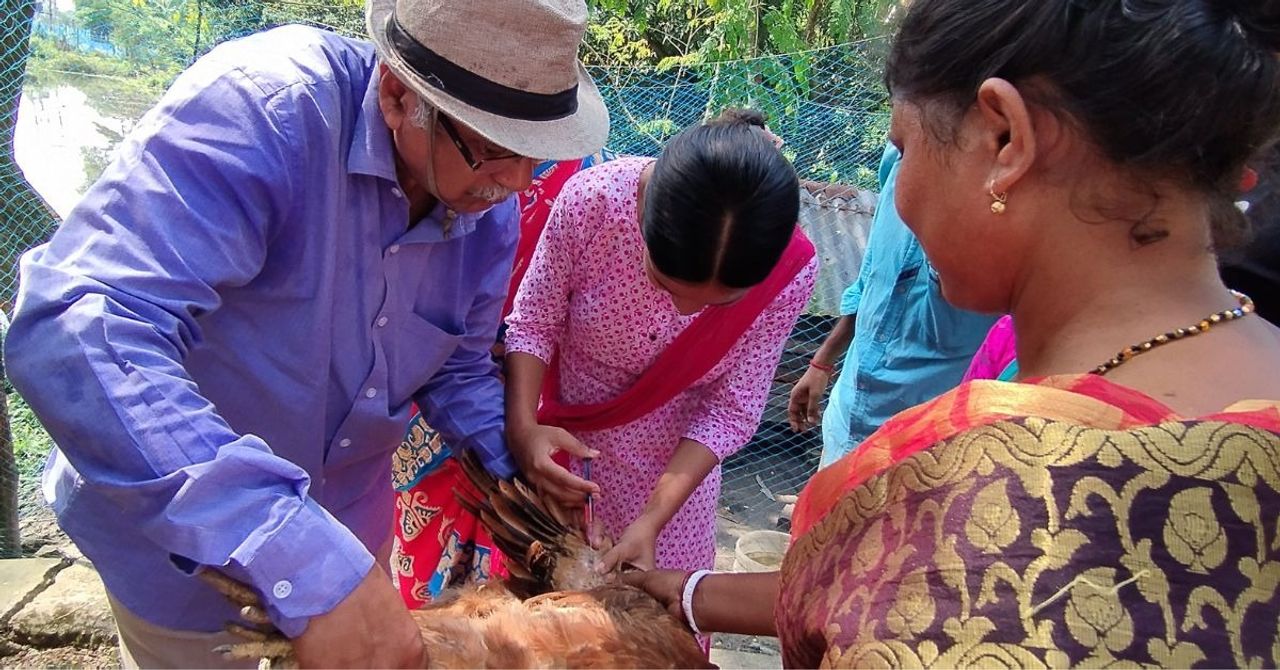
Recently, when a snake slithered into one of the locals’ homes in the Dulki village of Sundarbans, Madhushree Das was the first to be dialled. Within no time, she reached the spot, reassured the family that they had nothing to worry about, rescued the snake, and then handed it over to the Forest Department. For Madhushree, this instinct has become second nature. She is one of 99 local residents known as prokriti bondhus (friends of nature) under WWF-India’s Sundarbans Delta Programme, which has been active since June 2022. The programme equips the prokriti bondhus with the skills and know-how of mitigating human-wildlife conflict , rescuing and handling snakes, and protecting their natural environment. Was Madhushree scared? Absolutely not, the pride in her voice suggests, as she recounts the unfolding of events. These SOS calls give her a sense of purpose. “Knowing that everyone knows me as a prokriti bondhu makes me feel important,” she shares, adding that it isn’t just the locals who place their faith in her but also the Forest Department. Once relegated to household tasks, Madhushree is thrilled to now be in a position where she can serve her community. The prokriti bondhus are trained to have a deep understanding of the landscape and wild of the Sundarbans Soma Saha, Lead – Communities at WWF-India’s Sundarbans Delta Programme, has witnessed this shift in agency and confidence firsthand, having had a front-row seat to the women’s journeys. While bolstering their morale, she says the programme is an extension of a time-tested commitment of the locals towards their land . “Ever since we started working in the Sundarbans in 2005, we observed how tigers and other wildlife would stray into the villages near the forest, and people in these villages would voluntarily support the Forest Department, helping the wildlife safely return to the forest while ensuring no harm to humans,” she explains. These observations inspired the Prokriti Bondhu programme in the delta. “The objective was simple: to help the volunteers who used to spontaneously support the Forest Department continue their work, while also helping the local people during these incidents of wildlife straying into human territory,” she adds. Rescuing the snakes of the delta A part of the world’s largest delta, and spanning roughly 10,000 sq km (out of which about 4,000 sq km is in West Bengal, India), the Sundarbans are known for being the world’s largest single patch of tidal mangrove forest , home to around 50 reptile species and more than 30 mammal species. But while the untrained eye spots just the beauty, the locals know better. And when Soma and her team ventured into the delta in the early 2000s, they understood why these natives lived in a constant state of uncertainty. The Sundarbans is the world's largest contiguous mangrove forest “We saw the vulnerability the land was experiencing due to climate change, and poor infrastructure, transport facilities, healthcare systems, and limited livelihood opportunities; these caused the locals to depend on natural resources,” Soma shares. This, she adds, often results in human-wildlife conflict. Soma is referencing the deaths due to tiger attacks. While official records are sparse, estimates suggest that 300 people have died in such attacks since the year 2000. But while tragic, news of deaths due to tiger attacks often eclipses another crisis — deaths caused by snake bites, which receive far less attention despite being a significant public health issue. In fact, as a conversation with Padma Shri Dr Arunoday Mondal , who treats over 12,000 patients in the Sunderbans every year through his free medical service centre Sujan, shares, snake bites are a growing concern in the delta. Despite the government arranging anti-venom facilities, the doctor says the supply does not suffice. “In my experience, I have witnessed 30 people dying of snake bites every year,” he notes. Cognisant of how the delta’s untamed reality is a challenge to the people living here, WWF-India came up with the idea of turning the locals into safeguards of their own. To combat the problem of deaths due to snake bites , Soma says the prokriti bondhus are given live snake training and handling. She adds that their intervention has significantly helped put the locals' fears at ease. The prokriti bondhus are also trained in carrying out surveys using digital technologies “Previously, when people spotted a snake, they would either kill it or call the Forest Department. In cases where the Forest Department officials took time to reach the site, the locals, not knowing what to do, would eventually kill the reptile,” she shares. Not only did these attacks result in snakes being killed in large numbers, but they also gave the locals sleepless nights. But that is slowly changing, as one of the prokriti bondhus , Priyanka Mandal, shares. Having once feared the forest and snakes herself, Priyanka’s understanding of the wild has now deepened, and she credits the WWF-India programme for this, which empowers the prokriti bondhus to educate the community about the ecological importance of the reptiles. Priyanka wasn’t deterred when she learnt that the opportunity was purely voluntary; in her opinion, being taught to safeguard her land was as good an incentive as any. How the prokriti bondhus are ensuring a safer ecosystem The work of the prokriti bondhus is evident across 46 forest fringe villages in the Sundarbans. One call and they spring into action. But their work isn’t easy; it often involves dodging the pitfalls of the wild while attempting to perform their duties. Despite the nature of the job, the willingness of these prokriti bondhus surprised Soma and her team when they first set out to develop a cadre of volunteers. They distributed 10 application forms in each of the 46 forest fringe villages; over 360 people applied. WWF-India then organised village-level meetings where the applicants presented their motivations behind wanting to volunteer. Based on the presentations, 99 applicants were selected, out of which 42 per cent are women. After ensuring their families' support, in collaboration with the Forest Department, WWF-India started arranging training sessions. The trainings include the know how on mitigating human wildlife conflict Among the training imparted to them were: Identifying hoof marks and pug marks of wild animals Volunteers were taught the dos and don’ts during wildlife straying incidents Guidance was provided on whom to contact in case of such incidents Training covered the identification of different snake species Volunteers learned live snake handling techniques Dos and don’ts during snake bite incidents were also part of the training Things to remember while applying for ex gratia due to human-wildlife conflict All volunteers are covered under the Government of West Bengal’s universal basic health insurance programme, Swasthya Sathi. The prokriti bondhus are given live snake handling training Since the inception of the initiative, these prokriti bondhus have conducted 75 wildlife rescue operations (which included venomous snakes) and helped the WBFD officials during 10 tiger straying incidents, Soma shares. Meanwhile, WWF-India helps the prokriti bondhus with their livelihoods through a detailed engagement plan that supports their voluntary service while strengthening their skills and income opportunities . The prokriti bondhus are also trained in survey techniques. WWF-India assists the prokriti bondhus with vaccinations for the poultry and animals This is by way of providing capacity building on livestock rearing, including vaccination, along with hands-on training on goat breed improvement through artificial insemination. To support sustainable agriculture, agro-meteorological advisories are shared, which enable low-cost crop production. Beyond coexistence A WWF report underscores the dangers of collecting wild honey, an activity that’s rampant in the Sundarbans, with its vast mangrove ecosystem providing an untouched, diverse floral source for wild bees. The report suggests that this collection of ‘blood honey’ (referring to approximately five honey collectors dying every year in the Sundarbans due to conflict with tigers) accounts for about 34 per cent of deaths. In a bid to reduce this, WWF-India joined hands with the Sundarbans Biosphere Reserve (SBR) Directorate to come up with a plan. The project was conducted in the Lothian Wildlife Sanctuary in March 2017; five moulis ( traditional honey collectors ) were encouraged to place the apiary boxes (where beehives of honey bees can be kept and bred) in the fenced-off areas of Sundarbans as opposed to wild honey collection. The results indicated that the daily yield of honey from each apiary box was nearly double that of what was collected from wild bees, proving the exercise successful. This led to the formation of cooperatives in and around the Sundarbans, three of which sell their honey under the brand name Bonphool Wild Honey. While these and many other initiatives are helping create a safer environment in the Sundarbans delta, the prokriti bondhus remain at the heart of these efforts. This is reflected in the experiences of women like Shashthi Mandal, who says that the best part of being part of such a network is the strong sense of sisterhood it brings. “We work on so many rescues together, but doing it with other women makes me happy. It makes me proud.” This story is part of a content series by The Better India and WWF-India. All pictures courtesy WWF-India Sources 'Current Status of the Sundarban Snake Fauna and Assessment of Conservation Threats' : by Chandan Surabhi Das, Published in March 2015. ' At 70, Padma Shri Doctor Travels 160 Km Every Weekend To Treat Villagers For Free' : by Krystelle Dsouza, Published on 23 November 2023. 'Their husbands were killed by tigers. Now these women are restoring the big cat’s habitat' : by Nell Lewis, Published on 16 December 2025. Swasthya Sathi 'Pattern and Characterisation of Human casualties in Sundarban by Tiger attacks, India' : by Chandan Surabhi Das, Published in September 2018.