


 Dawn.com
 Policy pivot for the smallholders
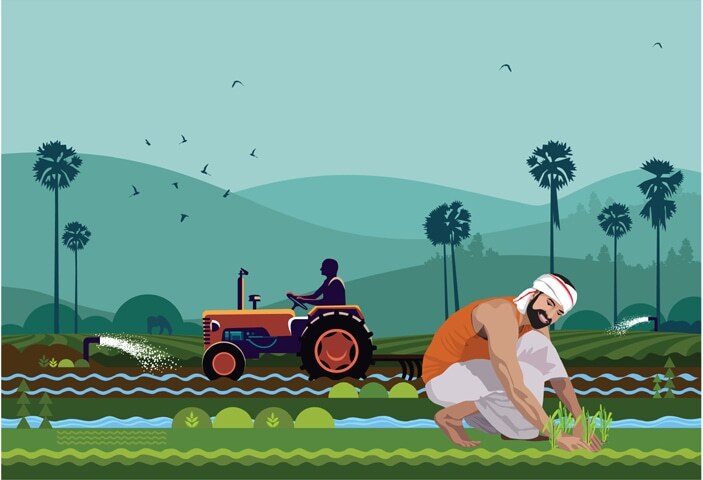
Pakistan’s agriculture sector is undergoing a structural change: farm sizes are shrinking at an alarming rate. This is thanks to intergenerational land division driven by high population growth and the encroachment of rapidly expanding — predominantly horizontal — housing colonies onto agricultural land, in almost every city and town. The 7th Agricultural Census of Pakistan 2024 reveals that the number of farms has increased from 8.26 million (2010) to 11.7m (2024), while the average farm size has shrunk to just 5.1 acres. Currently, 97 per cent of farmers own less than 12.5 acres, and around 61pc cultivate even less than 2.5 acres. In other words, with the exception of roughly 3pc, Pakistan’s agriculture sector is now entirely comprised of small farms. This reality has important implications for Pakistan’s agricultural policymaking. The challenges faced by smallholders are fundamentally different from those faced by medium and large farmers. Moreover, their challenges are intensifying day by day due to technological changes, climate change, rising production costs, and shifting market dynamics. Therefore, the business-as-usual approach will not work, and the time has come for a paradigm shift away from the decades-old approach that has traditionally served medium and large farmers. The need for such a policy shift becomes clearer through two examples. After discontinuing the wheat support price and withdrawing from direct procurement from farmers, Punjab — which produces about 76pc of the country’s wheat — is now relying on the electronic warehouse receipt system (EWR) to fill the policy vacuum left by the government’s exit. Tractor distributions are not enough, especially for the often overlooked millions of farmers with land under 2.5 acres However, by its very design — including warehouse locations and procedural requirements — the EWR is better suited to large farmers and stockists. Smallholders, who often have less than a truckload of saleable quantities, find it difficult to participate. As a result, the EWR fails to serve smallholders, who continue to look to the government for marketing support that can protect them from exploitative middlemen and arthees, as well as from market risks, particularly since they lack both financial resources and storage facilities to hold their crops. Another major challenge for most small farmers is the lack of two basic necessities: a tubewell for irrigation and a tractor for land preparation. Due to limited financial capacity and low utilisation factor, most smallholders cannot justify such investments. Consequently, they rely on costly rental services, which significantly increase their production costs. Moreover, service providers of combine harvesters, rice harvesters, and other expensive machinery often give low priority to smallholders, provide services late, charge higher rates, or supply poorly maintained old machines, resulting in high harvest losses. The government’s ballot-based distribution of a few thousand tractors — available to farmers owning five-plus acres — does not solve the smallholders’ problems. A tractor alone is not sufficient; farmers also need expensive implements costing millions, like cultivators, disc harrows, and rotavators. High maintenance costs further make tractor ownership a major challenge for smallholders. The challenges faced by smallholders do not end here. They have limited access to finance and extension services, and often receive poor-quality seeds and spurious agricultural inputs that adversely affect crop yields and, consequently, their profitability. Therefore, in this evolving agricultural landscape, where farm sizes are steadily shrinking, Pakistan needs smallholder-centric policies that address their specific challenges, safeguard their interests, and promote their well-being. Given the millions of farms, the government is increasingly constrained in service delivery. Smallholders, therefore, need to be connected through an organisational framework that enhances their market access, enables shared resources, and strengthens collective bargaining. To that end, in Pakistan’s context, the government should promote at least the following two: First, contract farming is a private sector led business model. The model has already been successfully adopted in Pakistan by several national and multinational companies, including Rafhan Maize, sugar mills, PepsiCo, seed companies, and others, proving that it has the potential to address many smallholder challenges. Under contract farming, companies typically provide farmers with quality seeds, inputs, and advisory services, while procuring produce at pre-determined rates. It is now imperative for the government to formulate policies that create an enabling environment for contract farming in the country; in particular, a speedy, out-of-court conflict resolution mechanism. Second, the decades-old cooperative system. This is a time-tested concept successfully practised in several countries, including India. In Pakistan, while the concept is not new, there is a need to introduce new customised variants for the country’s evolving agricultural landscape. Cooperatives enable joint ownership of machinery and equipment, as well as collective purchasing of inputs and marketing of produce, which enhances farmers’ bargaining power and helps secure better prices. In Pakistan, social divisions such as ethnicity, language, caste, or political differences may sometimes hinder farmers from collaborating. However, in several countries, the day-to-day management of sizeable cooperatives is handled by professional managers rather than by the farmers themselves. In Pakistan, alongside the already cultivated areas, millions of acres remain barren and underdeveloped in regions such as Cholistan, Thal, Tharparkar, Balochistan, etc. Developing these lands is beyond the capacity of smallholders and is feasible only through corporate farming, as companies possess both the technical expertise and financial resources to do so on a large scale. Khalid Wattoo is a development professional and a farmer, and Dr Waqar Ahmad is a former associate professor at the University of Agriculture, Faisalabad. Published in Dawn, The Business and Finance Weekly, January 12th, 2026