


 Business Recorder
 Bangladesh’s political crossroads: an election guide
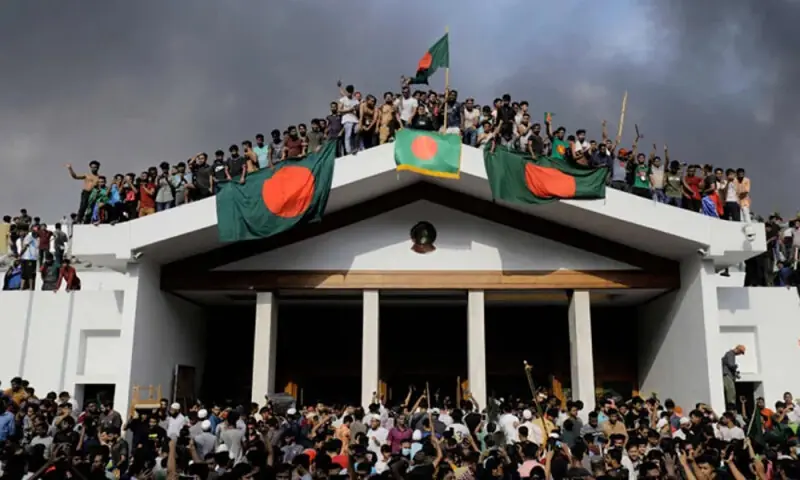
DHAKA: Bangladesh has been in political turmoil since a student-led revolt overthrew former prime minister Sheikh Hasina in August 2024, ending her 15-year autocratic rule. The Muslim-majority nation of 170 million people will hold its first elections since the uprising on February 12. Bangladesh declares three-day state mourning for ex-PM Zia Here are the key players in a vote that European Union election observers say will be the “biggest democratic process of 2026, anywhere”. Interim government Nobel Peace Prize winner Muhammad Yunus, 85, returned from exile in August 2024 at the behest of protesters to lead a caretaker government as “chief advisor”. He will step down after the polls. Yunus said he inherited a “completely broken” political system, and championed a reform charter he argues is vital to prevent a return to authoritarian rule. At least 73 killed as clashes rock Bangladesh, curfew imposed A referendum on the proposed changes will be held on the same day. He says the reforms will strengthen checks and balances between the executive, judicial and legislative branches. Bangladesh Nationalist Party (BNP) The BNP, led by Tarique Rahman, 60, is widely tipped to win the election, after he returned from 17 years of self-imposed exile in December 2025. Student leader release fails to quell Bangladesh protests His mother, the BNP’s veteran leader and former prime minister Khaleda Zia, died aged 80, days after his return. A BNP-led alliance includes both leftist and centrist parties, as well as small Islamist groups. Islamist-led alliance Jamaat-e-Islami, the country’s largest and best-organised Islamist party, ideologically aligned with the Muslim Brotherhood, is seeking a return to formal politics after years of bans and crackdowns under Hasina’s 15-year rule. Jamaat is leading an alliance of more than 10 smaller parties, including the National Citizen Party (NCP), formed by student leaders who spearheaded the uprising. Sheikh Hasina flees Bangladesh, ‘heading to London’ as military takes over It also includes the small Liberal Democratic Party, as well as fringe Islamist parties, most of which held only a handful of seats in previous parliaments. Bangladesh – one of the world’s most populous Muslim-majority countries after Indonesia and Pakistan – is home to diverse strands of Islamic practice, including a significant Sufi community often condemned by hardline Islamists. Bangladesh also has a small Shia community. Around 10 percent of Bangladeshis are not Muslim – the majority of those are Hindu and the country is also home to a small number of Christians. Awami League Hasina, 78, a fugitive in India, was sentenced to death in absentia for crimes against humanity in November. Her former ruling Awami League, once the country’s most popular party, has been outlawed. Loyalists may run as independent candidates, but it is unclear who the party’s once sizable membership will back. Bangladesh says at least 287 killed during Hasina-era abductions Human Rights Watch condemned the ban as “draconian”, while Hasina has warned that holding elections without her party would be “sowing the seeds” of further division. Army In a country with a long history of military coups, the army remains a pivotal force. It played a decisive factor in Hasina’s downfall, choosing not to intervene against the protests. Who is the Bangladesh army chief who announced Hasina’s resignation? The military continues to patrol the streets, maintaining a visible presence alongside the police. International players Regional powers have taken a keen interest. Bangladesh’s relations with India – once Hasina’s strongest ally – have cooled. Who is the Bangladesh army chief who announced Hasina’s resignation? Yunus’ first state visit was to China, signalling a strategic shift, while Dhaka has also deepened engagement with Pakistan, India’s arch-rival.