


 The Advocate
 I loved Mister Rogers. Then I learned who he asked to stay closeted
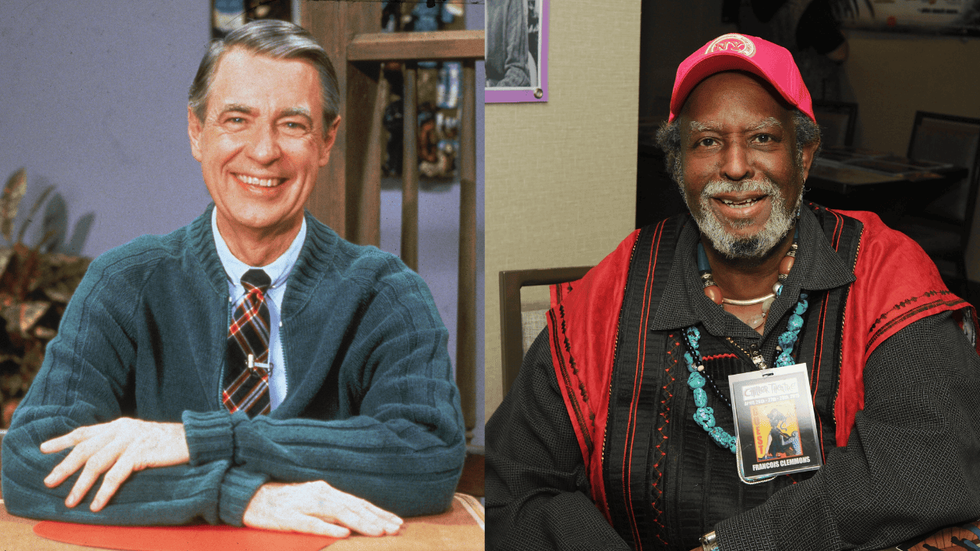
I have watched Mister Rogers' Neighborhood at several points in my life, well past the target age range of two to five years old. Mr. Rogers is a virtual companion to millions in childhood and beyond, speaking the words of love and acceptance we all long to hear through gentle teachings that serve up the ABCs of compassion and empathy. He encourages curiosity and is willing to go all in, even when he sometimes looks silly. Silly is a marker of triumph in his neighborhood. We would all do well to watch Mister Rogers for valuable life lessons. A few years ago, I watched a documentary about Fred Rogers. François Clemmons , a Black man known as Officer Clemmons on the television show, was interviewed about a famous scene in which Mr. Rogers invites Officer Clemmons to take off his shoes and socks and join him, their feet soaking together in the cool water of a children's plastic swimming pool on a hot summer day. A black man sitting next to a white man soaking their feet in the same water in 1969 was a clear commentary on racism and segregation. At the time, it was revolutionary. François has also told the story of being a gay man in the 1960's in Pittsburgh . Fred, his boss, advised François that he could not be seen at a gay bar or be publicly known as a gay man and continue to be on the children's television show because the social stigma would jeopardize the future of the show. François also reported that Fred encouraged him to marry, thereby straightening out his life and image. Watching François tell the story, I was dumb struck. Like a sucker punch landed in the middle of my chest. How could someone as devoted as Mr. Rogers to encouraging acceptance tell a person to deny his authentic self, hide who he was, and involve an unwitting person in the process by urging François to marry? Clemmons married a woman and later divorced. François later clarified that he felt Fred's counsel was not a personal rejection, but a reflection of the times. He believed Fred loved him, and he loved Fred, who was a father figure to him. He also reported that, eventually, he was personally accepted as a gay man by Fred. But not on the show. For me, the vicarious damage was done, echoing a message I and others in the LGBTQ+ community hear reverberating through the air around us: I like you just the way you are, but… In 1975, Mr. Rogers invited Margaret Hamilton, the actress who played the Wicked Witch of the West in the original Wizard of Oz movie, to his neighborhood. As they talked, Margaret slowly put on the black witch costume over her feminine pink street dress and demure strand of white pearls. The transparent transformation made the wicked witch less scary for children. Maybe Mr. Rogers should have also invited Billie Burke, who played Glinda the Good Witch, to his show. Rumor has it that Ms. Burke had an intimate relationship with lesbian director Dorothy Arzner. What if Mr. Rogers had made loving relationships between two women less scary for kids and adults in 1975? What if Officer Clemmons was known as a Black gay man? That would also have been revolutionary and perhaps life-saving for someone watching. Realistically, these actions would likely have ended the show, but that does not lessen the pain I feel. Fred Rogers himself said, "little by little we human beings are confronted with situations that give us more and more clues that we aren't perfect." We don't know what Mr. Rogers would say today or who he would welcome to his television neighborhood. My hope is that his attitudes and actions would have evolved. Maybe there would be a Safe Space sticker on his front door. He would greet François as a gay man with a husband, maybe wearing a rainbow lapel pin on his uniform. And his guests would include the new Wicked witch – queer Black actress Cynthia Erivo - sending a message of acceptance and support to millions of children and adults. Instead of these imagined events, we can take Mr. Rogers' words of wisdom and make them our own truth within a community ethos of caring for each other as good neighbors. After all, as Fred Rogers said, “the greatest gift you ever give is your honest self.” Ellen D.B. Riggle is an award-winning researcher, educator, and author, and Executive Producer of the short documentary, “Becoming Myself: Positive Trans & Nonbinary Identities.” Voices is dedicated to featuring a wide range of inspiring personal stories and impactful opinions from the LGBTQ+ community and its allies. Visit Advocate.com/submit to learn more about submission guidelines. We welcome your thoughts and feedback on any of our stories. Email us at voices@equalpride.com . Views expressed in Voices stories are those of the guest writers, columnists, and editors, and do not directly represent the views of The Advocate or our parent company, equalpride.