


 Dawn.com
 Discos resort to forced loadshedding as shortfall surges to 4,000MW
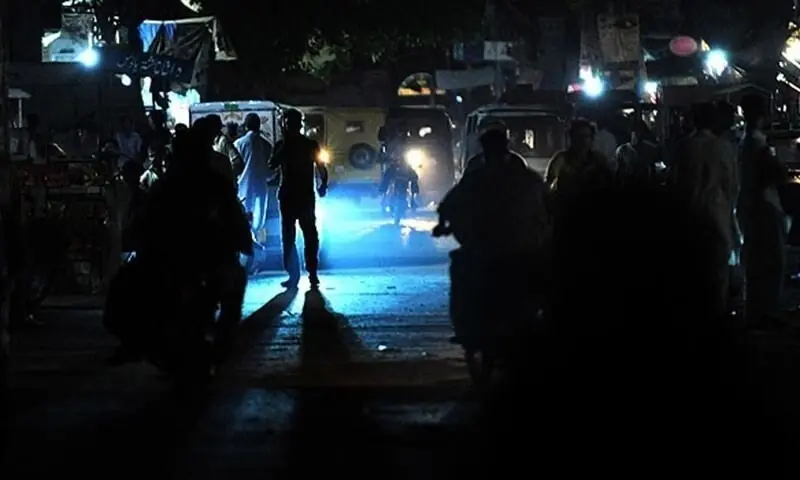
LAHORE: The power distribution companies (Discos) have started forced loadshedding across the country after the electricity shortfall surged to nearly 4,000 Megawatts, including 1,000MWs in the Lahore Electric Supply Company (Lesco) alone, comprising five districts. According to official sources, the situation has been persisting for the last many days due to dense fog causing repeated tripping of various power plants in the southern region, while the hydel power generation remains negligible in the ongoing winter. “When we compare the situation with the previous year’s, the electricity demand has increased by approximately 2,000 MW during the winter, owing to the extensive use of heating appliances,” the official, who requested anonymity, explained while talking to Dawn on Monday. In addition, he said, the reduction in the gas supply to Lahore-based power plants, along with the closure of one unit at the Sahiwal Coal Power Plant, has further constrained the generation capacity, leaving Discos with no option but to resort to loadshedding in Punjab, Sindh and other provinces. According to another official source, the situation has worsened over the last 4-5 days after a couple of power plants in the southern region went off grid due to the tripping caused by dense fog. “From these plants, the Matiari-Lahore High Voltage Direct Current (HVDC) transmission line supplies power to Punjab, especially Lahore,” he maintained, adding that the situation is expected to improve in the coming days as the work is underway to restore these plants. On the other hand, the consumers are suffering because of the hours-long forced loadshedding — three to six hours in the urban areas and six to 10 hours in rural areas of Punjab, Sindh and other provinces. “In Sukkur city, forced loadshedding has been continuing for three to five hours daily. But the rural areas, especially in the interior Sindh, are facing eight to twelve hours loadshedding on a daily basis these days,” a Sukkur-based consumer told Dawn. According to a Lahore-based consumer, the forced loadshedding is being observed for three to six hours on a daily basis in the city these days. “For the last couple of days, we are also experiencing shortage of water supply from the Water and Sanitation Agency (Wasa), due to the non-operation of tube-wells because of the loadshedding. This has also resulted in unavailability of warm water in this chilly weather,” he complained, asking the government to intervene and ensure uninterrupted electricity and gas supply. Meanwhile, Lesco also continued observing forced loadshedding for hours in Punjab capital and the adjoining districts following a shortfall of over 1,100MW in its total consumption of over 3,200MW in peak hours. Since the power shortfall has emerged due to lesser allocation from the national grid, Lesco Chief Executive Officer (CEO) Ramzan Butt says the company has no option but to go for loadshedding in such a situation. “At present, the hydel power generation is zero. Meanwhile,the consumers earlier using the solar net-metering system, have also returned to the Lesco’s system due to non-generation by their solar power equipment because of the dense fog. Moreover, we have no supply from those selling solar power to us through net metering. Likewise, various power plants went off the grid due to tripping caused by the harsh foggy weather,” he explained. “This all led to power shortfall in our total consumption,” he added. The Lesco CEO said that at 7:45pm (Monday), the total demand of Lesco, which covers Lahore city district and the districts of Kasur, Okara, Sheikhupura and Nankana Sahib, was 3,241MW, whereas the supplies from the national grid was 2,160MW, resulting in a shortfall of almost 1,100MW. Published in Dawn, January 13th, 2026