


 Dawn.com
 Govt allows re-export of transit cargo
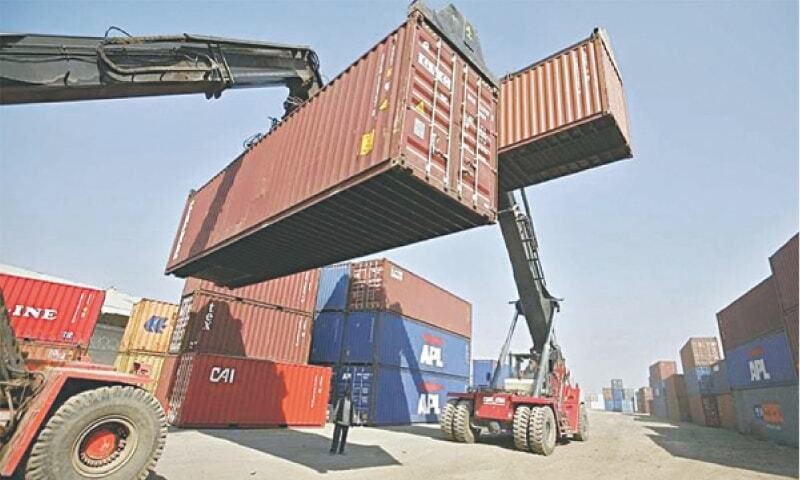
ISLAMABAD: The government has allowed the re-export of transit cargo stuck at Pakistani ports to save Afghan importers from rising demurrage charges. At a time when there is no indication that the border with Afghanistan will reopen soon, importers engaged in Afghan Transit Trade (ATT) have requested that the Ministry of Commerce grant a one-time waiver for the re-export of over 6,500 containers stuck at Karachi ports, as they are incurring rising demurrage charges. The need for re-export arose after the border crossing between Pakistan and Afghanistan was closed on Oct 11, 2025 leading to a near-complete halt of bilateral trade and movement of transit cargo. Pakistan-Afghanistan relations have deteriorated amid tensions over the banned Tehreek-i-Taliban Pakistan (TTP). After successive rounds, Pakistan declared the talks effectively over on Nov 7, after which Afghanistan suspended trade ties. Pakistan had already closed its border following the October clashes. Over 6,500 containers stuck at Karachi ports since closure of Pak-Afghan border in October “Yes, we have issued letters to individual importers who are approaching the ministry to re-export their cargo,” an official at the Ministry of Commerce told Dawn on Tuesday. The official added that the commerce minister had the power to grant a one-time exemption. Interestingly, the commerce ministry has not officially announced the decision but has begun issuing letters to intended importers who approached the ministry for re-export permission. The largest number of stranded containers — approximately 3,000 — originates from Malaysia and contains palm oil intended for edible use in Afghanistan. “We have already issued letters to most palm oil importers to re-export their containers,” the official said. But he declined to specify the exact number of palm oil containers approved for re-export. Re-export is subject to approval from the Ministry of Commerce on a case-by-case basis. A customs official told Dawn that the number of containers stranded at the Chaman and Torkham borders was not big, ranging between 600 and 700. Instead, the bulk of transit cargo was stuck at the two ports in Karachi. Envoys’ plea to Islamabad The cargos, sourced mostly from China and Vietnam, are currently stranded at Karachi, the official said. He added that the ambassadors of these countries had approached the government to seek approval for re-export. Following these consultations, the government has decided to allow all importers to re-export their cargo from Karachi. This move offers Afghan importers an opportunity to use alternative ports or routes to transport their goods to the Afghan market. This decision, according to the official, will allow importers to use other ports for the transportation of their goods to Afghanistan. On Dec 3, Islamabad allowed clearing of consignments imported on humanitarian grounds. In the first phase, 143 containers carrying such goods were given permission for transit at Chaman and Torkham. A breakdown shows that 67 of the containers carried assistance from the World Food Programme, 74 were loaded with supplies for children donated by Unicef, and two containers had healthcare and family support items from another UN agency. According to the customs official, since the Taliban government has barred the entry of these containers, none had crossed the border for the past three months. The volume of Afghan imports transiting through Pakistan has declined sharply over the past two years falling to $2.4 billion in FY24 from $6.7bn in FY23, and dropping further to $1.01bn in FY25. With the current suspension of trade, industry estimates suggest the figure could slip below the $1bn mark during the current fiscal, deepening the shift in Afghanistan’s import routes and suppliers. Published in Dawn, January 14th, 2026