


 Dawn.com
 Trump eggs on protesters as Iran presses charges
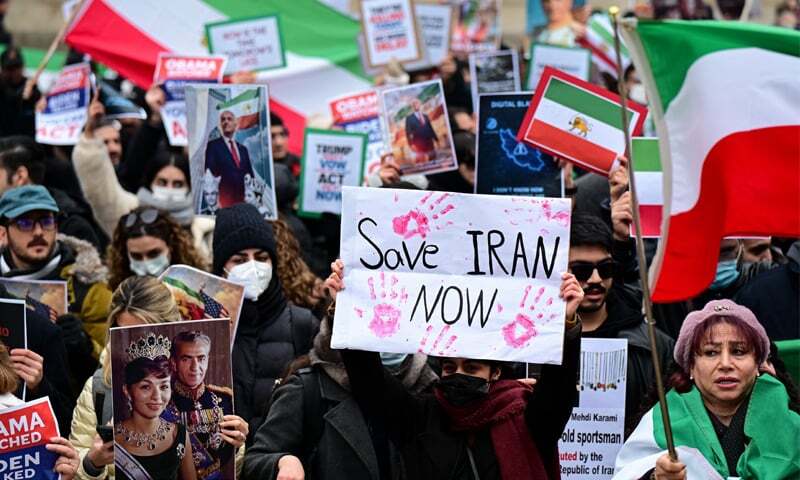
• US president says Iranians ‘will have to figure it out’ themselves, cancels all engagement with Tehran • Oil prices rise after Trump slaps 25pc tariffs on states doing business with Iran • Iranian official puts death toll from unrest at 2,000 • World leaders react to tariff imposition, ‘horrific deaths’ WASHINGTON/DUBAI/DOHA: Iranian authorities will press charges punishable by death against some individuals arrested during recent demonstrations, prosecutors said on Tuesday, even as US President Donald Trump urged Iranians to keep protesting, saying help was on the way. “Iranian Patriots, KEEP PROTESTING — TAKE OVER YOUR INSTITUTIONS!!!… HELP IS ON ITS WAY,” Trump said in a post on Truth Social, adding he had cancelled all meetings with Iranian officials until the “senseless killing” of protesters stopped. But when asked to expand on his message to protesting Iranians, he said: “You’re going to have to figure that one out. I’m sorry.” Following the US president’s post, Iranian security chief Ali Larijani said on social media platform X that Trump and Israeli Prime Minister Benjamin Netanyahu were the “main killers” of the Iranian people. The message came hours after Trump slapped 25pc import tariffs on products from any country doing business with Iran — a major oil exporter. The move triggered movement in global markets, with oil prices surging by about 3pc on Tuesday as the prospect of disruptions to Iranian crude exports overshadowed possible increased supply from Venezuela. While foreign monitors continued to speculate on the number of casualties from the crackdown on recent anti-government protests, Reuters quoted an Iranian official as saying that around 2,000 people had been killed. The official blamed “terrorists” for the deaths of both protesters and security personnel, but did not give a breakdown. Iran’s authorities have tried to take a dual approach to the demonstrations, calling protests over economic problems legitimate while enforcing a harsh security crackdown. The office of the Tehran prosecutor said in a statement quoted by state television that an unspecified number would be charged with “waging war against God”. “The government sees security forces and protesters as its children. To the best of our abilities, we have tried and will try to listen to their voices even if some have tried to hijack such protests,” government spokesperson Fatemeh Mohajerani said on Tuesday. Communications restrictions including an internet blackout over recent days have hampered the flow of information. The UN rights office said on Tuesday that phone services had been restored but internet links with Iran remained patchy. Addressing the blackout, Iranian Foreign Minister Abbas Araghchi told Al Jazeera : “The government was in dialogue with the protesters. The internet was cut only after we confronted terrorist operations and realised orders were coming from outside the country.” Videos of nighttime clashes between demonstrators and security forces over the past week, including several that were verified by Reuters , have shown violent confrontations with gunfire and burning cars and buildings. World wary World leaders and capitals also weighed in on the tensions simmering in the Islamic Republic, as well as the confusion surrounding the protests and the possible fallout from Trump’s tariff imposition. Qatar said Tuesday that a military escalation between the United States and Iran would have grave consequences for the region, while China vowed to safeguard its legitimate rights and interests, in the context of President Trump’s punitive tariff announcement. “We have always believed that there are no winners in a tariff war, and China will resolutely safeguard its legitimate rights and interests,” foreign ministry spokeswoman Mao Ning told a regular news conference when asked about Trump’s levy announcement. Russia also condemned what it described as “subversive external interference” in Iran’s internal politics, saying any repeat of last year’s US strikes would have “disastrous consequences” for the Middle East and international security. In a call with Iran’s Supreme National Security Council Secretary Ali Larijani, Qatari PM Sheikh Mohammed bin Abdulrahman al-Thani expressed Doha’s support on Tuesday for “all efforts aiming to de-escalate and peaceful solutions”. The Qatari foreign ministry said the two men had discussed the latest regional developments, without directly mentioning ongoing protests that have convulsed Iran. In addition, the UAE Minister of Foreign Trade Thani Al Zeyoudi said on Tuesday it is unclear how President Trump’s announcement of tariffs on countries trading with Iran will be implemented and whether it will impact food imports. Sanctions Saying that he was horrified by the mounting violence against protesters, UN High Commissioner for Human Rights Volker Turk urged Tehran to halt all forms of violence and repression against peaceful protesters, and to restore full access to the internet and phone services. EU chief Ursula von der Leyen also Brussels would “swiftly” propose new sanctions on Iran. “The rising number of casualties in Iran is horrifying. “I unequivocally condemn the excessive use of force and continued restriction of freedom,” she posted online. Underscoring international uncertainty over what comes next in Iran, which has been one of the dominant powers across the Middle East for decades, German Chancellor Friedrich Merz said he believed the government would fall. But Iranian Foreign Minister Abbas Araghchi dismissed Merz’s criticisms, accusing Berlin of double standards and saying he had “obliterated any shred of credibility”. ‘Royal family’ White House envoy Steve Witkoff over the weekend met with Reza Pahlavi, the exiled son of Iran’s last shah and a prominent voice in the fragmented opposition, to discuss the protests roiling that country, Axios reported on Tuesday, citing an unidentified senior US official. Meanwhile, the widow of the deposed shah of Iran has also called on Iranian security forces to support protests. Farah Pahlavi, 87, echoing calls made by her son the former crown prince Reza Pahlavi, said she believed “light will triumph over darkness” despite a crackdown by authorities that activists fear has left hundreds dead. She left Iran on January 16, 1979 alongside her husband Mohammad Reza Pahlavi, just two weeks before the return to the country of Islamic revolution leader Ayatollah Ruhollah Khomeini. Her husband died in 1980. Farah Pahlavi had on January 2 welcomed the protests as “filling my heart with pride”, but this is her first statement since they grew into large-scale demonstrations last week calling for an end to the Islamic republic. Farah Pahlavi was the third wife of the shah, who she met while a student in Paris. Published in Dawn, January 14th, 2026