


 Dawn.com
 PPP continues to question Islamabad deforestation, expresses dissatisfaction with answers given in NA
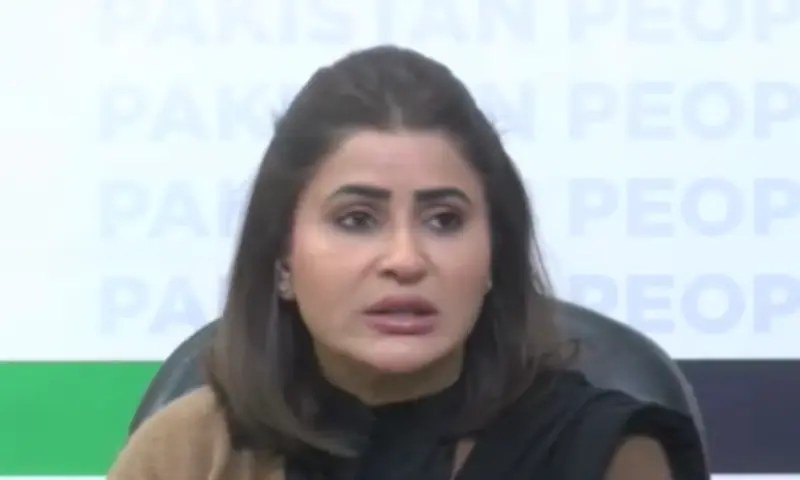
The PPP on Wednesday continued questioning the government on the recent deforestation in Islamabad, expressing dissatisfaction with the answers given by the government in a session of the National Assembly (NA) a day earlier. In the past few days, there has been widespread criticism over the cutting of thousands of mature trees in various locations of the federal capital, including the levelling of acres of tree cover around Shakarparian. On Tuesday, Minister of State for Interior Tallal Chaudhry had informed lawmakers that 29,115 trees had been removed from the Islamabad Capital Territory region (ICT), but that more than this number would be planted in the coming months. PPP lawmaker Shazia Marri, addressing a press conference, said that the issue had been raised in the NA as “all parliamentarians were concerned”, hoping that they would receive answers to the “questions that have been flying about”. However, she said, the response by the state minister for interior during Tuesday’s NA session had only raised more questions. “Sometimes it is said that it is because of pollen allergies … yesterday another impression was given, that there are some brown districts and some green districts — so you have to keep some brown and some green,” Marri said. “At what cost? At the cost of your environment? At the cost of urban planning? At the cost of biodiversity in your urban areas? At what cost?” She pointed out that not only were political parties asking these questions, but also civil society, adding that the World Wide Fund of Pakistan (WWF-Pakistan) had also shown serious concern about the way the trees were being cut down. “It is not just cutting,” she said. “It is an action that is challenging your environmental governance; it raises questions on transparency.” Marri particularly took exception to the lack of transparency shown by the government in its response to the outcry. “You tell us: for however many trees you have cut, how many have you planted? We are not being shown this. We are only shown trees being cut, not planted.“ “We don’t know how many trees are being planted — we are only told that these many thousands have been planted. But what proof is there of this?” she added. The lawmaker further said, “To give them some benefit of the doubt: if you cut the trees and there was some good reason for it, then why are you running from giving answers?” Marri added that Chaudhry “should have given a patient answer” in the NA session yesterday. “He felt that maybe the CDA [Capital Development Authority] was being attacked; it was not like that.” She further said, “If you’re going to cut trees by the thousands in Pakistan’s capital — that is the face of your country — and so boldly, then the question will be raised… and will not just be asked to you by political parties, by the PPP, but the public will ask, civil society will ask, journalists will ask. They ask you and you get upset — that is not appropriate.” “If there is indeed purity in this action of yours, then share it. Tell us,” she added. Marri regretted that the government had not given a press conference on the matter of the trees, saying, “There’s a press conference on everything. But why did the government not take the public into confidence on the cutting of trees, through a press conference or a media briefing? This should have happened, and I regret to say it did not.” The CDA has maintained that only paper mulberry trees were removed, as they had been causing pollen allergies . However, social media users had alleged that, besides paper mulberry, indigenous trees were also chopped down, making Shakarparian look like barren land. Climate Change Minister Musadiq Malik has defended the move , stating that paper mulberry was an invasive and “life-threatening” species. Load shedding concerns At the same press conference, Marri slammed the state of load shedding in Pakistan, particularly focusing on Sindh. She said that if one called their sub-divisional officer, they would be told that the load shedding was because a household had not paid their electricity bill: “If one house didn’t pay the electricity bill, then you’ll cut electricity for the whole neighbourhood? … If not paying the bill is illegal, then cutting the electricity of those who do pay the bill is also illegal.” Marri lamented that this was the state of affairs in winter, wondering what would happen in summer. She also condemned gas load shedding and the lack of gas provided to Sindh, including Karachi, although it was a natural resource found in Sindh. She added that according to Article 158 of the Constitution, the first right to gas went to the people of the wellhead region. However, she said, people were being deprived of gas and when gas was available, they were being sold imported gas at high prices.