


 Business Recorder
 IMF programme widely perceived as ‘anti-growth’: Dar
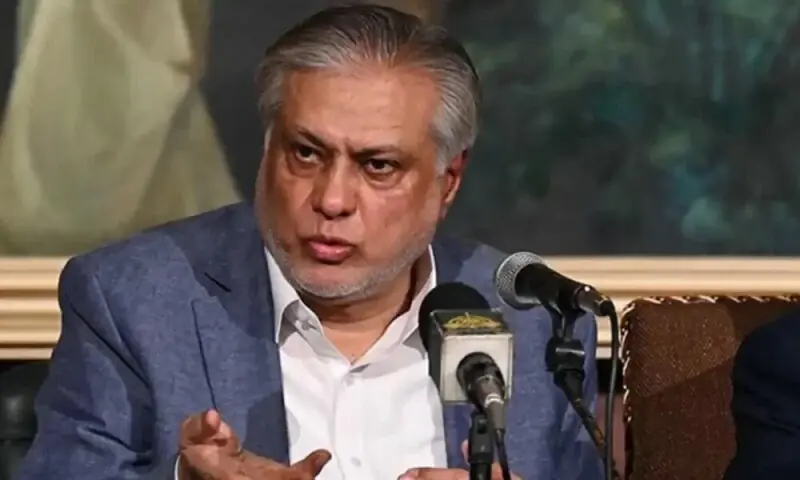
ISLAMABAD: Deputy Prime Minister and Foreign Minister Senator Mohammad Ishaq Dar on Wednesday acknowledged that the IMF programme is widely perceived as an “anti-growth” measure, cautioning that a growth rate of around 2.6 percent could effectively amount to zero or even negative growth when viewed against the country’s annual population increase. Addressing the closing session of the Pakistan Policy Dialogue 2026, organised by the Policy Research & Advisory Council in collaboration with the Corporate Pakistan Group, Dar said that any growth above 2.6 per cent should be considered net growth. Pakistan had taken three years to achieve above 6 percent growth in 2017. “Now, I see there is a potential in Pakistan to achieve higher growth in the years ahead,” he remarked.He said that geo-economics remained a cornerstone of the present government’s foreign policy, emphasizing that expanded economic engagement would yield tangible benefits for Pakistan’s private sector. READ MORE: IMF official praised Pakistan as ‘very good example of reform, resilience’: finance ministry The CPEC 2.0 with China, alongside expanding economic engagement with the United States, Europe, the Gulf and Central Asia, is driving trade, investment, connectivity and jobs, with new opportunities being pursued in East Asia and Africa. Ishaq Dar said the twin deficit confronted the economy. There is a need to plug the external account gap of USD 30 billion, he said. “This can be easily bridged through a USD 10 billion increase in remittances, USD 10 billion in exports and USD 10 billion in services sector,” he added. He underscored that economic correction requires firm foundations, responsible governance, policy consistency, and institutional reforms to deliver economic stability. He said that the government pursued tough but essential reforms with clarity and purpose. Key measures including privatisation of state-owned enterprises, circular debt reduction, right-sizing government, and digital governance are producing results, which are reflected in a current account surplus, easing inflation, stronger revenues and renewed investor confidence. He stressed that the next phase must translate reforms into outcomes to sustain economic stability and unlocking inclusive prosperity for all Pakistanis. Dar said “it is essential to strengthen the foundations of the economy, and that benefiting from modern technology in the economic sector is the need of the hour. For economic improvement, there should be a mechanism that is not affected by political changes. For economic recovery, we took difficult decisions and set aside political conveniences.” He said that “policies are now being implemented; the privatization of PIA became possible after two years of sustained hard work. Privatization will not only improve the airline but will also reduce the burden on the economy.” He said that “in 2017 Pakistan was among the 20 countries that were major economic powers in the world. In 2022, Pakistan’s economy was in its worst condition; I was called in to rescue it, and the country was saved from default. This government’s economic roadmap is very clear.” Dar said Pakistan is negotiating a 19 percent tariff deal with the United States. Recently, a delegation from the European Union visited; the EU delegation will consider the reaffirmation of GSP Plus. The federal minister said Pakistan has signed a defence agreement with Saudi Arabia. For every citizen of Pakistan, Saudi Arabia is dearer than life itself. It is Pakistan’s good fortune to have been entrusted with the responsibility of safeguarding the two holy sites. The deputy prime minister further said that a new phase of relations has begun between Pakistan and Bangladesh. There is a China–Pakistan–Bangladesh trilateral setup, and there is also one in the making with Pakistan, China, and Afghanistan together. Copyright Business Recorder, 2026