


 The Better India
 In a World Hooked to Bad News, These Founders Bet on Positive Stories Before They Were Viral
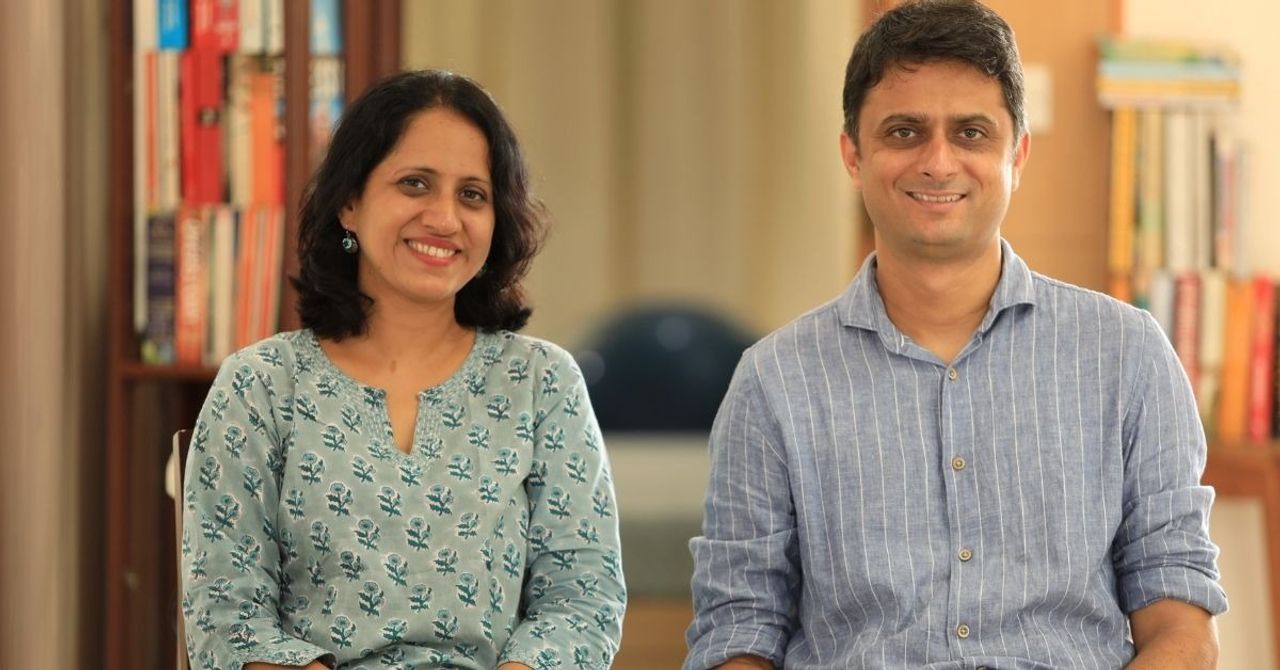
How can you leverage the internet to drive large-scale social change? In 2008, Dhimant Parekh and Anuradha Kedia, graduates of the Indian School of Business, held full-time corporate roles. Starting a media company wasn’t on the cards, but the arrival of the morning newspaper was a proverbial nudge in this direction. War, climate change, disease, declining sex ratios, an uptick in the number of school dropouts, rape, and growing human-animal conflict — the news was doing its job; it was reporting the problem. Yet, Anuradha and Dhimant wondered: who was reporting on the solutions? “Despite the pocket of goodness all around, the news wasn’t covering any of it. We almost felt like it was our duty to start disseminating this information,” Anuradha points out. Now, 17 years later, they recall that moment as when the idea for The Better India was seeded. And it’s never wavered from its purpose: to be a constructive rebuttal to what otherwise parades as news. But a paragraph doesn’t do justice to the late nights, doubt, and Herculean effort that went into formalising the idea into a startup . “There was no playbook,” as Dhimant puts it, referencing the lack of peer media outlets from which they could borrow lessons. It compounded the challenge, but the way they see it, it handed them the pen to create a blueprint for pragmatic journalism in India. And every time doubt crept in — “not that something like this should be built, but rather if we would be able to build it”, Dhimant interjects — conviction would step in as GPS, and they’d keep going. “There were (and are) people making such a difference in society, and there needed to be a voice for them,” he says. The Better India is that voice. I stumbled upon it one random afternoon in 2021. While doomscrolling through Facebook, I recognised a familiar face. Known in the neighbourhood as ‘the guy who builds food forests’, I found myself staring at George Remedios’ journey brought to life through video, so thoughtfully, it was almost like I was seeing him in a new light, not as the local environmentalist, but as a trailblazer. Curious and impressed, I let myself scroll further, slipping down a rabbit hole of inspiring stories curated by The Better India . A common thread ran through each of them; they spotlighted people who shared a heartbeat with their community, changemakers with a real knack for solving real-world problems, with intent and purpose. They didn’t preach; they led by example. Through articles, videos and interactive content, The Better India ensures it gives the country its dose of positivity The sceptic in me wondered, ‘Are there really so many changemakers in India ?’ For I had just stumbled on Pandora’s Box of good. With every scroll and read, my worldview shifted; doubt made way for optimism. And, as Dhimant and Anuradha share, this intent is the cornerstone of the platform, one of the largest of its kind that’s serving India a slice of hope with its morning chai . ‘Our stories were different’: Where the blind see in different colours Partho Bhowmick’s inspiration behind ‘Blind With Camera’ was the world-renowned Hungarian blind photographer Evgen Bavcar. Partho’s motive was simple: to train passionate, visually impaired youth to take pictures. Through assistive technology, he helped hundreds of them imagine the world in spectrums of their own. Anuradha smiles as she recounts the story, one of her favourites. “It was so contrary to convention. When you get to know about something like this, it blows your mind. But it did not just stop there; a girl reached out to us, saying she’d joined ‘ Blind With Camera ’ after reading our article. She wrote to tell us how it changed her life. ‘I’d always been ridiculed because I wanted to pursue photography despite being blind, but reading the story helped me realise I could,’ she said. We began to see how, even changing one life mattered.” The impact came in doses, sometimes small, other times large, but always in ripples that grew wider with time. Take, for instance, the story published on ‘Baliraja’, the WhatsApp group where hundreds of farmers from Maharashtra counselled each other about new-age agrarian practices, tech in farming, and on most days, simply, that suicide wasn’t the solution to a disappointing harvest; better days would come. Dhimant retells the story, reasoning how its impact was revelatory of a larger movement. “Thousands more farmers became a part of such WhatsApp groups. Here was our work being written and published in English, read largely by metro dwellers, but the impact was on a thousand farmers in rural Maharashtra,” he points out. Anuradha interjects, “When a series of such impacts kept coming our way, it made us realise that we needed to keep building, because if one story could achieve so much, imagine what more could do.” She adds here that building The Better India even changed the way she interprets ROI (traditionally implying return on investment). “For me, it’s ‘return on impact’. When we look at our numbers, it’s amazing (over 250 million across English, Hindi, Marathi, and Bangla), but there’s also what our stories can do: to inspire people to take action.” Leaving behind knowledge as a legacy Buried in the depths of the internet’s memory is a URL. www.thebetterindia.blogspot.com (It exists. Check it out for yourself.) When created in 2008, it marked out a space where hyper-local ideas shared ground with great potential. Today, (as I’d like to believe), The Better India ’s predecessor website must look with great pride at how far its current protege has come. The forerunner site was a repository of stories that Anuradha and Dhimant would document while they volunteered across social organisations in Bengaluru, in a bid not to lose them. “In the evenings, we’d meet up with friends and, in the course of conversation, tell them about all the good work that was happening around Bengaluru. Soon, they started joining us. The way we saw it, all of these solutions that initiatives were coming up with were knowledge that needed to be shared so it could inspire people. Otherwise, what legacy were we leaving behind for the next generation?” Dhimant says. Dhimant Parekh and Anuradha Kedia co-founded The Better India, the country's largest solutions-oriented journalism platform The idea generated interest. But, when the couple decided to quit their corporate roles and test entrepreneurial waters, it came with quite a lot of (well-intentioned) advice — “People think of giving back to society once they retire; both of you are still young”; “How will this pan out?”; “What about the loans?” and “This isn’t going to work”, as many media veterans pointed out. But for every naysayer, there was always a message of thanks or one of hope. Today, The Better India isn’t just a media platform anymore. It’s a movement that transcends conventional journalism to champion transformative narratives. By spotlighting grassroots innovators , sustainable initiatives, and unsung changemakers, it disrupts the cyclical negativity. It’s a catalytic force reshaping public perception of possibility. The algorithm of optimism Virality and depth lie at two ends of the journalistic spectrum, both equally dear to a business. Can they co-exist? Dhimant and Anuradha believe so. As Anuradha puts it, “Good virality is simply human connection at scale. When stories are honest, hopeful, and grounded in real change, people carry them forward on their own. We always wanted to ensure that the story’s focus remains on the ordinary citizen who is making a difference, the unsung hero.” As someone with a degree in computer science engineering, Dhimant can always be found toying with AI, testing models, building new tools , experimenting with emerging technologies, and encouraging the different teams at The Better India to integrate these tools in their daily operations, wisely. ‘Wisely’ being the operative word. Over the years The Better India has grown into a team of people dedicated to bringing to you the nation's changemakers Anuradha and Dhimant started out telling stories that merged people’s lived realities with generations of wisdom. And through the years, they’ve stayed true to the moral compass of business. “It takes time to build something substantial, something meaningful. But two things help: if you can stay true to the promise with which you started, and if you can do this consistently,” Dhimant adds. From admiring them to now telling their story, it’s a full circle moment for me. And often the question still revisits, ‘Are there really so many changemakers in India?’ Only now, I don’t wonder anymore. I simply find the next one I want to write on.