


 Business Recorder
 Bilawal explains how fiscal challenges can be overcome
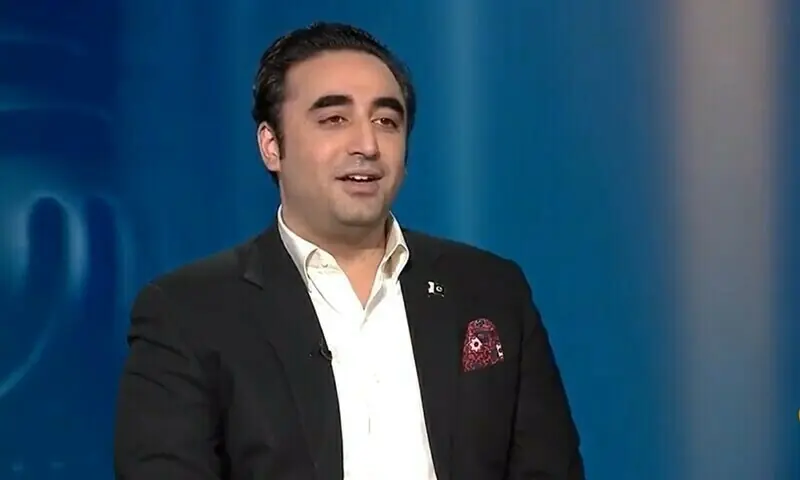
ISLAMABAD: Pakistan People’s Party (PPP) Chairman Bilawal Bhutto Zardari emphasised that cutting the provincial share under the National Finance Commission (NFC) would not resolve fiscal challenges and urged the federal government to devolve tax collection responsibilities to the provinces for sustainable financial management. “Today, Sindh collects Rs 316 billion in sales tax and has demonstrated the best performance in sales tax collection. Other provinces have also outperformed the federal government in this regard, proving that provinces are more effective in tax collection. When the federal government initially assigned Sindh the task of collecting sales tax on services, the collection stood at Rs 16.6 billion, which the Sindh government increased to Rs 28 billion within a year. The provinces should be incentivised by allowing them to retain any tax revenue collected beyond their assigned targets,” Bilawal Bhutto Zardari expressed these views while briefing the gathering on “A Journey of Achievement, Progress and Opportunity of Sindh Government” under the auspices of the Information Department of the Government of Sindh at the President House on Thursday. Ambassadors and diplomatic staff of several countries, members of the business community, representatives of chambers of commerce across Pakistan, and senior journalists from Islamabad’s electronic and print media were present on the occasion. Bilawal Bhutto briefed the gathering in detail on health, education, climate and water, law and order, social protection, economy, energy, and mobility. The briefing covered the period from 2008, when the PPP formed the government in Sindh, to 2025, outlining the initial conditions of these sectors, the progress achieved, and the future roadmap. While giving a presentation using visual screens at the Presidency, Bilawal said, “The Sindh government had increased the health budget from 2.9 percent to 10 percent, as the PPP believes healthcare is a basic right, not a privilege. He said that when the PPP took office in 2008, the Jinnah Postgraduate Medical Centre (JPMC) had 1,100 beds, which have increased to 2,028 under the PPP government. The JPMC now has three Cyber Knife facilities providing free medical treatment. Patients from 178 cities and 24 countries have been treated, with less than 50 percent from Sindh as 31 percent were from Punjab, 11 percent from KPK, 7 percent from Balochistan, and 5 percent from other countries. A new 12-storey building with 600 beds is in the pipeline, and by 2028 JPMC will have a total capacity of 3,200 beds.” He said that the National Institute of Cardiovascular Diseases (NICVD) and the Sindh Institute of Cardiovascular Diseases (SICVD) have treated 2.9 million patients since their establishment, making this the world’s largest primary cardiology programme. He said that currently, there are 11 hospitals and 30 chest pain units across Sindh. He said that the National Institute of Child Health (NICH) increased its capacity from 3,400 beds to 5,750 beds, the largest number of beds in a single hospital in the world. He said that Sindh Institute of Urology and Transplantation (SIUT) has performed 7,700 kidney transplants and treated 4.5 million patients, benefiting a total of 35 million patients free of cost. The Gambat Institute of Medical Sciences (GIMS) has been performing liver transplants since 2016, with 1,362 transplants conducted so far. Of these patients, only 47 percent were from Sindh, while 35 percent were from Punjab, 15 percent from Balochistan, and four percent from KPK, he said. In primary healthcare, the PPP chairman said that a total of 175,000 patients have been treated in collaboration with the ChildLife Foundation. Due to these initiatives, the mortality rate in Sindh stands at 2.9 percent the lowest in Pakistan and below the national average, with an overall decline of 16 percent, he said. The chairman PPP stated that energy was one of the country’s biggest challenges, and the Sindh government now generates 1,845 megawatts through its wind energy programme. “Solar energy units have been provided to 200,000 families, with a further 275,000 units planned for the next phase. Under public-private partnerships, three additional solar projects are underway for Karachi. Special Economic Zones have been established, along with several public-private partnership projects.” He noted that the concept of public-private partnership was first introduced in the PPP’s 1993 election manifesto by Shaheed Mohtarma Benazir Bhutto. He said that the Sindh Engro Coal Mining Company is a prime example of this model. “The Thar Coal Project has created 3,000 jobs, 71 percent of which were given to the local population, and for the first time women truck drivers were seen working at the project,” he added. Briefing on the education sector, the chairman PPP said that from 1947 to 2008 there were only ten universities and two campuses in Sindh, whereas by 2025 the number has increased to 30 universities and 18 campuses. He informed that the student-teacher ratio, which was 50:1 in 2008, has been reduced to 35:1. Additionally, 129 new colleges were established. The Sindh government provides 4,000 merit-based scholarships annually and has also established 10 autism centres. He further informed that under the Sindh Rural Support Organisation (SRSO), 1.4 million women have been lifted out of poverty. He said that women were provided interest-free loans, with a recovery rate of 98 percent. During the floods of 2022, Bilwal Bhutto said that over 70 percent of Sindh province was inundated, destroying 2.1 million houses. He said that under the Sindh Peoples Housing for Flood Affectees (SPHF), the Sindh government initiated the construction of 2.1 million houses, the world’s largest housing initiative. “These houses are climate-resilient, with 75,000 already completed. The project has generated employment for one million people. Notably, ownership of the houses is granted to women, making it the world’s largest asset-ownership initiative for women,” he said. In the agriculture sector, Bilawal said that the Sindh government disbursed Rs 21 billion to 198,000 beneficiaries through the Benazir Hari Card. He said that 4,110 km of canals were lined, and 57,000 km of roads were constructed. He said that the Sindh government also built the largest bridge over the River Indus. Electric buses and pink buses were introduced for the first time in Pakistan, along with the launch of the Pink Scooty project for women and girls,” Bilawal said. Copyright Business Recorder, 2026