


 Ruptly
 'Fed up with empty words' - Farmers hurl tyres and manure outside administrative buildings in Dijon to protest EU-Mercosur deal
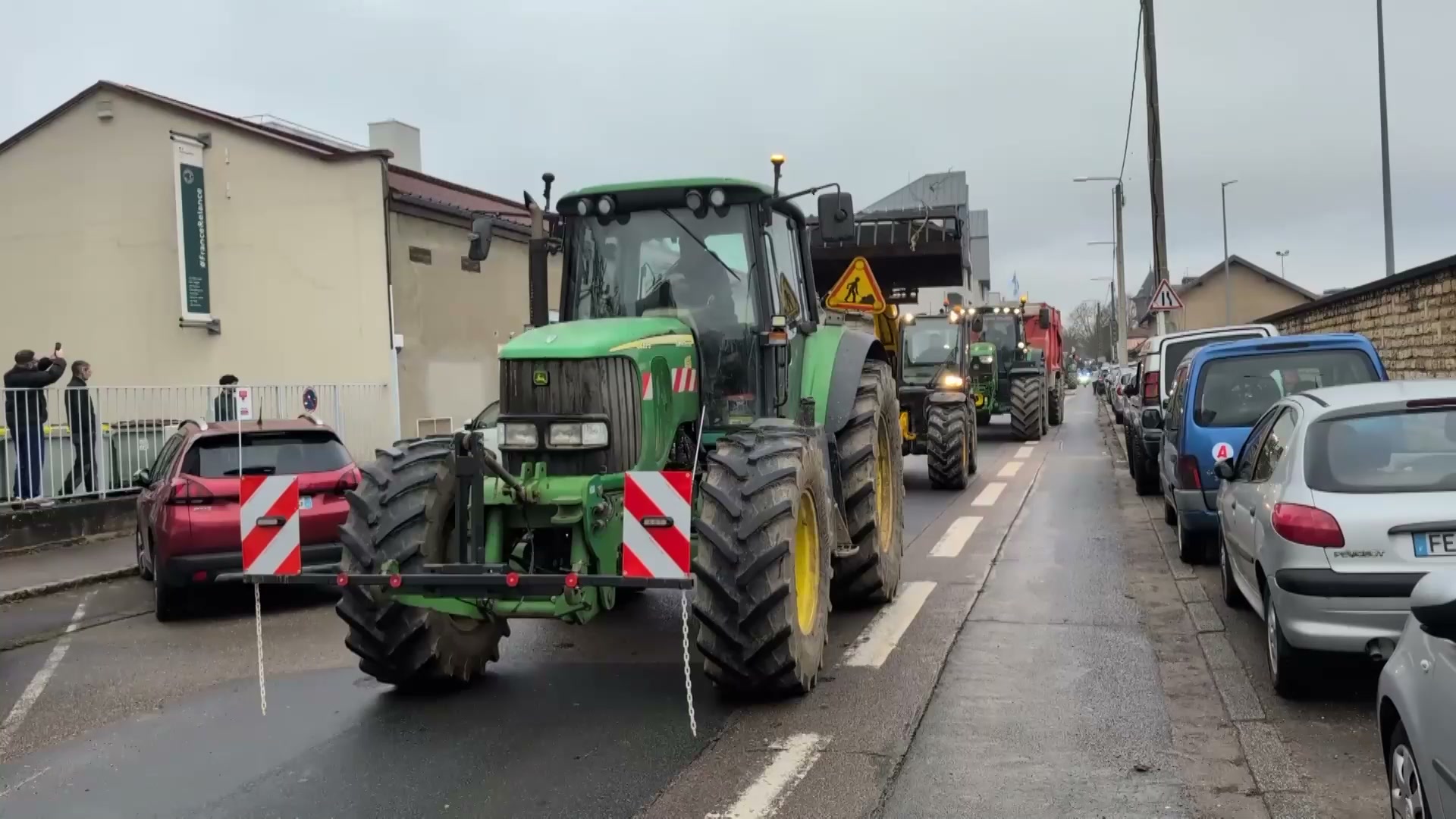
"Hundreds of farmers took to the streets of Dijon on Thursday to protest regional agricultural policies and oppose the EU-Mercosur trade deal. Footage shows farmers driving tractors to administrative buildings, including the French Office for Biodiversity and the Regional Directorate for Environment, Planning and Housing, where they dumped piles of hay, manure and tyres outside. President of the Young Farmers of the Cotes d'Or department, Thomas Lemee, accused the government of blocking young farmers' investment opportunities while 'turning a blind eye' to low-quality imports. "We are fed up with empty words; we have seen no concrete action on our farms. Things need to change quickly because I think that in the coming years, the situation is going to become much more complicated," noted Antoine Carr, President of the FDSEA21. Demonstrators also gathered at the Place de la Republique, blocking the streets and placing EU flags on piles of tyres and manure before setting them on fire. "We need to turn out in large numbers in Strasbourg next week on January 20. It was supposed to be on the 20th, but von der Leyen got scared and already postponed it to the 21st, because we are putting pressure on her and she is afraid that the vote will go against her," Lemee remarked. The movement, held under the calls of the National Federation of Farmers' Unions and the Young Farmers' Union, reportedly gathered 120 farmers and up to 70 tractors across the Burgundy-Franche-Comte region. Farmers across Europe have shared their distress regarding the EU-Mercosur deal, with months of protests amid broader grievances, including rising costs and stagnant incomes. While some European leaders have publicly opposed the deal, it is still expected to be signed in Paraguay on Saturday, with backing from a majority of EU countries. Despite the planned signing, the agreement will not take immediate effect. It must still be approved by the European Parliament and ratified by Mercosur member states, a process expected to take several months. Negotiated over 25 years, the deal would phase out most tariffs over 15 years, creating a free-trade area encompassing approximately 780 million people."