


 Business Recorder
 Pakistan warns against external interference in Iran’s internal affairs at UNSC
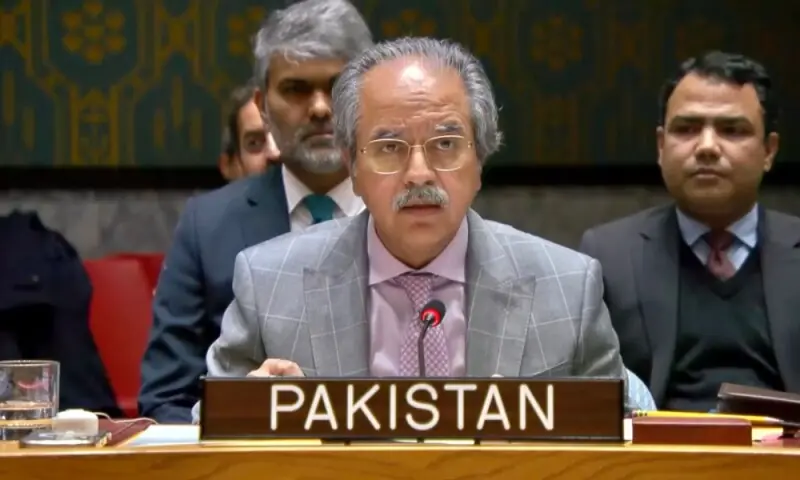
Pakistan has told the UN Security Council that it hopes for an early normalisation of the situation in Iran, warning that the UN Charter and international law prohibit external interference in the internal affairs of states. “The UN Charter prohibits threat or use of force against other states’ territorial integrity or independence, or to interfere in matters essentially within the domestic jurisdiction of states,” Permanent Representative of Pakistan to the UN Ambassador Asim Ahmad told an emergency meeting of the 15-member UN Security Council on Thursday evening. The United States convened the Security Council meeting to discuss the situation in Iran, with the country’s Ambassador Mike Waltz criticising the actions taken against Iranian protestors and assuring them of President Donald Trump’s support. READ MORE: US tells UN all options on table, Iran warns it will respond to any aggression In his remarks, the Pakistani envoy said, “We have been carefully observing developments in Iran and the region in recent days”, pointing out that new threats to regional peace and stability remain a serious cause of concern. Ambassador Asim described Iran as a “brotherly country”, saying that the people of the two nations share deep-rooted historical, friendly, cultural and religious bonds. “A stable and peaceful Iran is in the interests of Pakistan, the region and beyond,” he said, adding that his country has “full confidence in the wisdom of the Iranian people and leadership”, rooted in the country’s culture, history and resilience. Ambassador Asim highlighted that the fundamental principles of the United Nations Charter are “inviolable and sacrosanct”, noting that the Charter prohibits the threat or use of force against the territorial integrity or political independence of states. Any external interference in the internal affairs of states, he added, is inconsistent with international law and the principles of the UN Charter. “We strongly believe that all disputes must be resolved through peaceful means and in accordance with international law,” the Pakistani envoy affirmed, warning that continued hostilities, use of force and unilateral actions will only deepen crises and cause unnecessary suffering. “We sincerely hope that the situation in Iran will soon return to calm and normalcy, free from any internal turmoil or external pressure, and all relevant parties will return to the negotiating table to find a lasting solution to their differences, based on mutual respect and understanding,” Ambassador Asim said in conclusion. Opening the debate, UN Assistant Secretary-General Martha Pobee, briefing the UNSC members, called for restraint by all parties to prevent further escalation. Ms. Pobee described the situation in Iran as “fluid and deeply concerning”, noting that “protests continue, albeit reportedly at a smaller scale than last week.” She voiced alarm, however, over public statements suggesting possible military strikes on the country. “This external dimension adds volatility to an already combustible situation. All efforts must be undertaken to prevent any further deterioration,” she said. Moreover, UN Secretary-General Antonio Guterres “remains convinced that all concerns regarding Iran, including those related to the nuclear issue and ongoing protests, are best addressed through diplomacy and dialogue.” He also “urges maximum restraint at this sensitive moment and calls on all actors to refrain from any actions that could lead to further loss of life or ignite a wider regional escalation.” READ MORE: US imposes sanctions on Iran over crackdown on protesters The protests erupted on December 28 after shopkeepers in the Iranian capital Tehran took to the streets to rail against the collapse of the national currency, soaring inflation and worsening living conditions. Ambassador Waltz, the US envoy, accused the Iranian government of actions against its own citizens and its own people that have repercussions for international peace and security. “President Donald J. Trump and the United States of America stands by the brave people of Iran,” he said. “Regardless of its excuses, the regime is solely responsible for the economic misery of the Iranian people” and “will be held accountable”. Russia’s UN Ambassaador Vassily Nebenzia hit back, saying the world has been watching as the United States “continues to escalate tensions” and “fuel hysteria” around Iran. He said that the current Security Council meeting, requested by the United States, is “nothing more than yet another attempt to justify blatant aggression and interference in the internal affairs of a sovereign state.” “And if, as Washington puts it, Iran’s authorities do not come to their senses, then Washington will solve the Iranian problem in its favourite way – through strikes aimed at overthrowing an undesirable regime – in order to lend credibility to and justify its actions,” the Russian envoy said. China’s Ambassador, Sun Lei, said the United States has openly issued threats of the use of force against Iran. Stressing that China has always advocated adherence to UN Charter principles and international law, he said sovereign equality and non-interference in internal affairs are “the most fundamental norms” of international affairs. “The use of force can never solve problems,” the Chinese envoy said, noting that military adventurism would push the region towards an abyss. “No action that defies international law can be tolerated.” Ambassador Gholamhossein Darzi, Deputy Permanent Representative of Iran, said he is speaking on behalf of a “nation in mourning”. “It is deeply regrettable that the representative of the United States regime, which requested this meeting, has today resorted to lies, distortions of facts and deliberate disinformation to conceal his country’s direct involvement in steering unrest in Iran towards violence,” he said. He added that the United States requested the meeting in order to “conceal its direct complicity in the crimes its mercenaries have committed against our nation”. “The United States regime is attempting to portray itself as a friend of the Iranian people, while simultaneously laying the groundwork for political destabilisation and military intervention under a so-called humanitarian narrative,” he said. He described these claims as “particularly cynical” in light of what he called the United States’ long and well-documented record of unlawful military interventions, regime-change operations and systematic violations of international law and the Charter of the United Nations.