


 Business Recorder
 LFS sees a sharp rise in average wages
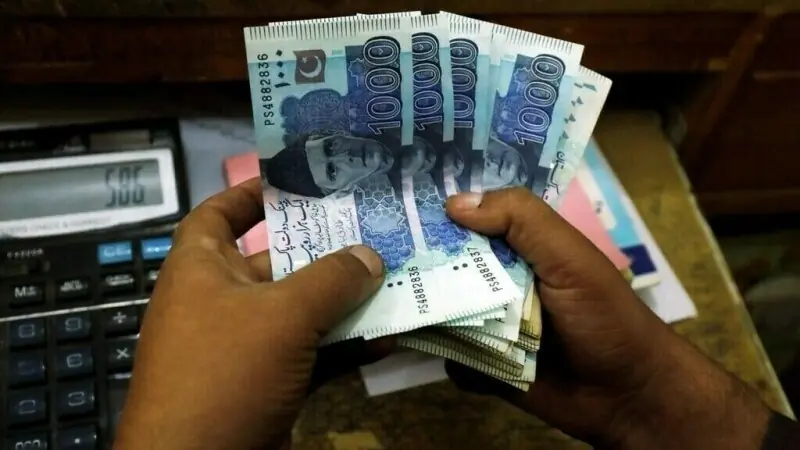
ISLAMABAD: Labour Force Survey (LFS) 2024-25 claimed a sharp rise in average wages over the past four years - 62 percent raise - however high inflation rate during this period raises concerns over the real purchasing power of each rupee earned. According to Pakistan Bureau of Statistics (PBS) survey, the average monthly wage for all Pakistan increased from Rs24,028 in the LFS 2020-21 to Rs39,042 in LFS 2024-25, reflecting a rise of around 62 percent. However, this increase coincided with volatile inflation rate, including a peak of over 29 percent in 2021-22 and persistently elevated prices in subsequent years, raising concerns over the real purchasing power of the rupee. A closer examination of the data shows that wage growth has been uneven across sectors. PBS figures indicate that formal sector wages rose from Rs34,964 per month in 2020-21 to Rs54,038 in 2024-25, an increase of about 54.5 percent. In contrast, informal sector wages—covering the bulk of the workforce—are estimated to have increased from Rs17,529 to Rs30,834 per month over the same period. READ MORE: Punjab increases minimum wage to Rs40,000 PBS claimed that standard statistical codes were fully observed, however it acknowledged a five percent margin of error - a margin with greater applicability on the informal sector given the bias associated with the surveyors and the surveyed. The 2024-25 survey revealed that Balochistan recorded the highest average monthly wage at Rs27,659, followed by Sindh at Rs24,664, Khyber Pakhtunkhwa at Rs24,028, and Punjab at Rs23,367. Anecdotal surveys carried out by Business Recorder on the disparity within provinces revealed skepticism over these rankings which some argued were a reflection of survey composition rather than actual wage dynamics. Inflation was calculated at 8.9 percent in 2020-21, surging to 29.18 percent the following year, before easing to 23.41 percent in 2023-24 and averaging 4.49 percent in 2024-25. Analysts note that cumulative inflation over this period significantly eroded real incomes, particularly for low and middle-income households whose spending is concentrated on food, energy and transport. A significant portion of formal sector wage growth is attributed to civilian and military personnel, estimated at around seven percent of total employment, whose salaries are funded through the federal budget and were revised upward multiple times during the period Economists argue that while nominal wage growth is evident in official figures, a more facts-based assessment is required to determine real income gains. Copyright Business Recorder, 2026