


 Business Recorder
 Govt now holds certain financial liabilities with PIAHCL
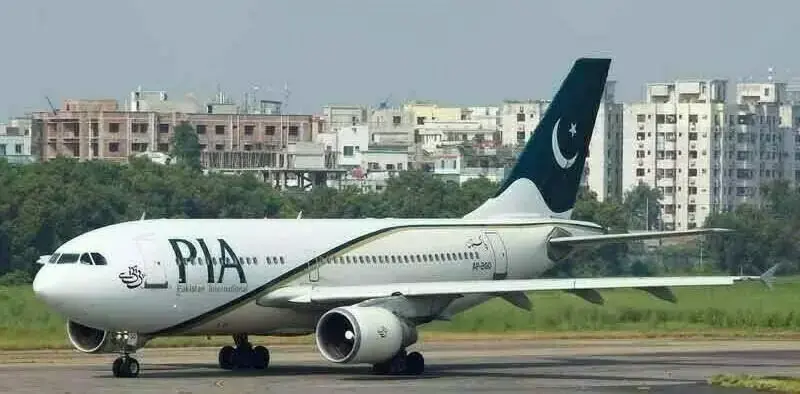
ISLAMABAD: Federal Minister for Defence Khawaja Asif informed the National Assembly on Friday that following the restructuring and privatisation of PIA, the government now holds certain financial liabilities with the newly established PIA Holding Company. He emphasised that this shift has strengthened financial oversight, enhanced fiscal discipline, and improved stability, effectively positioning the airline for sustained profitability. In response to questions from MPs, Asif revealed that PIA’s balance sheet has been significantly cleaned up. Approximately Rs268.7 billion in bank debt, Rs170 billion in government payables, Rs188.3 billion in legacy liabilities, Rs44 billion in employee-related obligations, and Rs26 billion in non-core assets have been removed. As a result, he added, PIA’s negative equity has been reduced from Rs698 billion to an expected Rs45 billion by April 2024. The minister explained that these liabilities were transferred to the PIA Holding Company Limited (PIAHCL) as part of a comprehensive restructuring plan. This move, he said, has streamlined financial management, improved resource allocation, and greatly reduced the burden of debt servicing that had previously consumed much of the airline’s cash flow. “This ‘clean-up’ has substantially eased the debt servicing pressure, which had been draining PIA’s cash flows,” he added, emphasising the identification and rationalisation of cost centres, as well as the outsourcing of non-core functions. In response to supplementary questions, Minister of State for Finance Bilal Azhar Kayani clarified that only PIA’s core operations had been privatised, with assets such as PIA-owned hotels excluded from the transaction. He expressed confidence that the privatisation would enhance service delivery and improve the airline’s financial standing. Minister for Commerce Jam Kamal Khan, addressing a calling attention notice regarding Pakistan’s export targets, noted that significant interventions have been made to achieve the USD 60 billion export goal. However, he cautioned, “Achieving this target is challenging unless we address key issues like electricity tariffs, the tax regime, GST, facilitation, ease of business, tariff rationalisation, and trade diplomacy. The commitments with the International Monetary Fund (IMF) make it difficult to alter taxes and tariffs in the short term.” He added that six working groups have been formed, led by the private sector, to drive export growth. Additionally, he noted that the Export Development Fund had been abolished, as per exporters’ demands, which had previously levied a 0.25 per cent charge on them, benefiting exporters. Khan also highlighted improvements in various sectors, including manufacturing, and pointed to a notable surge in agricultural exports last year. The chair referred the calling attention notice to the concerned standing committee for further deliberation. During the question hour, Minister of State for Interior Talal Chaudhry revealed that the National Cyber Crime Investigation Agency (NCCIA) had received over 150,000 complaints last year regarding WhatsApp account hacks. He said over 81,000 of these complaints were related to financial crimes, resulting in the arrest of 1,095 individuals. Chaudhry also noted that cellular companies had been directed to enhance security measures for SIM card issuance. He further stated that Islamabad’s air quality had improved compared to last year, thanks to measures such as vehicle emission certification as part of the ongoing environmental enhancement efforts. Several bills were introduced before the House, including the Export Development Fund Amendment Bill, 2026, the National Tariff Commission Amendment Bill, 2026, the Export-Import Bank of Pakistan Amendment Bill, 2026, the Pakistan Telecommunication Reorganisation Amendment Bill, the Life Insurance Nationalisation Amendment Bill, the Federal Board of Intermediate and Secondary Education Amendment Bill, the Islamabad Capital Territory Condominium (Ownership and Management) Bill, and the Alternative Dispute Resolu-tion Amendment Bill, 2026. Law Minister Azam Nazeer Tarar introduced the Pakistan Nursing and Midwifery Council Ordinance, 2025, and the Transfer of Railways Amendment Ordinance, 2025, which were referred to the relevant committees for further deliberation. Copyright Business Recorder, 2026