


 Dawn.com
 Boosting Pakistan’s agriculture
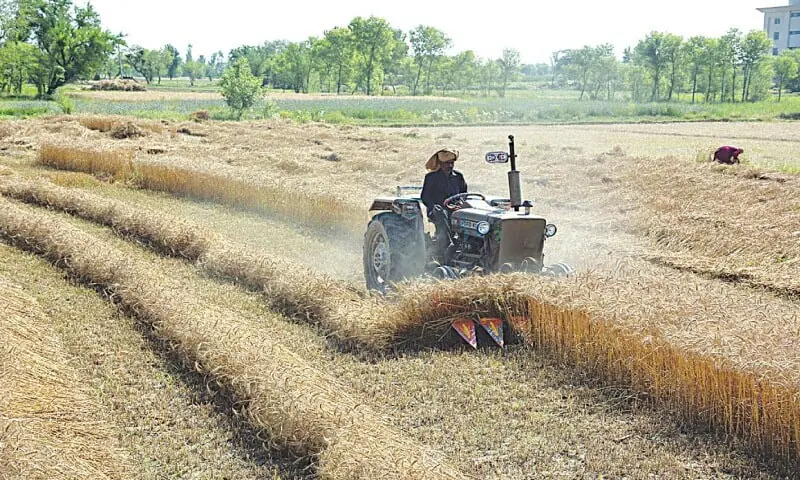
Historically, Pakistan’s agricultural policy has primarily emphasised crop yield improvements as the main driver of agricultural growth. Interventions such as improved seeds, optimal fertiliser use, effective pest and disease management, and provision of extension services were all aimed at raising per-acre productivity. Conceptually, this focus was quite sound. Even today, it is relevant because Pakistan’s yields for most crops remain well below global averages, and the yield gap between progressive farmers and the average smallholder is still substantial. Unfortunately, despite efforts, the compound annual growth rate (CAGR) of wheat yields over the past 25 years (1998–99 to 2023–24) has been only 1.66 per cent, as yields increased from 878kg per acre to 1322.5kg per acre. By contrast, during the same period, the population grew by a CAGR of 2.5pc. Consequently, the country met rising wheat demand partially through the expansion of wheat area. Similarly, the CAGR of yields for rice, sugarcane, rapeseed and mustard, and potato has been 1.38pc, 1.78pc, 0.65pc, and 1.64pc, respectively. It is important to recognise that any meaningful increase in future crop yields will depend primarily on the availability of high-yielding, climate-resilient seed varieties. However, decades of underinvestment in agricultural research and development (R&D) have left Pakistan largely incapable of developing such varieties locally. Nevertheless, another potential way to raise net yields and overall agricultural output is to reduce harvest and post-harvest losses, which reach up to 10pc for grains, oilseeds, and pulses, and as high as 30pc for fruits and vegetables. The country must move from its focus on improving yields to growing a wide range of high-value crops with comparative advantages Regrettably, Pakistan has not invested much in promoting modern harvesting and threshing equipment, improving crop handling and transportation practices, or developing crop storage systems that are safe from rodents, pests such as weevils, and mycotoxins (aflatoxin). As a result, millions of tonnes of wheat (government stocks) are stored in open fields, and a large number of export shipments of various crops are rejected every year due to aflatoxin contamination. In past decades, Pakistan has also enhanced overall agricultural output through extensification — expanding the area under cultivation. However, much of this expansion has been offset by land taken over for housing colonies. Even so, from 2010 to 2024, the total cultivated area increased from around 42.6 million acres to 52.8m acres. Notably, Pakistan still has millions of acres of barren land, but the government’s long-standing preference for investing in motorways and highways over water storage infrastructure, such as dams, has made water availability a binding constraint on further expansion. This challenge is further compounded by the failure to improve water-use efficiency in the agriculture sector. Rising cropping intensity (the number of crops grown on a piece of land in a calendar year) has been another key factor boosting Pakistan’s agricultural production. The widespread installation of new tubewells, particularly solar-powered ones, has enabled farmers in many districts to move from single to double cropping. Similarly, the advent of short-duration seed varieties for several crops has made it possible to cultivate three crops annually. In several districts, three-crop patterns have emerged, such as potato–maize–Basmati rice (90-day 1509 variety) or wheat–sesame–Basmati rice (1509). All these factors that have contributed to higher agricultural production in Pakistan have been only partially supported by the government and, in many cases, have emerged without any policy backing at all. Most of these developments occurred organically. The underlying driver has been the economic pressures faced by farmers — particularly due to shrinking farm sizes — which have forced them to extract maximum output from increasingly smaller landholdings. At the same time, the private sector has played its role by marketing inputs and technologies that enable farmers to boost productivity. Despite these farmer- and market-led adjustments, the real GDP of the agriculture sector has failed to grow at a pace sufficient to reduce rural poverty or generate meaningful self- or wage-employment. This underscores the need for a paradigm shift in agricultural policy — one that moves beyond incremental fixes and is capable of delivering broad-based, sustained growth to the sector. To achieve this within the prevailing agricultural landscape, the government must prioritise two strategies in its agricultural policy framework. First, Pakistan is stuck with the low-value crops — wheat, rice, sugarcane, cotton, gram, and maize — which have been cultivated on over 90pc of the cropped area for decades. Yet the country has a clear comparative advantage in growing a wide range of high-value crops, such as garlic, olives, turmeric, peas, groundnuts (in irrigated areas), and many others, which can be cultivated on vast areas thanks to fertile soil, favourable agro-climatic conditions, quality water, and abundant cheap labour. Therefore, the focus should move to crop diversification. However, these crops require higher input costs and a well-functioning value chain from farm to export markets, which necessitates government support. Second, the government should encourage export-oriented small and medium enterprises (SMEs) in agricultural processing and value addition by providing targeted incentives and supporting them in accessing and expanding into international markets. Nevertheless, one point must be clear: unless Pakistan’s agricultural commodities and value-added products gain reliable access to export markets, efforts toward crop diversification and value addition will remain largely futile. This necessitates enhancing the effectiveness of the Department of Plant Protection, the Ministry of Commerce, and Pakistan’s trade missions abroad. Khalid Wattoo is a development professional and a farmer, and Dr Waqar Ahmad is a former associate professor at the University of Agriculture, Faisalabad. Published in Dawn, The Business and Finance Weekly, January 19th, 2026