


 Dawn.com
 Govt cites weather among reasons for power outages
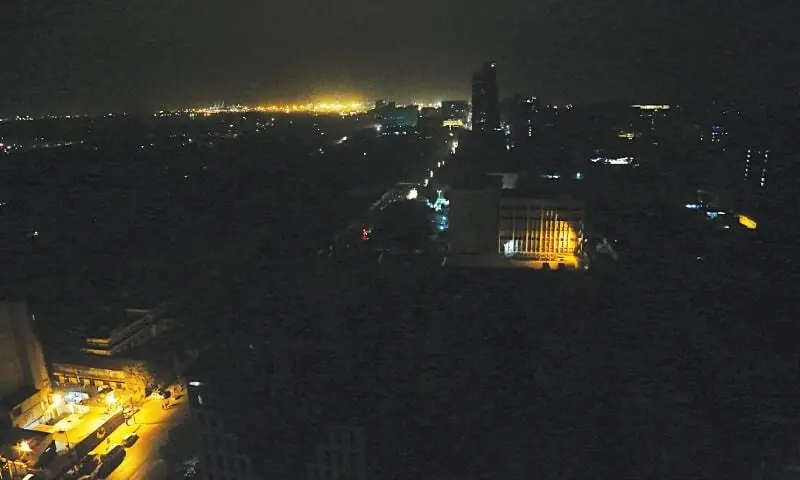
• Leghari says electricity cuts due to fuel mismanagement, transmission constraints, among other causes • Minister contests ‘outdated’ Nepra report, says document should have been shared for ‘fact-checking’ • Claims tariff dropped from Rs53.04 in March 2024 to Rs42.27 in December 2025 ISLAMABAD: The government on Sunday conceded power cuts in most parts of the country for the last 8–10 days despite surplus capacity due to transmission constraints and fuel mismanagement, the continuation of the debt servicing surcharge on consumers for the next six years, and the cost of inefficiencies being charged to taxpayers. Speaking at a press conference in the capital, Power Minister Awais Leghari said the grid faced problems due to fog, north-south transmission constraints, a few days of extension in the scheduled outage of a major nuclear power plant, and ‘mistakes’ in the right fuel arrangements by the Sahiwal Coal Power Project. He said the issue was, however, mainly due to the repeated tripping of the transmission system because of the weather. This resulted in lower production of a few hundred megawatts, on top of lower hydropower generation due to annual canal closure. The minister apologised to the consumers for the inconvenience but said that nothing was possible due to the weather. The minister contested the recent State of the Industry Report (SOIR) 2025, released by the National Electric Power Regulatory Authority (Nepra), saying it came out with a 5-6 month delay and thus interpretations were based on outdated data. He said that Nepra wrongly observed that Rs3.23 per unit was an additional burden on consumers, saying it had been in place for years and would have gone on for decades, but the current government announced its continuation for only six years. Mr Leghari said the regulator also wrongly claimed that higher system losses than regulatory targets were an unnecessary burden on consumers, and said these gaps — both low recoveries and high losses — were being financed by the Ministry of Finance out of taxpayers’ money and hence posed no additional burden on electricity consumers. The minister said the SOIR was a comprehensive document and its draft should have been shared with the power division for fact-checking before its publication. He said the government had no intention of strangulating the regulator, but capacity improvement was required both at the power division and the regulator. He said the power division would officially write to the regulator to highlight its concerns. He agreed with the Nepra’s projections, indicating a surplus margin of up to 8,700MW, that increased generation costs and higher tariffs, as most of the plants operate under ‘take or pay’ or ‘must run’ agreements, but said the installed capacity had passed through due to the regulatory process. The government had introduced a surplus power package for industrial and agricultural consumers at discounted rates for three years to stimulate demand and improve asset utilisation, and positive results emerged in December. ‘Without due diligence’ Responding to weaknesses in integrated system planning pointed out by Nepra and its cost to consumers, the minister said that Nepra had been approving the indicative generation expansion plans (IGCEP) without due diligence. “We have now submitted IGCEP 2025-35, which represents a fundamental shift in Pakistan’s approach to power sector planning purely on merit and least cost of energy, thus excluding 7,967MW high-cost and non-essential generation projects and prioritisation of low-cost, indigenous, and renewable energy sources, with a projected saving of $17bn,” he said. The minister confirmed that delays in project execution remained a persistent challenge across several major initiatives in the transmission sector, saying the government has separated the project development function into an independent company, EIDMC, for the timely execution of transmission projects. He also denied that the power division controlled power companies, saying they were given full autonomy under the board of directors. “In the current year, the fiscal space burden has already been reduced by Rs400bn (from Rs1.287 trillion to Rs893bn) through this process,” he said. He also conceded the past practice of Discos issuing electricity bills with incorrect readings, which was ‘a major driver of non-payment, leading to lower recoveries for the Discos’. He claimed that over Rs40bn had been returned to the consumers last year through the introduction of a proportionate billing mechanism (bills no longer than 30 days). He hoped the regulator would soon approve investment plans to enable Discos to introduce automated meter reading (AMR) devices. He said the Discos’ recovery of bills improved from 92.4pc to 96.6pc in FY2025, resulting in Rs183bn reduction in unrecovered bills, falling from Rs315bn in FY24 to Rs132bn in FY25. In FY2026 (Jul-Dec), recovery improved by another Rs43bn compared to last year, he said. On the other hand, the at-source deduction of 25pc from bills of provincial governments and government departments also improved financials. Circular debt Contesting the regulator for reporting that circular debt reduction of Rs780bn last year primarily stemmed from external financial injections rather than structural improvements, the minister said the regulator’s “understanding with regard to power sector numbers is surprising”. He said the debt reduction was due to lower losses (Rs193bn), waiver of late payment surcharges with power producers (Rs260bn), and Rs300bn due to macroeconomic improvements like exchange and interest rates. Most importantly, the minister challenged Nepra for claiming that only the private sector distribution company, KE, had not contributed to the circular debt, but its consumers paid the debt servicing surcharge. “K-Electric had contributed to the accumulation of circular debt in the past by not paying electricity dues to CPPA-G. Up to June 2023, the resulting addition to circular debt due to K-Electric’s non-payment amounted to Rs640bn. The receivables from KE stand at more than Rs300bn as on November 30, 2025,” the minister said. He added that lenient regulatory targets to improve KE efficiency resulted in more than Rs500bn subsidies to its consumers over the last five years. Responding to Nepra’s assessment that the non-affordability factor due to rising electricity tariffs pushed consumers toward conservation and solar alternatives, and that economic stagnation further reduced demand, the minister claimed the average tariff had dropped from Rs53.04 in March 2024 to Rs42.27 per unit in December 2025. Published in Dawn, January 19th, 2026