


 RTHK English
 'Expand marathon scale to boost economy'
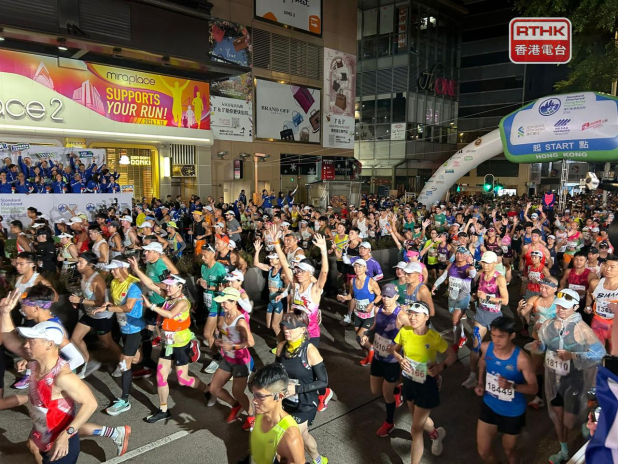
Sports sector representatives on Monday said expanding the annual Hong Kong marathon could help boost tourism and fit into the government's policy initiatives. The comments came after the Hong Kong, China Association of Athletics Affiliates said it would establish a special group to look into the marathon route and its design, with a view to expanding the scale of the event. Around 120,000 people signed up for 74,000 slots at the annual Hong Kong marathon that took place on Sunday, including roughly 25,000 runners from overseas. Speaking on an RTHK programme, lawmaker Kenneth Fok, who represents the sports, performing arts, culture and publication sector, said expanding the marathon to a two-day event could better support the city's economic development. "Some mainland friends told me they stayed in Hong Kong hotels for two nights to prepare for the marathon — and prices were up because of the event. That kind of demand can also give Hong Kong’s tourism sector a boost," he said. Fok also said the marathon route could be designed to feature the bustling streets of the city as well as the Northern Metropolis, so runners could see both the thriving and tranquil side of the SAR, thus boosting promotion efforts. Meanwhile, lawmaker Vincent Cheng, who is also the vice chairman of the Major Sports Events Committee, said having the event run for two days would be more practical, and a split schedule would give organisers more flexibility to manage logistics. "Because there are so many runners, the race has to start early — around 5 or 6am. That’s not ideal for everyone. But if you push it later... by 11 or noon it can get very hot, which raises risks for runners. So mornings are still the safest option," he said. Cheng said organisers could consider scheduling the 10-kilometre and half marathon races on Saturday and have the full-marathon race on Sunday, while throwing in a carnival at the finishing line to offer more experiences to participants. Professor Patrick Lau at Baptist University's Department of Sports and Health Sciences said Hong Kong should look to its own unique features, such as the scenery, to boost the event's popularity worldwide, rather than only increasing participant quotas. He also said nearby residents and shop owners' opinions should be taken into account when designing the route, as negative comments towards the event would pose impact on the event's reputation.