


 The Better India
 This Kashmiri Dentist Has Spent 20 Years Training People To Save Lives in Emergencies
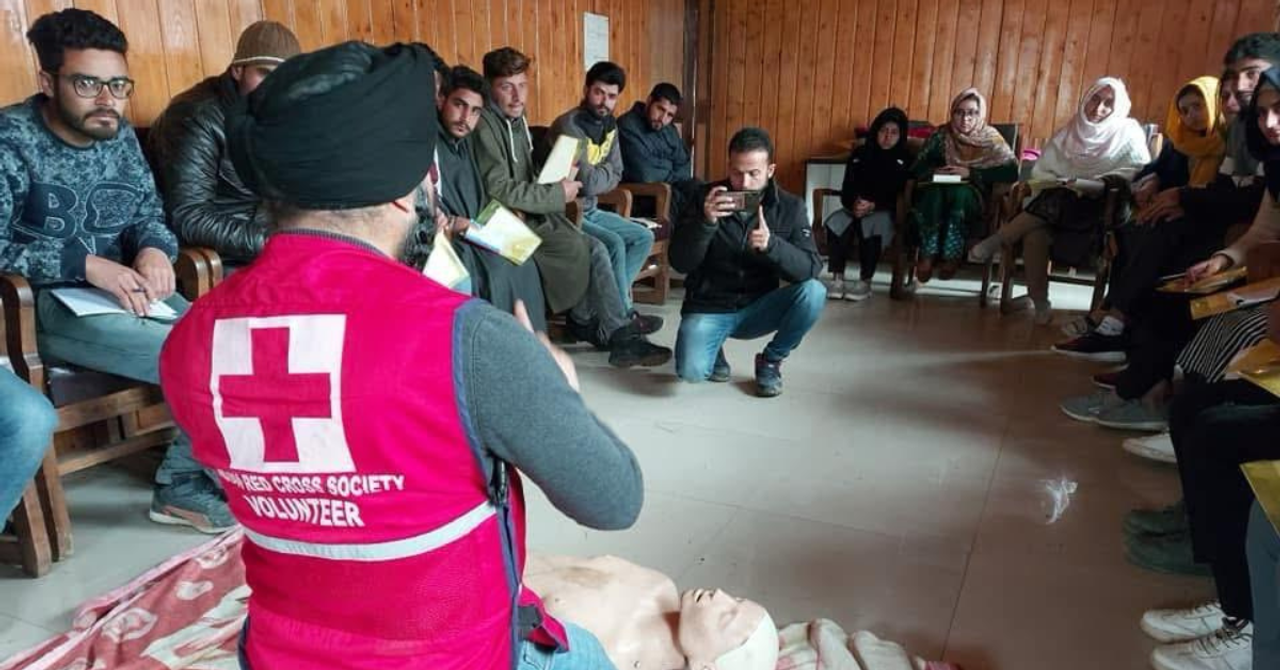
In October 2005, the earth shook violently across parts of India and Pakistan. In North Kashmir, the border town of Uri was reduced to rubble. Homes collapsed, roads split open, and cries for help rose from beneath broken walls. As panic spread, a young dental surgeon from nearby Baramulla ran towards the destruction. That moment would go on to define the course of Dr Itinderpal Singh Bali’s life. Dr Itinderpal Singh Bali’s work in emergency training began after witnessing the 2005 Kashmir earthquake. Nearly two decades later, Dr Bali, now 51, is known across Jammu and Kashmir and beyond as the ‘Aid Man of Kashmir’. He has trained more than 30,000 people in life-saving first aid and emergency response skills , helping communities act in the crucial minutes before professional help arrives. The day helplessness became a calling “When the 2005 earthquake hit Uri, I saw unimaginable helplessness,” Dr Bali recalls. Roads were cut off. Hospitals were difficult to reach. Injured people lay bleeding as neighbours stood close by, afraid that a wrong move could worsen the situation. The desire to help was everywhere. The knowledge of how to help was not. Since 2007, Dr Itinderpal Singh Bali has trained communities to respond in the critical minutes before help arrives. That gap stayed with him long after the aftershocks stopped. Dr Bali began to understand that survival during disasters often depends on what happens in the first few minutes, long before an ambulance or doctor can reach the injured. What communities needed, he realised, was not only hospitals and equipment, but ordinary people trained to respond with confidence and care. Learning to serve, and giving structure to instinct In the months that followed, Dr Bali worked closely with earthquake survivors and social activist Nirmala Deshpande. The experience deepened his resolve to move from instinctive action to organised service. In 2007, he underwent professional disaster response training with RedR India, a UK-based humanitarian support organisation. That training helped him translate the lessons of 2005 into a structured, community-driven approach. CPR training is central to Dr Bali’s work, as early intervention improves survival during cardiac emergencies. From there, his work expanded steadily. Villages, schools, police units, disaster response teams, and public spaces became classrooms. The goal remained consistent: equip people to act before professional help arrives. First aid , Dr Bali explains, includes immediate care for injuries, sudden illness, cardiac arrest, burns, bleeding, fractures, choking, shock, and unconsciousness. It involves CPR, controlling blood loss, handling fractures safely, rescuing drowning victims, and moving the injured without causing further harm. “If people are trained in these basic skills,” he says, “many deaths can be prevented during the golden hour after an accident or disaster.” Training thousands, one session at a time Since 2007, Dr Bali has trained students, teachers, police personnel, health workers, civil defence teams, army units, drivers, and villagers. In total, more than 30,000 people have gone through his disaster management programmes. Nearly 20,000 of them are from Jammu and Kashmir, with over 10,000 receiving focused training in CPR. More than 30,000 people have received first aid or disaster response training through Dr Bali’s programmes. “In Kashmir, I mostly conduct trainings free of cost,” he says. “One day every week is fully dedicated to free awareness and training programmes. Outside Kashmir, I receive a small remuneration.” In recognition of his expertise and long-term commitment, the Indian Red Cross Society appointed him a National Master Trainer in 2017. Nearly 20,000 of Dr Bali’s trainees are from Jammu and Kashmir, where access to emergency care can be delayed. Today, his sessions take place in schools, colleges, community centres, sports grounds, panchayat ghars, and buildings belonging to the police, fire services, and the army. Some sessions are designed specifically for students. Others are open to anyone who wants to learn. When training meets the test of reality Dr Bali’s work has never been confined to classrooms. He has repeatedly stepped into active disaster zones, applying the very skills he teaches. Mohammad Amin, a resident of Uri, remembers one such moment during a period of intense shelling, when several people were left injured. “The shelling did not stop, and evacuation was extremely difficult,” Amin says. “The nearest hospital was far away, and people were badly wounded.” Dr Bali’s training draws from field experience during earthquakes, floods, and high-risk emergency situations. Amid the danger, Dr Bali and his team of volunteers moved forward. They administered first aid on the spot and guided others on how to lift and carry the injured safely. “He treated people himself and calmly instructed others,” Amin recalls. “That guidance prevented further complications until evacuation became possible.” From learning to saving lives For many trainees, the impact of these sessions extends far beyond the training day. Mohammad Adnan, a Class 12 student from Baramulla, attended one of Dr Bali’s programmes and soon found himself putting the lessons into practice. “We learnt how to treat burn injuries, stabilise someone who has fallen from a bike, handle fractures, and perform CPR,” he says. “These skills helped us assist people who needed immediate care.” For Dr Bali, such moments affirm the purpose behind years of consistent effort. Responding where help is farthest Over the years, Dr Bali has taken part in rescue and medical operations during the 2005 Kashmir earthquake, the 2014 Kashmir floods, the Nepal earthquake, the Bihar floods, and Operation Sindoor. During the 2015 Nepal earthquake, he headed the United Sikhs medical team from India for 15 days. He supervised medical camps in Kathmandu and villages in Bhaktapur district, treating both quake-related injuries and general medical conditions. Students and volunteers trained by Dr Bali have applied these skills during real-life emergencies. Within India, his work has included mine-worker trainings in Jodhpur, task-force sessions in tribal districts of Rajasthan, refresher courses with the Haryana Red Cross Society, and UNDP-nominated emergency coordination exercises in Uttarakhand. Yet, despite his work across regions and borders, Kashmir remains at the heart of his mission. Preparing a region that lives with risk Kashmir is vulnerable to earthquakes, floods, avalanches, and landslides. In many remote areas, ambulances take time to arrive, making community preparedness essential. “In cardiac cases, people hesitate to touch the patient,” Dr Bali says. “But CPR must begin immediately. Every minute of delay reduces survival chances.” With a rise in sudden cardiac incidents, CPR training has become a priority. Dr Bali regularly conducts mock drills with schools, disaster response teams, and civil administration to test readiness and response time. “We cannot wait for ambulances to reach every corner of our hilly terrain,” he says. “If people know CPR, many sudden deaths can be prevented.” Two decades after the earthquake that shaped his path, Dr Bali continues to build community-level preparedness. Alongside his emergency response work, Dr Bali continues to practise dentistry at his clinic in Baramulla. Balancing clinical responsibilities with training sessions and disaster response has become part of daily life. At home, his wife and two children understand the risks that come with his work. “But they know this gives peace to my heart,” he says. ‘ Giving first aid soothes my heart ’ For his sustained service during disasters, the COVID-19 pandemic, earthquakes, and floods, Dr Bali received the State Award for Social Reforms and Empowerment from the Jammu and Kashmir Government on Republic Day 2024. Still, he measures success differently. “When I give first aid to someone in pain, it soothes my heart,” he says. “And when someone trained by me tells me they saved a life, that gives me real satisfaction.” Today, he advocates for trained emergency task forces at district and panchayat levels, and for first aid education in every household and classroom. “Accidents can happen anytime, anywhere, to anyone,” he says. “First aid is something everyone should know.” Nearly twenty years after the earthquake that changed everything, Dr Bali continues to train, respond, and prepare communities for emergencies. “I may be a dental surgeon by profession,” he says, “but I am a first-aid responder by calling.”