


 Business Recorder
 Germany, France ‘will not be blackmailed’ with US tariff threat, finance ministers say
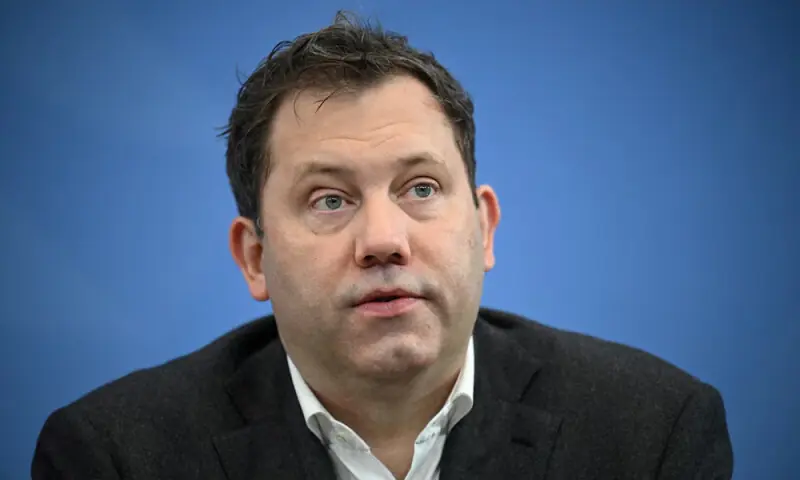
BERLIN: The German and French finance ministers said on Monday that European powers would not be blackmailed and that there would be a clear and united response to U.S. President Donald Trump’s threats of higher tariffs over Greenland. Trump vowed on Saturday to implement a wave of increasing tariffs on imports from European allies until the United States is allowed to buy Greenland, intensifying a dispute over the future of Denmark’s vast Arctic island. “Germany and France agree: We will not allow ourselves to be blackmailed,” German Finance Minister Lars Klingbeil said at his ministry, where he met with his French counterpart. “Blackmail between allies of 250 years, blackmail between friends, is obviously unacceptable,” French Finance Minister Roland Lescure said at the same event. Anti-coercion instrument on table EU leaders are set to discuss options at an emergency summit in Brussels on Thursday. One option is a package of tariffs on 93 billion euros ($107.7 billion) of U.S. imports that could automatically kick in on February 6 after a six-month suspension. “We Europeans must make it clear: The limit has been reached,” Klingbeil said. “Our hand is extended but we are not prepared to be blackmailed.” READ MORE: EU says ‘priority is to engage not escalate’ after Trump tariff threat The other option is the so far untested “Anti-Coercion Instrument”, which could limit access to public tenders, investments or banking activity or restrict trade in services, in which the U.S. has a surplus with the bloc, including in digital services. Lescure said that although the EU’s anti-coercion instrument was above all a deterrent, it should be considered in the current circumstances. “France wants us to examine this possibility, hoping of course that deterrence will prevail,” Lescure said. He added that he hoped the transatlantic relationship will return to being “friendly and based on negotiation rather than a relationship based on threats and blackmail”. Klingbeil said he was not interested in escalation, as it would come at the expense of economies on both sides of the Atlantic. Europe is ‘not weak’ Klingbeil and Lescure’s U.S. counterpart Scott Bessent said on Sunday that European “weakness” necessitated U.S. control of Greenland for global stability. “Our objective in the coming days, weeks, quarters and years is to politely but firmly convince Scott Bessent that he is wrong,” Lescure said. Lescure said Europe needed to adopt reforms to boost its technological edge and productivity in order to prove that Europe was indeed strong. Klingbeil said that with 27 European countries and 450 million citizens, the EU must develop strength - economically, in security policy, and politically - so that no one would even suspect Europe is weak. “What I expect from us as Europeans is that on a question that concerns the integrity and sovereignty of a country, we very clearly put up a stop sign and say: We are not going down this road,” Klingbeil said.