


 Ruptly
 Travel disrupted - Rail services slowed at Madrid's Atocha after deadly train collision causes delays across Spain
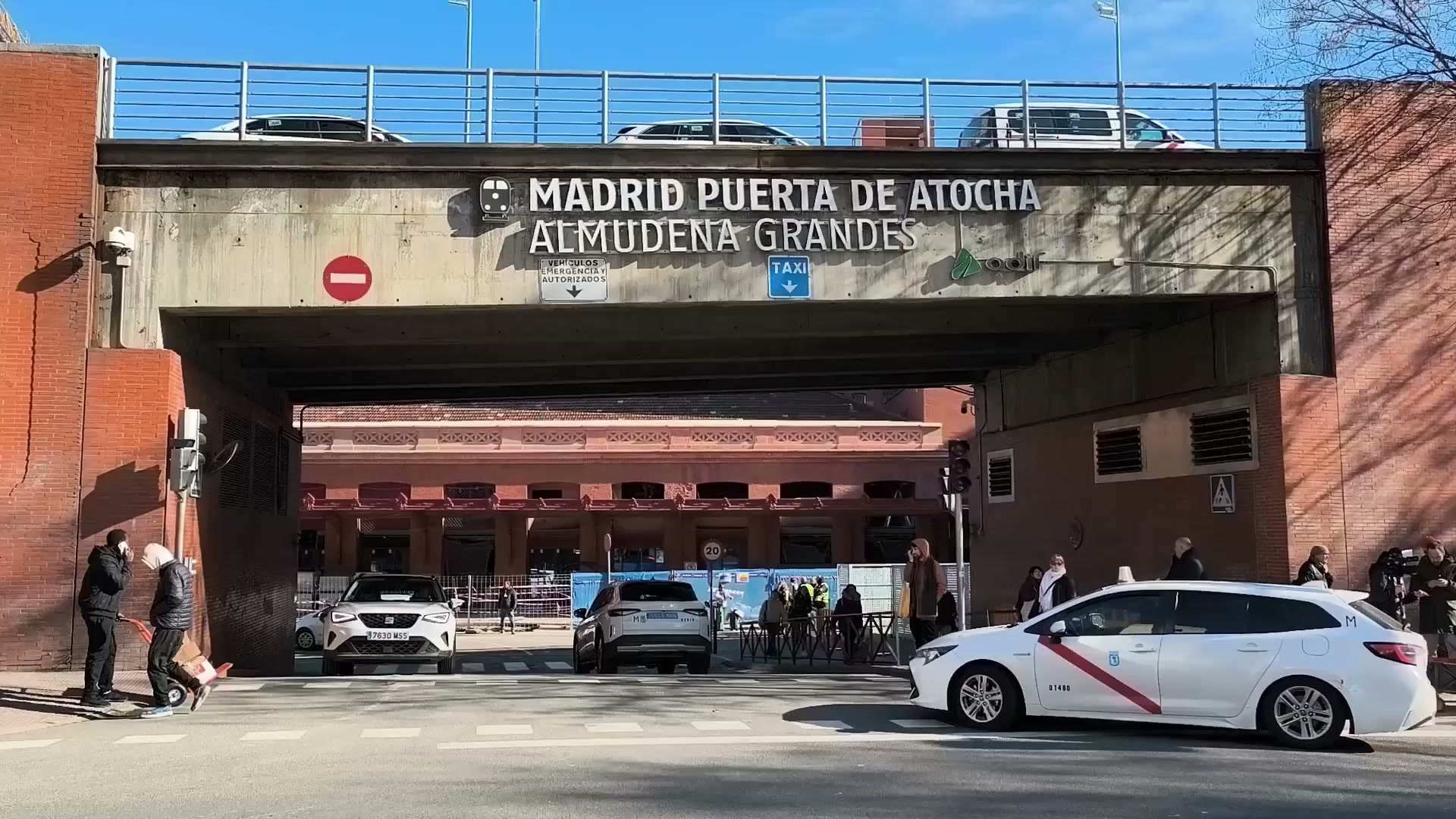
"Travel was severely disrupted at Madrid's Atocha Station on Monday after the deadly train collision in southern Spain prompted partial service suspensions, causing delays and congestion. Footage shows travellers moving through the station as information screens list multiple services to Andalusia as cancelled. Outside, several trains remain stationary on the tracks. Psychologists from SUMMA 112, Madrid's emergency medical service, are deployed at the station, providing support to the families of the victims. "We try to provide guidance. They arrive in a state of anguish, anxiety and uncertainty because they don't truly know if their relatives have passed away or not," a psychologist explained. "We have to inquire, guide them and help them begin to process this new critical situation that they don't know how to face," she added. According to the rail infrastructure manager Adif, the accident began when the tail end of an Iryo high-speed train travelling from Malaga to Madrid derailed. The derailed carriages spun onto an adjacent track, crashing into an oncoming Renfe Alvia train travelling from Madrid to Huelva. The first train, Iryo 6189, was carrying around 300 passengers, the operating company said, while authorities confirmed that around 400 passengers and staff were onboard both trains at the time of the collision. The disaster claimed at least 39 lives, with around 300 others left injured. Among the dead is a train driver. Many wounded passengers were taken to hospitals in Cordoba and Seville for treatment. The exact cause of the crash remains unknown. Speaking to reporters at Atocha station in Madrid, Spanish Transport Minister Oscar Puente said investigations are underway to determine what led to the derailment. Transport Minister Oscar Puente said the derailment happened on a newly renovated track and called the accident 'tremendously strange'. Prime Minister Pedro Sanchez said Spain was facing a 'night of deep pain,' as condolences poured in from across the country. He also declared three days of mourning starting Tuesday. Sunday's disaster is Spain's deadliest rail accident since 2013, when a high-speed train derailed near Santiago de Compostela, killing 80 people."