


 Dawn.com
 MoUs for $4.5bn agri investment with China
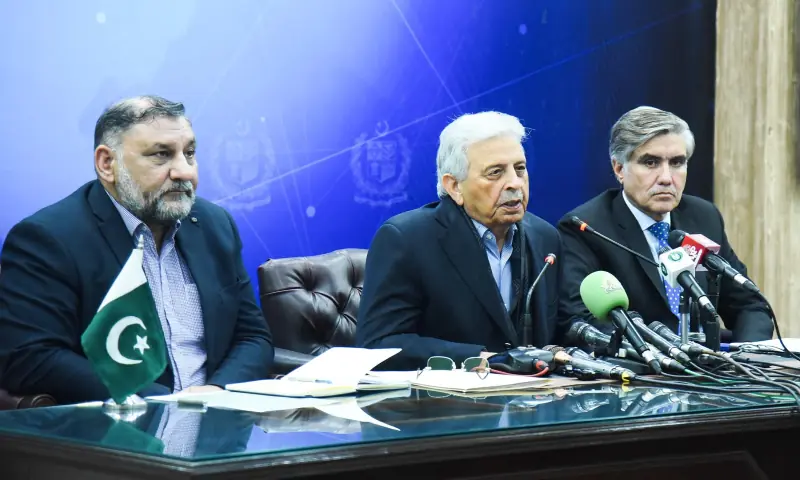
ISLAMABAD: Private sector entities of Pakistan and China have signed 78 memoranda of understanding worth $4.5 billion at the conclusion of Pak-China Agriculture Investment Conference, marking agriculture’s elevation as a priority sector under the second phase of CPEC. Briefing the media on Tuesday, Minister for National Food Security and Research Rana Tanveer Hussain said the conference would contribute to increased bilateral agricultural trade, expanded investment in priority sub-sectors, modernisation of production and processing systems, and the establishment of commercial partnerships between private sector entities of the two countries. Cooperation across 10 priority sub-sectors of agriculture includes collaboration in seed production technology; export of heat-treated beef; construction of grain storages and warehouses; strengthening ties for cheese production and export; improvement of local milk processing machinery; export of heat-treated offal; collaboration in buffalo UHT milk and camel milk powder; poultry machinery and technology; chemicals and bio-pesticides; feed mill equipment; renewable technologies in irrigation; value addition in mango pulp and tea; efficient fodder production; fish and shrimp feed technology; fruit processing; development of sweet and seedless Chinese citrus orchards in Pakistan; value addition of rice; soya milk packaging; and exchange of best citrus varieties with mango (chaunsa) variety. Of the 78 agreements signed, 37 were business-to-business investment agreements, 24 joint ventures and 14 partnership agreements. The 10 priority sectors identified were agri-chemicals and inputs; agri-machinery; food processing and value addition; meat and poultry industry; dairy products; fruits and vegetables; animal feed; fisheries and aquaculture; cold chain systems; and food-grade packaging and equipment. Agriculture formally included as priority area under CPEC 2.0 To ensure implementation of the MoUs, dedicated units were being established in the ministry as well as at the Pakistan Embassy in Beijing to oversee follow-up, the minister said. He added that enhanced cooperation in agriculture would help boost Pakistan’s exports. Currently, Pakistan exports agricultural products worth $8bn, and the government aims to double this figure over the next three years. Mr Hussain explained that the conference was conceived as a targeted, investment-focused platform rather than a general consultative forum. Its design emphasised direct private sector engagement, investment matchmaking and facilitation support, aligned with national priorities for agricultural modernisation and export-led growth. He said 116 Chinese companies and 165 Pakistani companies were invited to participate, enabling business-to-business matchmaking between shortlisted firms from both sides. Pakistan also showcased investable projects, value chains and policy reforms. He added that Pakistan had already signed a protocol for milk products with China. Documents revealed that the food security ministry plans to sign more than 25 sanitary and phytosanitary (SPS) and export protocols with key partners, including China, in 2026. Pakistan plans to introduce a new seed policy and a national agricultural biotechnology policy to create pathways for GMO seeds. Proposals are under consideration to allow the export of pesticides and fertilisers under specific conditions, particularly targeting regional and African markets. The participants of the conference were informed that Pakistan’s annual fruit production exceeds 10 million tonnes, while vegetable production stands at over 9m tonnes. With a rising population, domestic demand is growing at more than 5pc annually. Published in Dawn, January 21st, 2026