


 Dawn.com
 Gupta’s guilty plea vindicates Pakistan’s stance
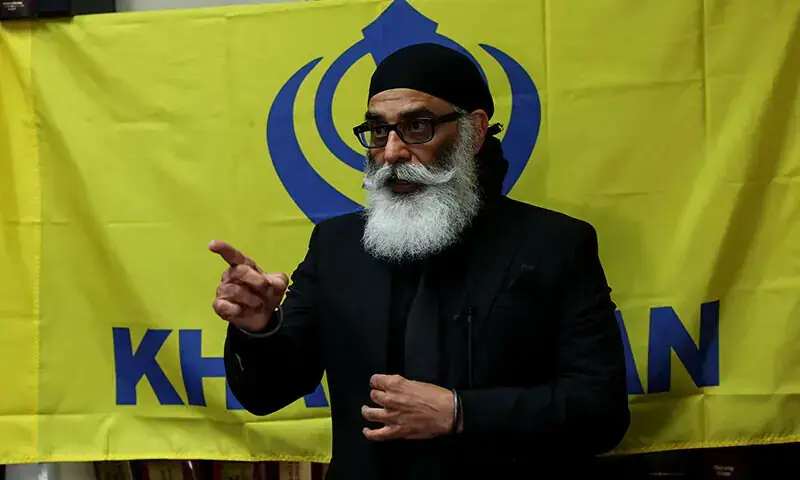
WASHINGTON: As a guilty plea in New York confirms India’s involvement in an assassination attempt on US soil, Pakistan has highlighted Indian-sponsorship of extraterritorial terrorism and threats against dissidents abroad, warning that the Modi government, in the garb of extremist Hindutva ideology has become the leading state sponsor of terrorism. Islamabad has shared “irrefutable and concrete evidence of Indian sponsorship of terrorism and terrorist groups operating in Pakistan from across our borders,” said Tahir Abdrabi, spokesperson for Pakistan’s Ministry of Foreign Affairs, at a recent press briefing. The warning comes as Nikhil Gupta , an American citizen, formally stands convicted in a US federal court after a Manhattan judge accepted his guilty plea in a murder-for-hire conspiracy targeting Gurpatwant Singh Pannun, a Sikh activist living in New York. The case carries a maximum prison exposure of 40 years. Observers say conviction confirms Indian plot to kill Sikh activist, but it does not resolve broader diplomatic questions of ‘state responsibility’ Under US law, a conviction occurs once a judge accepts a guilty plea after determining it was made knowingly, voluntarily, and with a factual basis. In Gupta’s case, the finding of guilt is final; only sentencing remains. His hearing is scheduled for May 29, with prosecutors calculating an advisory sentencing range of 235 to 293 months (roughly 19 to 24 years). Gupta admitted to charges of murder-for-hire, conspiracy to commit murder-for-hire, and conspiracy to commit money laundering. US officials have emphasised the broader implications. A US Department of Justice statement said the assassination plot was initiated by an Indian government employee, identified in reports as former Research and Analysis Wing (RAW) officer Vikash Yadav. FBI Assistant Director James C. Barnacle, Jr., added that Gupta acted at the “direction and coordination of an Indian government employee,” facilitating a “foreign adversary’s unlawful effort to silence a vocal critic of the Indian government.” When the case first appeared in the media in November 2023, then-Senator and Foreign Relations Committee Chair Ben Cardin described it as “a foiled assassination plot against a US citizen involving Indian government officials,” highlighting the need to examine how governments attempt to silence dissidents abroad. While US lawmakers have not publicly commented on Gupta’s conviction, reports indicate interest in assessing whether the plot reflects a systemic pattern or a limited operation. Intelligence cooperation between Washington and New Delhi could see subtle recalibrations in sensitive channels, while the Trump administration is expected to use the case as a warning against extraterritorial targeting on American soil. Diplomatic observers in Washington note that the case will likely influence “intelligence sharing, law-enforcement coordination, and visa or security vetting in sensitive areas,” rather than immediately prompting public sanctions or a breakdown in relations. The case also remains linked to the 2023 killing of Hardeep Singh Nijjar in Canada, an episode that strained Ottawa-New Delhi relations and drew attention from the United States and other Five Eyes partners. Together, the two incidents have positioned India in Western security discourse as a country accused of targeting dissidents abroad. While Gupta’s conviction confirms the plot, it does not resolve broader diplomatic questions of state responsibility, the observers noted. Those issues are expected to be addressed through intelligence channels, congressional oversight, and private diplomatic engagement — the quiet processes through which Washington balances law enforcement red lines with strategic partnerships central to its Asia policy. In that sense, the case is no longer just about the criminal act itself, but about how the United States chooses to translate a conviction into long-term norms governing the conduct of both allies and adversaries. Published in Dawn, February 22nd, 2026