


 Business Recorder
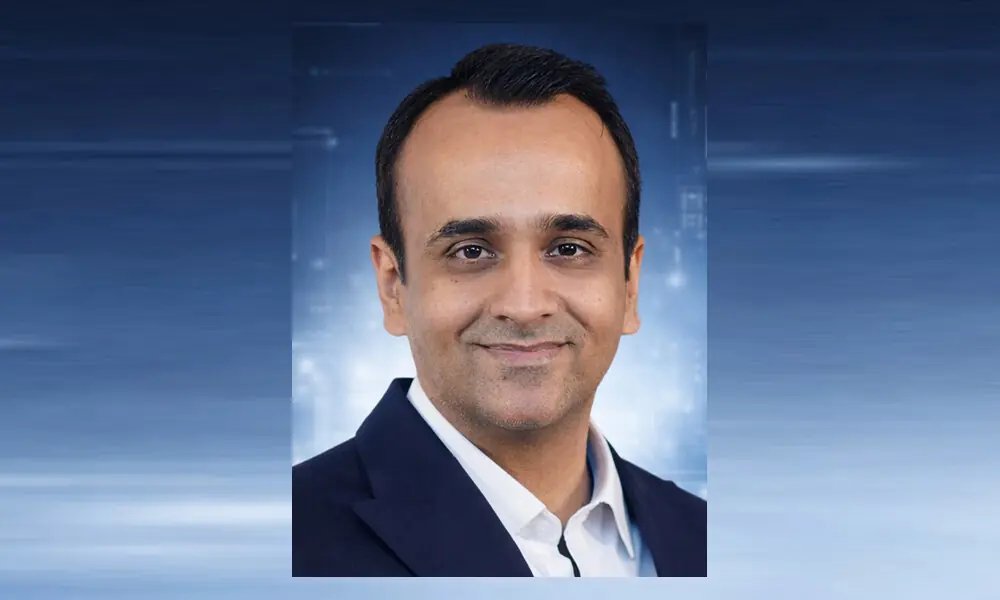
 Interview with Abdul Haseeb, Managing Director & CEO, TMC Pvt Ltd: ‘Pakistan has talent — but we lack employable expertise at scale’
Abdul Haseeb is the Managing Director & CEO of TMC (Pvt.) Ltd, one of Pakistan’s leading enterprise technology and digital transformation firms. Under his leadership, TMC has grown into a 1,000+ person organization with a presence across Pakistan, the Middle East, and North America. The company partners with global technology leaders such as SAP and Qlik and has delivered transformation solutions for 310+ organizations across sectors including FMCG, telecom, energy, manufacturing, healthcare, and the public sector. TMC has also been recognized as Pakistan’s Top SAP Partner for five consecutive years (2020–2024) and is a multiple SAP Quality Award winner, Following are the edited excerpts of a recent conversation BR Research had with him: BR Research: Before we dive in, tell us about your role at TMC and what the company does. Abdul Haseeb: Prof-essionally, I am the Managing Director of TMC. TMC is now an IT company of around 1,000 people. We primarily focus on SAP implementation, cybersecurity, digital AI, and data. We have a presence in Lahore, Karachi, and across international markets including the UAE, Qatar, Saudi Arabia, and the US. I have been running this setup for around 16 years, and we have seen both organic and inorganic growth — including acquisitions such as Siemens Pakistan’s SAP Business and Xnrel — which have now been merged under the TMC umbrella. BRR: As an industry expert, how do you see Pakistan’s IT sector today — and how are Pakistani tech companies performing within the global technology ecosystem? AH: There are three ways to look at it, starting with the global perspective. From a global standpoint, Pakistan does have good talent that can attract work. But when international clients look deeper at the level of expertise, we have very little to provide at scale. Globally, IT work typically falls into three models. The first is providing services and resources to consulting companies, projects, and clients. The second is being a technology provider, where you build and sell products. The third is providing back-office support for large international companies. In Pakistan, we are mainly operating in the first category. We do not have much of the second category — large-scale enterprise B2B products operating globally. And we also lack the third category — the presence of major global firms running large development centres or back offices here. BRR: How does this compare with regional competitors? AH: If you look at countries competing for services work, Pakistan’s scale is still low compared to geographies of comparable size. Even Egypt, for example, has built much more service talent at scale. India is a different benchmark entirely. India has setups like PwC, SAP Labs, and Oracle innovation centres. Pakistan does not have large international development centres like that. BRR: You mentioned a gap in expertise. What specific skills is Pakistani tech talent lacking? AH: You have to understand the difference between a university graduate and an employable resource in the global market. A global company wants someone productive in a defined role — and there is a major gap between that expectation and what our graduates typically offer. An employable resource is someone who has genuine experience in a specific tech stack. International markets generally do not hire “freshers.” Freshers can be inducted into local training programs, but global clients typically want experienced professionals. BRR: So how do we close this gap? AH: We need large-scale training — and not superficial training. People assume a 3-to-6-month course can produce a globally competitive resource, but that is not realistic. What is required is structured on-the-job training, real project exposure, and time in productive environments. That is how you build a large population of employable professionals. BRR: What role should universities and academia play in this transformation? AH: If academia is to play its role, it must provide the training and exposure that the industry currently has to provide internally. Universities might teach a basic course on SAP or Oracle, but they lack practical industry application. Academia needs stronger linkages with industry so that they teach practical, market-relevant skills. Also, universities must keep up with technology cycles. Technology changes extremely fast. A tech stack can have a shelf life of only a few years. By the time a university develops a program, the market has already moved. Universities need a more robust mechanism to stay current. BRR: Are there global models Pakistan can emulate — particularly India? AH: In India, big companies like HCL built their own campuses where they run training and onboarding programs at scale. HCL produces around 5,000 trained people annually, with a substantial portion trained directly by the company. India also has institutions like IIT, which produce talent that meets global standards. Pakistan has fewer such institutions. India’s industry reached a scale worth billions of dollars, and that scale allowed them to train and absorb talent systematically. BRR: Does Pakistan need investment first to reach that scale? AH: It’s a chicken-and-egg problem, but the “India boat” has sailed. Pakistan now has to do it organically. Companies like TMC are already growing aggressively. We grow our revenue by 35–40% annually, and others are also expanding. If the government wants to help accelerate this, there are things it can do — but companies will continue regardless. BRR: How is TMC approaching the talent issue internally? AH: We have our own training institute called Knowledge Streams. We run a university alliance program and train around 1,000 students annually, and we hire roughly 250 of them. This solves our own company’s needs at our current scale. But if we want to solve it at a national level, we need much larger and more structured interventions. BRR: Do you think freelancers are helping the country — or holding it back? AH: From an economic standpoint, a structured setup is always better than freelancers because structured firms can build capability, create more value, train people, and scale. I am not discouraging freelancers. But if you want the country to move up the value chain, you need strong companies. Companies can grow into billion-dollar entities and build systems — including training, product development, and exports at scale. Right now, freelancers are given incentives like 1% income tax, while registered companies face much higher taxes — in some cases up to 33% on domestic income. This creates a structural imbalance. Companies are the ones that can deliver scale, higher value-added services, and long-term ecosystem development. The policy environment should reflect that. BRR: How can Pakistan move beyond traditional outsourcing/BPO models toward more innovative, value-added services? AH: There are multiple dimensions. First, we must raise the talent quotient. This includes improving how universities produce talent and how companies train people with authentic experience. Second, we need more entrepreneurship. Entrepreneurs are the ones who build high-margin businesses, drive innovation, and pull the ecosystem upward. Third is domestic consumption. Pakistan is a large country. If we grow indigenous technology adoption internally, we will develop deeper capability and solutions — and move beyond commoditized hourly billing. This is similar to the China model: nurture and nourish the industry internally first. BRR: How important is indigenous development of AI and emerging technologies for Pakistan’s digital future? AH: Technology is always emerging. There is no concept of “past technology.” In the tech business, you are either driving the road roller — or you are part of the road being rolled over. India rode the cloud wave successfully. We missed that boat. Now there is an AI wave, and we must leverage it fully. Globally, growth is now being driven by AI — whether you look at China, the US, or major global technology leaders. Everything from geopolitics to the global economy is increasingly dependent on AI. Our focus should be on AI. BRR: Where do we stand as a country in terms of AI progress? AH: We are slow.The recent AI summit was a good move, and it started a campaign. But we need AI in our schools, workplaces, and government departments. We need aggressiveness. Look at the UAE, Qatar, or the US. Companies are already restructuring workforces using AI. AI will define the future of nations. BRR: Should Pakistan focus on attracting foreign investment — and is it realistic to attract companies like Google? AH: We don’t necessarily need “investment” in the traditional sense. What we need is for foreign companies to establish back offices and development centres here. That is how technology transfer happens. We should not just focus on FDI. Companies will come if it benefits them. Historically, Pakistan has also had issues like restrictions on repatriation of profits, which discouraged international firms. Now, we must create a business environment where companies want to come here. Google’s move to set up in Pakistan is highly appreciated, because they are one of the four major global movers in AI. We should welcome them with open arms. BRR: Do you think Pakistan is over-regulated? Is the issue the regulations themselves — or the way they are implemented? AH: Developed countries actually have far more regulation and compliance than we do. What we lack are the right regulations. Right now, IT companies have to comply with many things that are not even relevant to the industry. What we need is stronger enforcement of laws around Intellectual Property (IP) and contracts. Everything should be aligned toward Ease of Doing Business. BRR: Can you give an example? AH: In Dubai, the UK, or the US, a process may have ten steps — but it happens instantly. In Pakistan, even one step can take forever. For example, local banks demand cash-backed bank guarantees. In the US, there is an insurance-based setup where you can obtain cyber, performance, or other guarantees in an hour without blocking your capital. This is the direction we need to move in. BRR: What two or three major reforms would you recommend for Pakistan’s IT sector right now? AH: First, the talent pipeline must be addressed holistically. We should encourage companies to take more fresh graduates and train them. If a company typically takes 10 graduates, it should take 30 or 40. We can learn from the medical sector. Medical graduates have a mandatory house job. Why can’t we have a concept of “Teaching Tech Firms” that do the same? Second, we need structural initiatives for entrepreneurship. It is not just about loans — it is about mentorship, ecosystem support, and monitoring outcomes. Right now, government initiatives are often fragmented — training programs, micro-loans, and co-working spaces exist, but separately. We need deeper, larger-scale incubation models with more funding and focus.