


 Dawn.com
 The ecological cost of pesticides
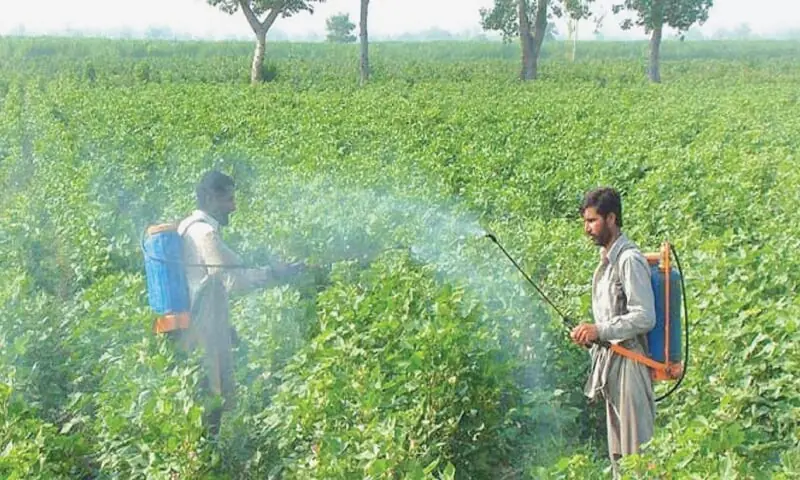
Crop protection chemicals have become inseparable from modern agriculture. From cotton belts to vegetable clusters, pesticides are widely used to secure crop yields, protect quality and stabilise farm incomes. For decades, the policy conversation has focused mainly on how much pesticide was being applied and whether it was enough to prevent crop loss. Today, a more complex and uncomfortable question is emerging: what is the ecological price of this protection and who ultimately pays for it? New international scientific assessments suggest that the ecological risk associated with pesticide use is increasing across many farming regions. The concern is not only about spray volume, but about toxicity intensity; how harmful the applied chemical mix is for insects, soil organisms and aquatic life. This shift in measurement changes the narrative. Even where total usage grows slowly, the biological damage potential may rise sharply due to stronger formulations and combined exposures. For agricultural economies like Pakistan, this is not just an environmental debate. It is a purely farm management and agricultural economics issue. Agriculture depends on living ecological systems as pollinators, soil micro-organisms, beneficial insects and natural pest predators. These systems rarely appear in farm budgets, yet they silently support productivity. When pesticide regimes become more toxic or poorly targeted, these support systems weaken. The consequences do not always appear immediately, but they do accumulate. Insects are usually the first to be affected. While pesticides are designed to eliminate crop pests, they also reduce non-target insect populations. This includes pollinators and beneficial predators that naturally control pest outbreaks. When beneficial insect numbers fall, farmers often face secondary pest surges. The response is typically more spraying, not less. Over time, the production system may slip into a chemical dependence cycle. Areas with heavy pesticide reliance experience declining beneficial insect populations and weaker soil biology, which harms crop productivity Soil biology is another hidden casualty. Many soil organisms are sensitive to chemical residues. They play a pivotal role in nutrient cycling, soil structure and moisture retention. When soil biodiversity declines, fertiliser efficiency drops and crop response becomes less predictable. Farmers compensate with more inputs, raising production costs. Field-level observations across multiple countries show that areas with heavy pesticide reliance often experience declining beneficial insect populations and weaker soil biological activity. The economic effect is indirect but real: rising input needs, greater pest volatility and reduced resilience against shocks. Pakistan’s crop sector has seen steady growth in pesticide consumption over the past two decades. Climate variability, pest pressure and yield targets have all contributed. However, advisory and monitoring systems have not expanded at the same speed. In many regions, pesticide retailers are the primary source of farmer guidance. Their commercial incentive is sales, not optimisation. As a result, overuse, repeated sprays and unverified chemical mixtures are commonly reported by growers themselves. The cost implications are already visible. Crop protection chemicals now represent a significant share of variable production costs for many crops. When misuse reduces beneficial species, farmers must spray more frequently, pushing costs further upward. This pattern narrows margins and increases financial risk, especially for smallholders. There is also a growing trade dimension. International food markets are tightening standards on chemical residues and sustainability compliance. Export buyers increasingly require traceability and safe-use assurances. Shipments that exceed residue limits face rejection and financial loss. For Pakistan’s horticulture and specialty crop exporters, pesticide governance is becoming a competitiveness factor, not merely a regulatory one. The answer is not to demonise pesticides or call for blanket bans. Crop protection remains essential for food security. The real issue is efficiency and intelligence of use. The difference between necessary protection and ecological overreach lies in targeting, timing and dosage. Integrated pest management provides a tested pathway. Instead of routine calendar spraying, integrated systems rely on field scouting, pest thresholds, biological controls and selective intervention. Chemicals are used when needed, not by default. Countries that have invested consistently in integrated pest management have reduced chemical load while maintaining yields. In Pakistan, such programmes exist but remain fragmented and underfunded. Scaling them requires institutional commitment rather than pilot projects alone. Technology can strengthen this transition. Farm-level digital transformation including pest alert platforms, satellite crop monitoring and precision spraying tools may reduce unnecessary applications. But technology adoption is not an automatic. Farmers must have sufficient digital literacy to interpret advisories and act correctly. Building technology-enabled farm capability means shifting decisions from routine habit to data-supported judgments. When used properly, digital decision support lowers both ecological risk and input cost. A major constraint is weak data. Reliable long-term pesticide usage and exposure records are limited across much of the developing world. Without measurements, risk management remains incomplete. National databases that track sales, usage patterns and ecological indicators would strengthen both policy-making and market confidence. Farmer realities must remain central in any reform effort. Producers are already under pressure from rising fuel, fertiliser and seed costs. Sudden regulatory tightening without support would be counterproductive. Transition toward lower-risk systems must be accompanied by training, advisory access and financial incentives. Global experience shows that reducing ecological pesticide risks and protecting farm profitability are compatible goals. In many cases, better targeting reduces chemical expenditure while improving ecosystem function. The benefits, however, appear over time, while adjustment requires immediate effort. That is why sustained policy backing matters. Modern crop protection has delivered undeniable gains in farm yield and agricultural supply stability. But its rising ecological cost is now producing economic repercussions that can no longer be ignored. Agriculture is not separate from ecology; it is built on it. When ecological foundations weaken, farm economics eventually follow. The policy choice ahead is not between productivity and protection. It is between short-term chemical intensity and long-term agricultural resilience. Smarter pest management, stronger advisory systems and technology-enabled farm capability can protect both biodiversity and balance sheets if acted upon in time. The writer is affiliated with the School of Management, Jiangsu University, Zhenjiang, Jiangsu P.R. China, and the Department of Agribusiness and Entrepreneurship Development, MNS-University of Agriculture, Multan, Pakistan. Published in Dawn, The Business and Finance Weekly, February 23rd, 2026