


 Autocar
 The 'disobedient' feature in new EVs that drives me crazy
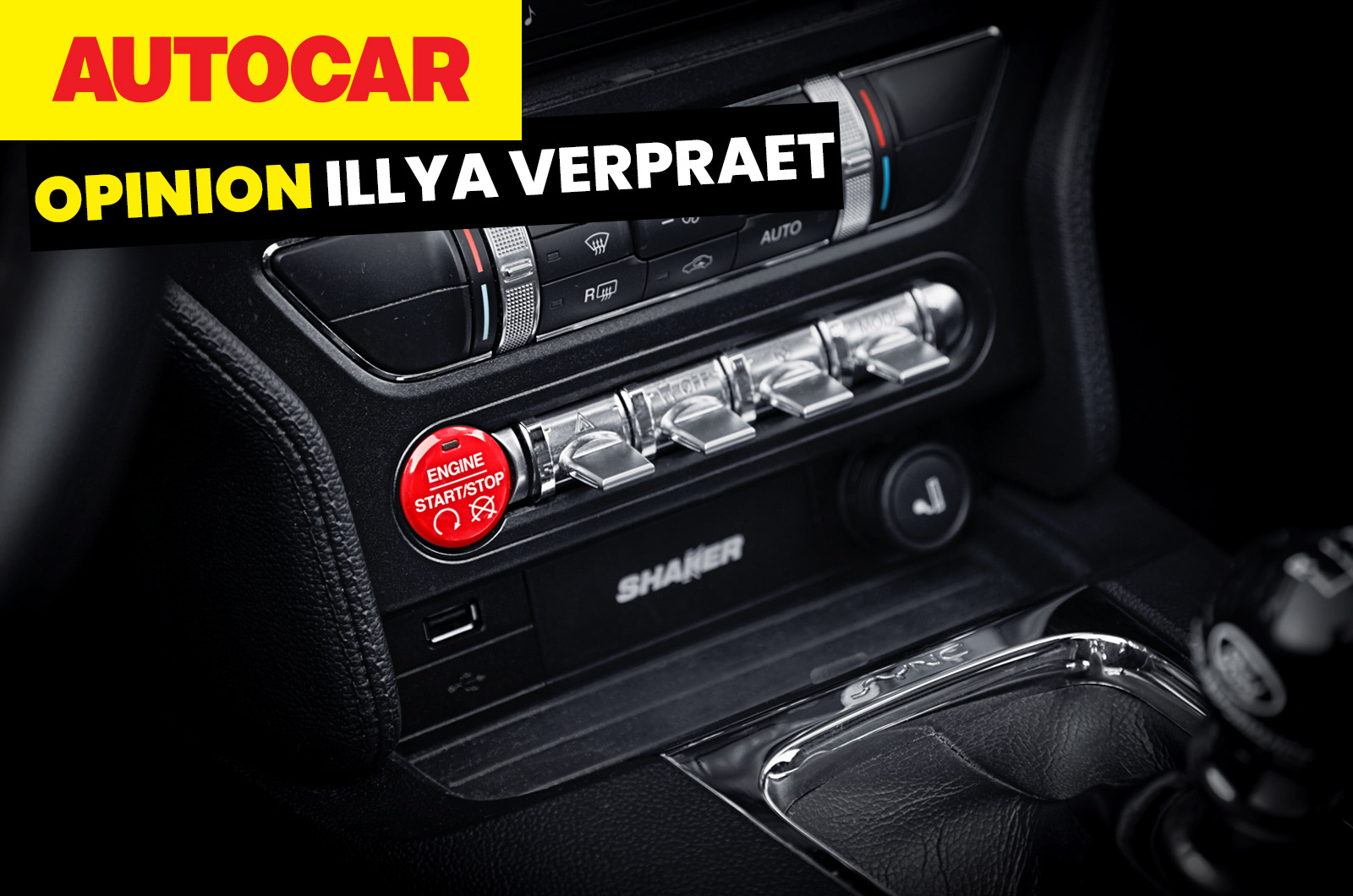
When talking about buttons, the on/off switch doesn't come into the conversation. Maybe it should We at Autocar talk a lot about buttons and other physical controls in cars and how having at least a few well-chosen ones for essential functions is important. The good news is that it does seem manufacturers are slowly getting it. Volkswagen , one of the pioneers of touch-sensitive nonsense, recently let me have a poke around an early prototype of its ID Cross EV , which featured a compact array of physical buttons in the centre console and on the steering wheel. Hurrah! A button that's less discussed is the one to turn the car on and off, which is strange because it's the one that is actually contentious. Most people agree that having buttons rather than touchpads on the steering wheel is a good thing. Dials for the interior temperature and fan speed are uncontroversial too. And having physical controls for the indicators is so universally agreed that even Euro NCAP has decided it won't award the full five stars to cars that don't have any. I'm fairly sure that was the reason for Tesla 's mirror-signal-U-turn on column stalks, rather than any naturally acquired common sense. Start/stop buttons in EVs , though, are another matter. There are those who think that they are completely redundant because there's no engine to start and therefore the car should just 'energise' when you get in and power down when you get out; putting it into drive should be enough to tell it to go. They also argue that such functionality is a safety feature: it's good that the car will automatically turn itself off because, with no engine noise, you might forget. Modern EVs are split roughly 50:50 between ones that have a start/stop button and ones that don't. Probably half of those that do will actually ignore your commands and turn themselves off when they deem it necessary. The disobedient ones are the worst. On the face of it, having EVs turn on and off automatically makes sense. After all, there's no engine that should or shouldn't be idling. But as with every instance of a machine trying to guess your intentions, it gets it wrong too often. I've lost count of the times I've been doing some slow-speed manoeuvring in a Volkswagen Group car with my seatbelt off, I've shifted my weight to get a different angle on the passenger-side mirror and the car has turned off and put itself into park mid-manoeuvre. Or the times I've set off and realised I needed to get something from the boot. With modern cars, that means going through the whole rigmarole of turning the various things on or off again. Some of them then have to slowly boot up their infotainment again, load a profile, reconnect Apple CarPlay... The loss of control that comes with modern cars doing things they're not asked to do is frustrating, then. But the ritualistic nature of switching a car on and off means a lot to me as well. Maybe this notion will disappear as we get a generation of drivers who only ever know cars with start/stop buttons, but I love starting an older car with a key. Every car I've personally owned has had a key that I needed to insert into a barrel and turn. The act of making sure the gearbox is in neutral or the clutch is down, twisting the key one step to turn some lights on, then another to prime vital systems and then one final time to wake the engine is a symbolic gesture in motoring. It's like uncorking a bottle of wine. I seek out bottles with a proper cork, not because the contents are necessarily of higher quality than in those with a screw top but because the short yet meaningful process of using the corkscrew that ends with the gentle 'pop!' somehow gives it all a bit more gravitas. Screw tops just don't have the same sense of occasion and nor do cars that start and stop themselves.