


 Business Recorder
 Trump hikes global tariffs
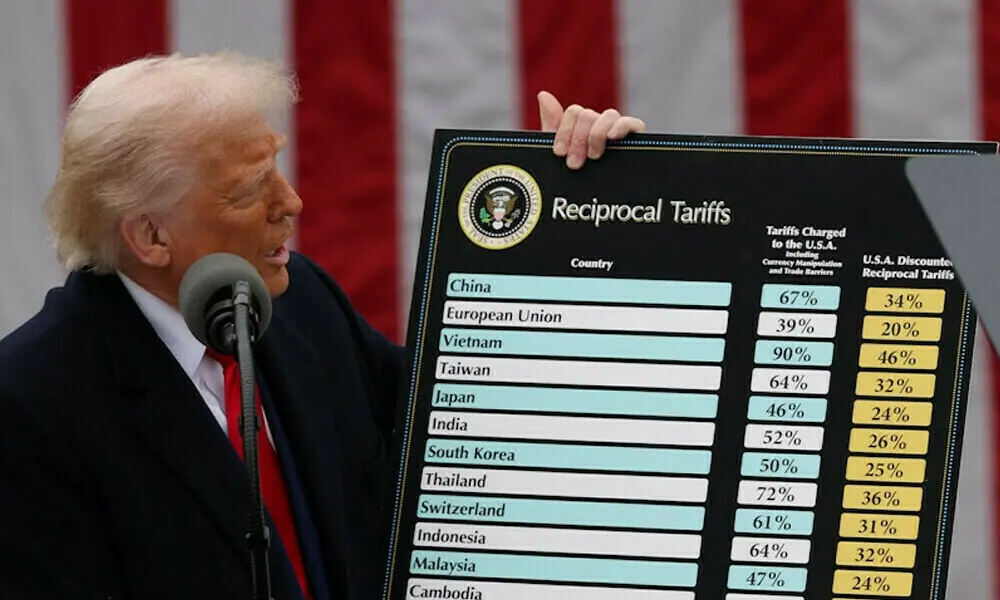
EDITORIAL: Peeved by the Supreme Court decision rejecting the president’s authority to impose tariffs under the 1977 Economic Emergency Powers Act President Donald Trump announced a rise in tariffs on imports from 10 to 15 percent citing Section 122 of the 1974 Trade Act that allows tariffs up to 15 percent for 150 days to address “large and serious” balance of payments deficits. Tariffs, empirical data reveals, are passed on their entirety onto the consumers of the importing country by raising price of imports. The White House issued a statement on Friday, noting that some goods, such as certain agricultural products like beef, tomatoes, natural fertilizers that are not grown in the US, and aerospace products will not be subject to the 15 percent levy. Additionally, when asked, President Trump stated Friday past that the numerous trade deals the US has already signed with other countries, including the European Union, China and other trading partners around the world “will likely remain in place…because they are international.” No doubt countries will seek greater clarity due to the use of the word “likely” as would Pakistan, given that 19 percent tariffs were agreed between the US and Pakistan, after considerable diplomatic effort on the part of our authorities. Critics of the government challenged the 19 percent tariffs agreed by the authorities as this may transform a trade surplus in favour of Pakistan into a deficit; and also lamented the haste in reaching a deal which they point out led to a rate that is higher than what India negotiated less than a year later (a factor that would impact on our export competitiveness in the US). Yet what must be acknowledged is that 19 percent was the lowest rate that was negotiated between the US and some of its trading partners at the time notably Malaysia, Cambodia, and Indonesia though the Vietnam tariff agreed was 20 percent. There is no doubt that President Trump harbours very warm feelings that he frequently publicly acknowledges for Prime Minister Shehbaz Sharif and Field Marshal Asim Munir which may, perhaps, account for the fact that he has yet to appoint an Ambassador to the country as he may prefer to directly deal with our leadership; however, at the same time, it is relevant to note that the Pakistani economy remains under considerable stress and, so far at least, in spite of pledges and the signing of non-binding Memoranda of Understanding (MoUs) there has been little foreign investment inflows into the country (which suffered a negative 53 percent decline July-January 2025-26). This situation is evident with the three friendly countries as well, notably China, Saudi Arabia and the United Arab Emirates, that have so far resisted requests to roll over more than USD 12 billion loans for the duration of the ongoing International Monetary Fund loan (scheduled to end late 2027), and instead they renew it annually due to what many maintain is a lack of comfort level with the government staying the course of the politically challenging reforms agreed with the Fund. The roll-overs funds are parked in the State Bank of Pakistan and provide critical support to the local currency. There is no doubt that as the only nuclear Muslim country Pakistan’s geopolitical importance has visibly strengthened in recent months and placed us in a situation where we can seek some reparations for providing a nuclear umbrella to Middle Eastern countries increasingly threatened by Israeli hegemonistic policy in the region. To conclude, it is hoped that the Pakistani authorities, in the short term at least, seek grant assistance and/or loan write-offs – a request that can be backed by a massive reduction in the budgeted current expenditure which would provide leverage with multilateral donors to phase out the IMF’s extremely harsh upfront conditions as well as with bilaterals that Pakistan is on the road towards genuine reforms. Copyright Business Recorder, 2026