


 Business Recorder
 Appointment of Achakzai as opposition leader challenged in FCC
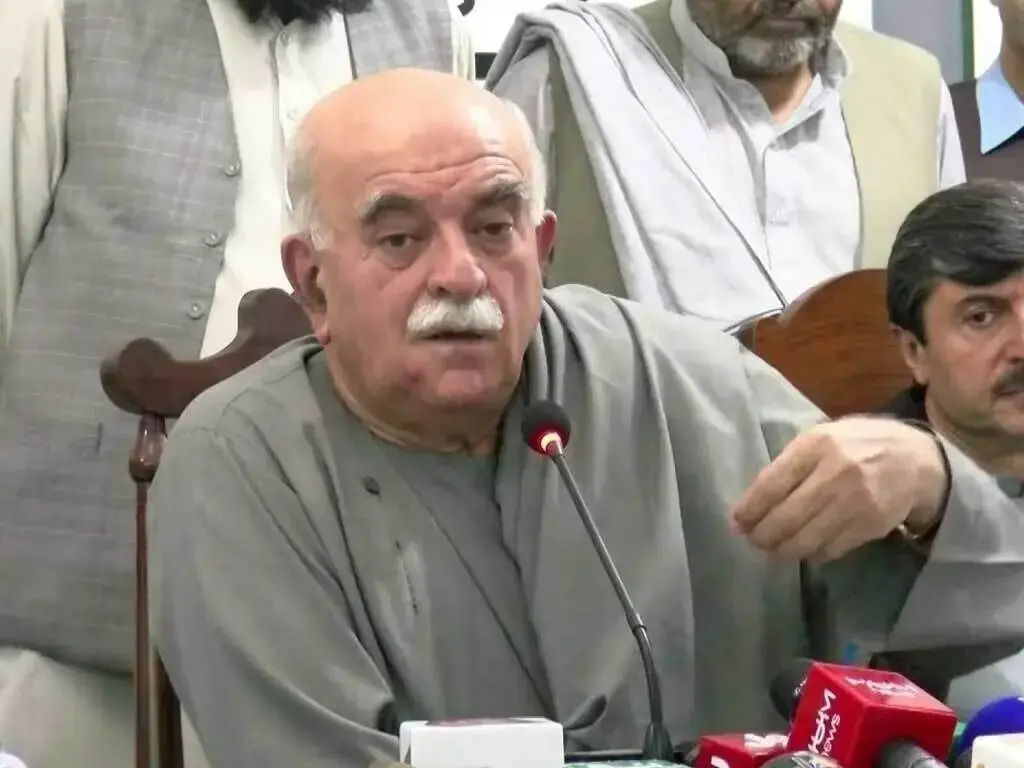
ISLAMABAD: The appointment of Mehmood Khan Achakzai as a Leader of the Opposition in the National Assembly was challenged in the Federal Constitutional Court (FCC). Akbar S Babar, a founding member of Pakistan Tehreek-e-Insaf, on Monday filed a petition before the Federal Constitutional Court under Article 175-E (3) of the Constitution, and cited the federation through the Secretary Ministry of Law and Justice, Speaker and Secretary National Assembly, and Mehmood Khan Achakzai, Leader of Opposition in the National Assembly, as respondents. The Court has been asked to set aside Notification No. F. 24(10)/ 2025-Legis dated 16th January, 2026, whereby Achakzai was declared Leader of the Opposition in the National Assembly. The FCC is also requested to direct the Speaker of the National Assembly to initiate and complete a fresh process for declaration of the Leader of the Opposition strictly in accordance with Rule 39 (3), ensuring independent verification of signatures, ascertainment of voluntariness, demonstrable formation of lawful and reasoned satisfaction, transparency consistent with constitutional safeguards, and insulation of the process from any unlawful or extraneous influence. He further prayed that till the final adjudication of this petition, restrain Achakzai from participating in constitutional processes under Articles 175 A, 213, and 224A of the Constitution and related statutory provisions. The petition, filed through Shaukat Aziz Siddiqui, contended that the public statements by senior leaders of the PTI indicated that the nomination of Achakzai had been finalised pursuant to express instructions of Imran Khan, founder of the PTI, who stands disqualified from holding public office and is presently serving a sentence in Adiala Jail. He raised the question, “Whether a person disqualified from holding public office may nevertheless exercise determinative political authority in a de facto capacity?” It stated that the established parliamentary practice demonstrates that where voluntariness of members’ action is legally material, the Speaker has insisted upon personal interaction and independent ascertainment. In 2014, when members tendered en masse resignations, the Speaker required personal meetings to verify intention before acceptance. In 2022, following mass resignations, the Speaker again undertook individual verification notwithstanding prior acceptance by an Acting Speaker. The purpose of such verification was to ensure that members were acting freely and not under duress or external compulsion, consistent with the guarantees embodied in Article 4 of the Constitution. The petitioner contended that in the present case, no record has been produced indicating that the seventy-four signatories were individually invited, examined or personally verified by the Speaker before issuance of Notification No. F.24 (10)/2025-Legis dated 16 January 2026 declaring Achakzai as Leader of the Opposition. No material has been disclosed demonstrating independent satisfaction of the Speaker regarding the authenticity and voluntariness of the signatures. The absence of such verification assumes particular significance in light of the public assertions that the nomination was made pursuant to the binding direction of a disqualified individual. It said that the importance of strict compliance with Rule 39(3) is heightened by the constitutional consequence attached to the office of the Leader of the Opposition. The holder of that office enjoys the status of a Federal Minister with all perks and privileges. Any infirmity in the lawful constitution of that office risks cascading consequences upon the legitimacy of subsequent constitutional appointments. The petitioner also prayed to declare that Rule 39(3) of the Rules of Procedure and Conduct of Business in the National Assembly, 2007 imposes a mandatory jurisdictional obligation upon the Speaker of the National Assembly to independently verify the authenticity and voluntariness of the signatures of the members before declaring a member as Leader of Opposition. He has also requested to declare that any declaration of the Leader of the Opposition made without demonstrable independent verification of signatures and without lawful formation of jurisdictional satisfaction by the Speaker is constitutionally infirm, arbitrary, unreasonable, and of no legal effect. It further prayed to declare that constitutional disqualification under Articles 62 and 63 of the Constitution cannot be directly or indirectly circumvented through de facto exercise of determinative political authority by a disqualified individual in relation to parliamentary processes, and that any declaration based upon such impermissible direction is unlawful and void. Copyright Business Recorder, 2026