


 Ruptly
 'In one way or another' - Charcoal trade drives forest loss as Malawi battles floods and deepening poverty
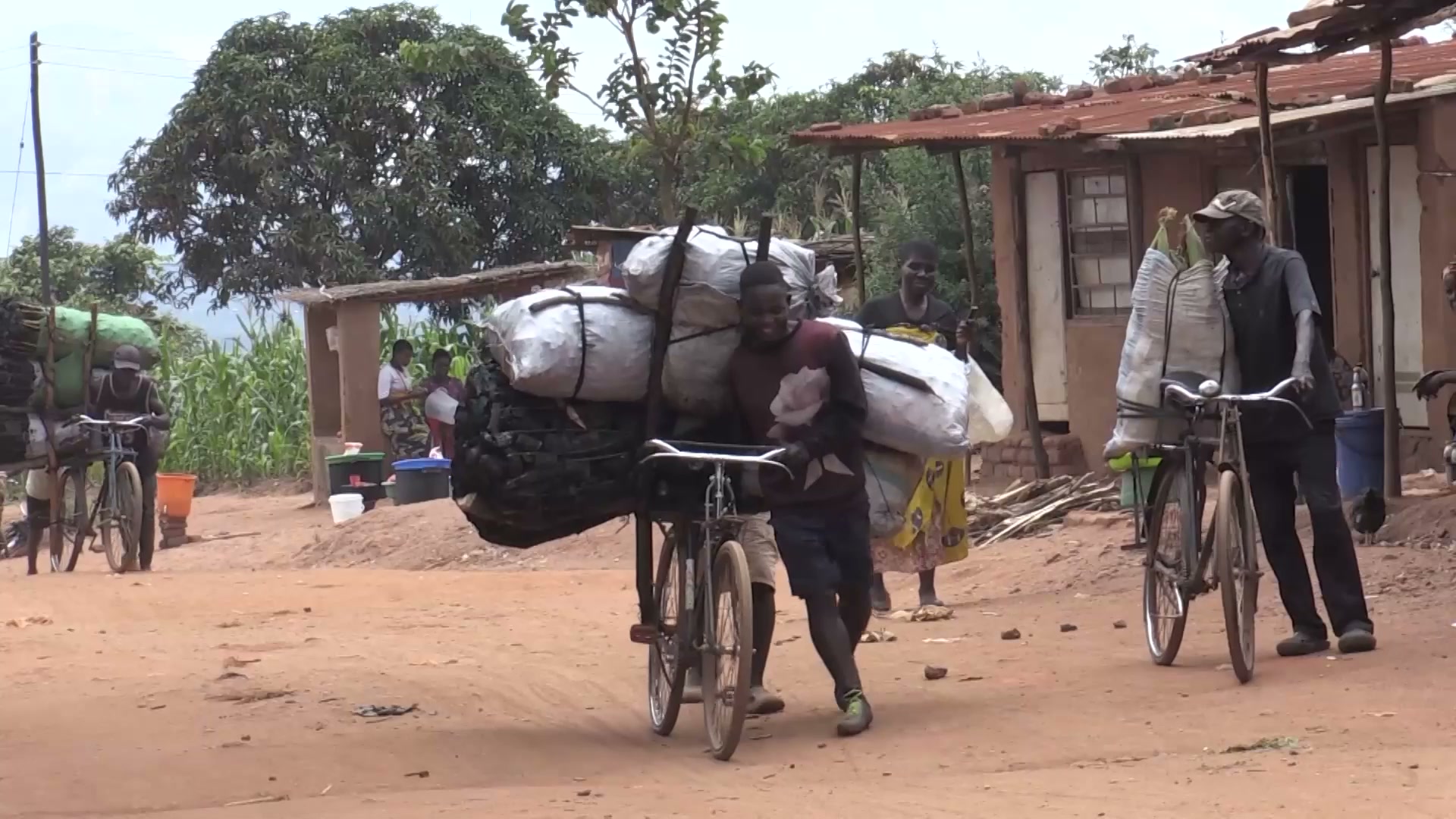
"Malawi is grappling with severe deforestation fuelled by the charcoal trade, with an estimated 17 per cent loss in forest cover between 2001 and 2024 - a decline linked to worsening annual floods, soil degradation and rising rural poverty. Footage filmed on Monday in Lilongwe shows bicycle vendors hauling heavy sacks of charcoal across the city, while trucks loaded with firewood enter busy markets where stacks of charcoal are sold primarily for household cooking. "Now we order the charcoal from Mozambique because our forests were destroyed," said Henry Mtsilo, a charcoal vendor, adding, "Our police and the military confiscate the charcoal from us, and sometimes they tell us to bribe them with one hundred thousand [Malawi Kwacha]. When we fail to give them the money, they impound the charcoal and the bicycles, and our poverty situation keeps worsening." Another vendor, Chrissie Justin, said profits are minimal despite long working hours. "If I can find a well-wisher to give me capital, I can start to sell used clothes because, although I spend much time selling charcoal, I don’t make a profit. All I get is just money for food," the woman noted. According to Teddie Kamoto, Acting Director of Forestry for the country's Department of Forestry, the pressure on the country’s protected areas has intensified. "Almost all our forest reserves are encroached in one way or another, either through cutting of trees for charcoal and firewood, cultivation, infrastructure development and other activities," he said, warning that forests are becoming heavily degraded. Kamoto also added that deforestation is accelerating soil erosion, with gullies forming across parts of the country. The loss of tree cover has contributed to river siltation, increasing the frequency and severity of floods. "If we can have a very good energy mix in this country, where you have charcoal being part of the energy, then you have gas, you have electricity, all those, a good mixture," Kamoto added. Although the charcoal trade is illegal, authorities have deployed police and military officers to crack down on vendors. This strategy, according to critics, has done little to reduce demand while causing great hardship for those who depend on the trade. Officials acknowledge that, without viable alternatives, the current situation is unlikely to change. Only around 20 per cent of Malawians reportedly have access to electricity, and frequent power cuts continue to be a common occurrence, underscoring the need for a more diverse energy mix that reduces dependence on biomass."